Faris Adani
SpaceX Veteran Says He’s Figured Out How to Make Rocket Fuel From Water.
The concept of In-Situ Resource Utilization (ISRU), particularly the audacious idea of transforming readily available resources like water on extraterrestrial bodies into rocket fuel, has captivated space scientists and engineers for decades. This vision, which promises to revolutionize space exploration by drastically reducing reliance on Earth-launched propellants, is now on the cusp of a critical real-world test, thanks to the pioneering efforts of former SpaceX engineer Halen Mattison and his innovative startup, General Galactic. They are poised to demonstrate that water, the most fundamental compound for life, could also be the key to unlocking humanity’s future in space.
Historically, the notion of “living off the land” in space has been a cornerstone of advanced mission planning. As far back as the Apollo era, engineers pondered how future lunar bases could sustain themselves. The discovery of significant quantities of frozen water ice in shadowed craters at the Moon’s poles, and later on Mars, dramatically intensified interest in ISRU. Scientists have long suggested that this lunar water ice could be harvested, processed, and split into hydrogen and oxygen—the very components of highly efficient rocket propellants. This would offer future space travelers a self-sufficient means to refuel for journeys back to Earth, or onward to more distant destinations, fundamentally altering the economics and logistics of deep space missions.
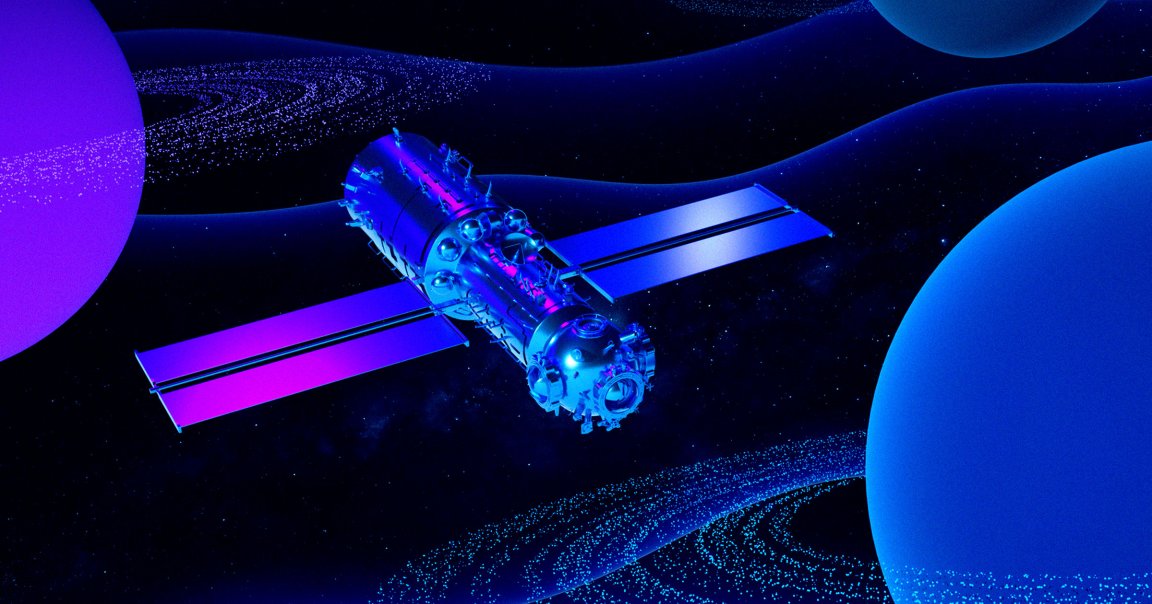
Now, General Galactic is taking this theoretical concept from the drawing board to orbit. As reported by Wired, Mattison and his team are preparing for a pivotal launch in October. Their plan involves sending a sophisticated 1,100-pound satellite into space aboard a SpaceX Falcon 9 rocket. This mission isn’t just another satellite deployment; it’s an ambitious proof-of-concept designed to rigorously evaluate water’s viability as a propellant for two distinct types of propulsion systems: electrical and chemical.
The satellite will conduct a series of experiments, exploring how water can power both “short and steady burps” of thrust for fine orbital adjustments and “much more powerful but short-lived bursts” for significant maneuvers. For electrical propulsion, often associated with plasma thrusters, the process involves ionizing a gas and accelerating it using electromagnetic fields to generate thrust. General Galactic plans to utilize water by first splitting it into hydrogen and oxygen through electrolysis. The oxygen, once isolated, would then be subjected to a strong electrical current, transforming it into a stream of superheated plasma. This method is known for its high specific impulse – meaning it’s highly fuel-efficient – but generates relatively low thrust, making it ideal for long-duration missions and precise orbital adjustments rather than rapid accelerations.
In parallel, the satellite will test water’s application in chemical propulsion. This more traditional method relies on the exothermic reaction of burning propellants at high temperatures and pressures to produce exhaust gases, which are then expelled to create thrust. Here, the electrolysis of water yields both hydrogen gas (H2) and oxygen gas (O2). The hydrogen would serve as the primary fuel, while the oxygen would act as the oxidizer, mirroring the potent liquid hydrogen-liquid oxygen propulsion systems used in many of today’s most powerful rockets, like the Space Shuttle’s main engines or the upper stages of the Falcon 9. The challenge, and the innovation, lies in performing this entire fuel production process in the harsh vacuum of space, using a resource that is initially water.
The potential applications of such technology are far-reaching and strategically significant. Mattison has highlighted its immediate relevance for military assets in space. In an increasingly contested orbital environment, where satellite activities are closely monitored and even “shadowed” by rival nations, maneuverability becomes a critical defense mechanism. The ability for a satellite to generate its own propellant from a benign resource like water could provide an invaluable tactical advantage, enabling satellites to evade threats, change orbits dynamically, or extend their operational lifespan without needing to carry massive amounts of conventional fuel from Earth. The existing reports of Russian and Chinese spacecraft closely tracking US satellites underscore the urgent need for such capabilities.
Beyond military applications, the commercial implications are equally transformative. Companies operating vast constellations of communication or Earth observation satellites could significantly reduce operational costs if their spacecraft could refuel in orbit. This could lead to longer mission durations, more flexible operations, and even the possibility of satellite servicing or debris removal, where maneuvering capabilities are paramount. For future deep space exploration, the ability to harvest water from lunar ice or Martian subsurface deposits to fuel return journeys or subsequent legs of a mission would be a game-changer, making human missions to Mars and beyond far more feasible and sustainable.
Despite the boundless optimism surrounding this venture, the path to water-based rocket propulsion is fraught with significant engineering challenges and a healthy dose of skepticism from the scientific community. Ryan Conversano, a consultant for General Galactic and a former NASA technologist, articulates one of the primary concerns: the corrosive nature of ionized oxygen. When oxygen is superheated into a plasma, it becomes highly reactive, posing a substantial risk to the delicate electronics and structural materials of the satellite. “It makes material selection and design of the device or devices very, very challenging,” Conversano explained to Wired. Ensuring the longevity and reliability of components exposed to such an aggressive environment requires advanced materials science and innovative engineering solutions.
Another critical question revolves around efficiency. While water is abundant in space (in certain locations), the energy required for electrolysis and the mass of the electrolysis system itself could negate the advantages over conventional fuels. Traditional chemical propellants like hydrazine or liquid oxygen/kerosene (RP-1) offer well-understood performance characteristics and do not require on-board manufacturing. The mass of power systems, electrolyzers, storage tanks for cryogenic hydrogen and oxygen, and associated plumbing must be carefully balanced against the mass savings from not launching all propellant from Earth. If the “factory” for producing fuel in space is too heavy or inefficient, the entire concept loses its edge. Moreover, storing cryogenic hydrogen and oxygen in space for extended periods without boil-off is a persistent engineering hurdle, regardless of how the propellants are sourced.
Given these formidable obstacles, it’s understandable why scientists remain cautious. However, this skepticism does not diminish the immense value of investigating such a transformative concept. The long-term vision of humanity as a multi-planetary species hinges on our ability to live and thrive independently of Earth’s resources. ISRU is not merely an optimization; it is an enabling technology for sustained human presence beyond our home planet.
Researchers worldwide are already making strides in related fields. For instance, China has explored methods for extracting oxygen and water from lunar regolith, the loose soil and dust covering the Moon’s surface. Similarly, scientists are investigating how to unlock water and other useful compounds from Martian rocks. These efforts are complementary to General Galactic’s mission, as demonstrating the propulsion system’s viability would create a direct demand and pathway for these extracted resources.
Ultimately, turning these extraterrestrial resources into rocket fuel could prove immensely useful, particularly for any future space travelers who might find themselves in a predicament—perhaps having unexpectedly drained their spacecraft’s tanks ahead of their return journey. Such an on-demand, in-situ refueling capability would not only provide a crucial safety net but also drastically expand the operational envelopes of future missions. The upcoming test by General Galactic is more than just a satellite launch; it’s a bold step toward a future where space travel is not limited by what we can carry from Earth, but by what we can create among the stars. This endeavor stands as a testament to human ingenuity and the relentless pursuit of making the impossible, possible, mirroring other cutting-edge developments such as Chinese astronauts creating rocket fuel in space using “artificial photosynthesis.” The stakes are high, but the potential rewards for space exploration are immeasurable.