Faris Adani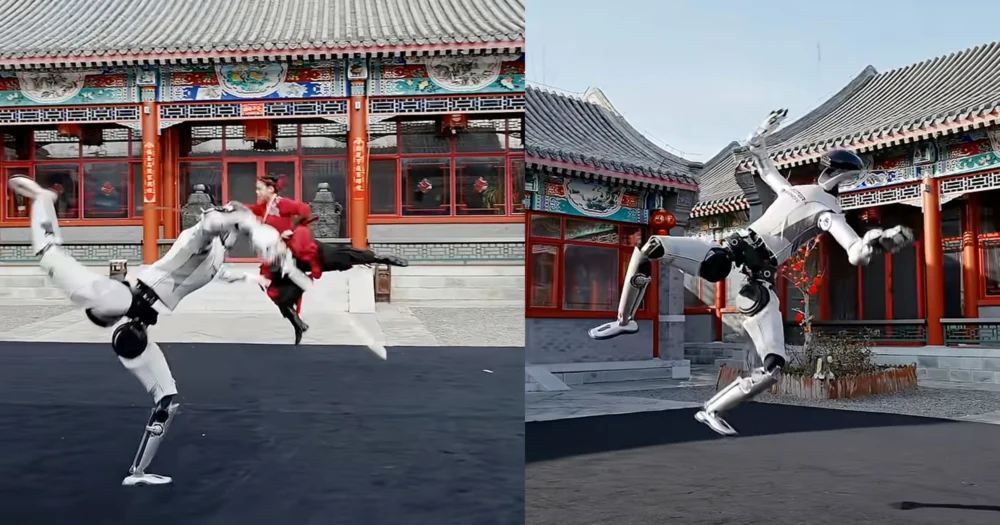
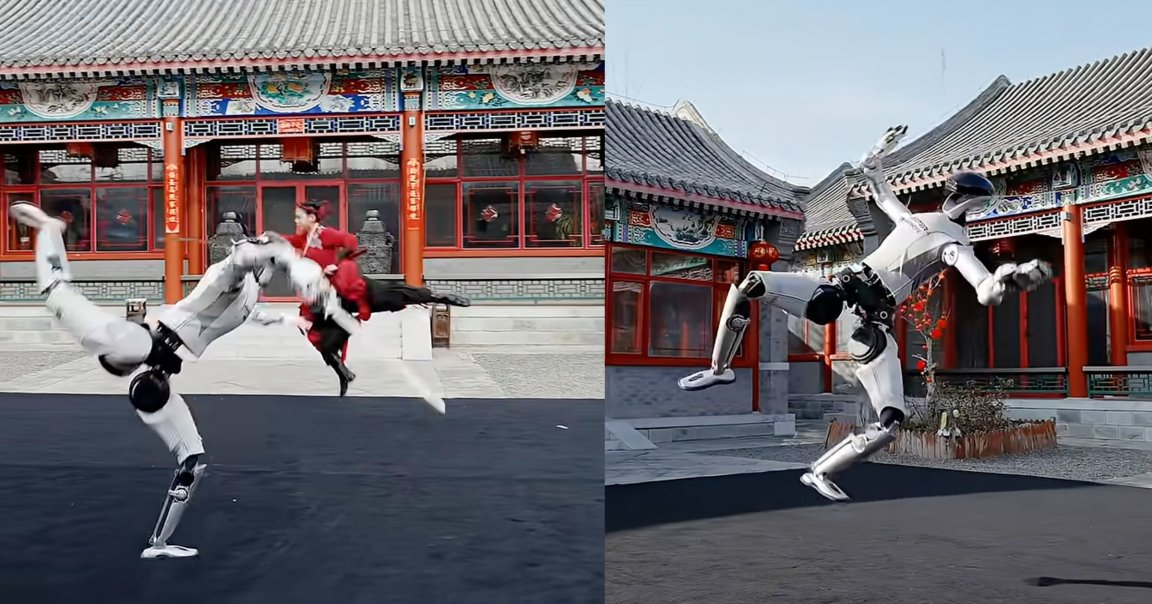
The long-anticipated fusion of advanced robotics and ancient martial arts has officially culminated in a spectacle that has captivated global audiences: engineers have equipped a humanoid robot with a sword, and the results are nothing short of breathtaking. For years, the development of humanoid robots has often been showcased through demonstrations of sophisticated movement — from intricate dance routines that highlight fluid articulation to martial arts exhibitions designed to test balance, strength, and precision. Now, in a move perfectly timed to usher in the Chinese New Year, a visionary marketing strategy has paired a cutting-edge robot with a traditional blade, pushing the boundaries of what these machines can achieve.
Introducing the Robotera L7, a marvel of modern engineering affectionately dubbed “Linghu Chong” by Chinese media, a moniker inspired by the legendary swordfighter from the beloved wuxia novels of the twentieth-century author Jin Yong. This robot doesn’t just hold a sword; it masterfully wields what developers are calling the “Dugu Nine Swords,” a direct homage to the fictional, peerless sword-fighting technique employed by its namesake. This cultural reference immediately elevates the demonstration beyond a mere technical feat, imbuing it with layers of narrative and historical significance that resonate deeply within Chinese culture and among fans of martial arts literature worldwide.
The demonstration video, widely shared by outlets such as *China News*, reveals the L7 executing a complex sequence of thrusts, acrobatic kick flips, and powerful slashes with a remarkable blend of grace and ferocity. Unlike some earlier, more rudimentary robotic prototypes that often struggled with basic locomotion and could appear clumsy, the Robotera L7 exhibits a level of motor control and dynamic stability that sets it apart. It leaps, twirls, and pivots, integrating the weapon seamlessly into its movements without a hint of entanglement or instability. This fluid execution is a testament to years of research and development in advanced robotics, particularly in areas like real-time balance control and motion planning.

🤖🥰 INSANE Sword Dance! #Robotera L7 pulls off wild martial arts! #Humanoid #KungFu #Robotics
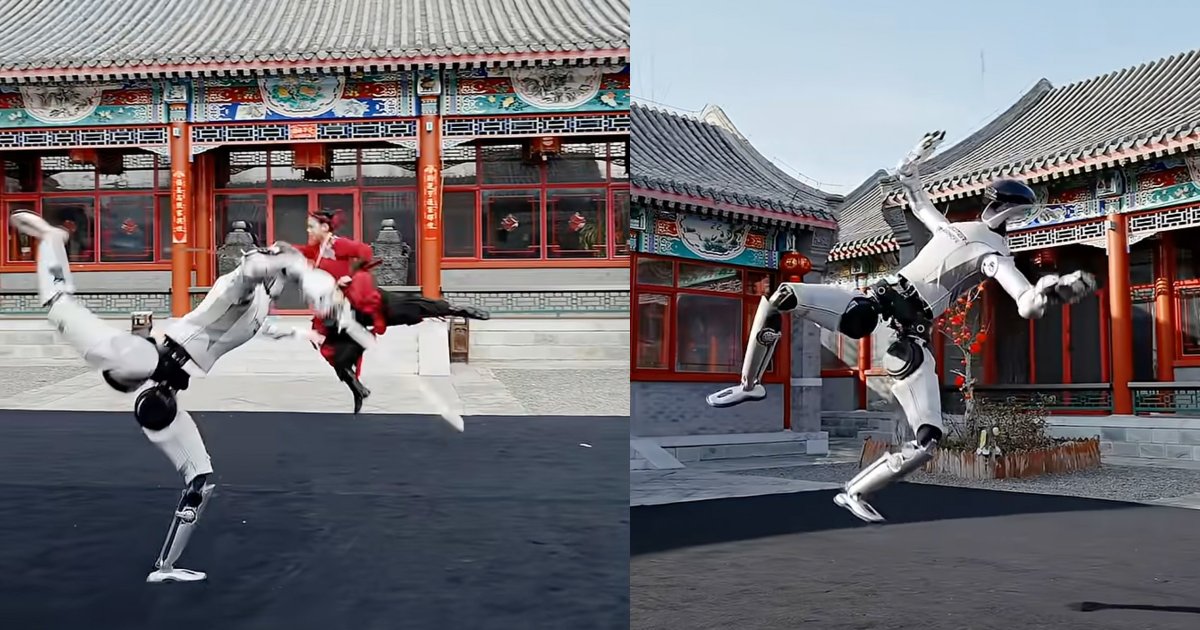
At the heart of the L7’s impressive capabilities lies its sophisticated articulation system. According to the official Robotera website, the L7 boasts an astounding 55 degrees of freedom (DOF). Degrees of freedom refer to the number of independent movements a robot can make. Each joint or axis of rotation contributes to this count, allowing for a broader range of motion and more complex actions. For instance, its arm alone features seven degrees of freedom, enabling it to reach, grasp, and manipulate objects with considerable dexterity. Even more remarkable is its hand, which is said to possess 12 degrees of freedom, granting it fine motor control essential for gripping and wielding a sword with precision and maintaining a firm hold during dynamic maneuvers.
While 55 DOF is a monumental achievement in humanoid robotics, it’s still instructive to compare it to human anatomy. The human hand, often cited as one of nature’s most complex biomechanical structures, is commonly understood to have a staggering 27 degrees of freedom, giving us unparalleled fine motor control and adaptability. This comparison highlights that while the L7 is incredibly advanced, humanity still retains a “tactical advantage” in terms of raw dexterity and nuanced manipulation, at least in theory. However, the fact that the L7 can execute such dynamic full-body movements, including rapid-fire martial arts sequences, speaks volumes about the progress in replicating human-like agility and coordination. The challenge isn’t just about having many joints, but about controlling them synergistically to produce fluid, powerful, and balanced movements under varying conditions.
The engineering behind such a feat involves not only the mechanical design of the joints and actuators but also sophisticated control algorithms. High-torque motors, advanced sensors (like accelerometers, gyroscopes, and force sensors), and real-time feedback loops are critical for maintaining balance, adapting to unexpected forces, and ensuring the robot’s movements are precise and stable. The software, likely incorporating elements of reinforcement learning or advanced motion capture data, translates complex martial arts forms into executable commands, allowing the robot to learn and perform with increasing accuracy and fluidity.
The L7 first made its public debut in July of 2025, developed in collaboration with the prestigious Tsinghua University. At its initial unveiling, Robotera primarily emphasized the robot’s remarkable agility, showcasing its impressive breakdancing moves. These demonstrations were not just for show; they served as compelling proof of concept for the robot’s ability to maintain dynamic balance and execute complex, high-speed movements, qualities that are transferable to a wide array of practical applications beyond entertainment. The company also highlighted its more practical capabilities in commercial environments, such as logistics, manufacturing, and even service industries, where dexterous and adaptable robots can significantly enhance efficiency and safety.
This sword-wielding robot is just one example among many recent Chinese engineering accomplishments that underscore the nation’s rapid advancements in science and technology. From pioneering airborne wind turbines and dominating global solar energy production to making significant strides in artificial intelligence and advanced manufacturing, China has firmly established itself as a leading innovator. The sight of Western executives reportedly being shaken by visits to Chinese factories reveals a technological landscape that is evolving at an unprecedented pace. While the current year may traditionally be associated with the horse in the Chinese zodiac, these developments strongly suggest that, in the realm of robotics, the “year of the armed robot” – or at least the highly capable and sophisticated robot – may already be upon us.
The implications of such advancements are vast and multifaceted. On one hand, the L7’s capabilities hint at a future where robots can perform highly complex tasks in hazardous environments, assist in precision manufacturing, or even revolutionize entertainment and human-robot interaction through incredibly lifelike performances. On the other hand, the image of a sword-wielding robot inevitably sparks discussions about the ethical considerations of developing increasingly autonomous and capable machines, particularly concerning dual-use technologies that could have both civilian and military applications. As robotics continues its exponential growth, the ongoing dialogue between innovation, societal benefit, and ethical responsibility will be more crucial than ever.
Ultimately, the Robotera L7’s sword demonstration is more than just a marketing stunt or a technical showcase. It’s a powerful symbol of humanity’s relentless pursuit of artificial intelligence and advanced robotics, bridging ancient traditions with futuristic capabilities. It challenges our perceptions of what machines can do and invites us to ponder the exciting, and sometimes daunting, possibilities that lie ahead in an increasingly automated world.