anjir abdul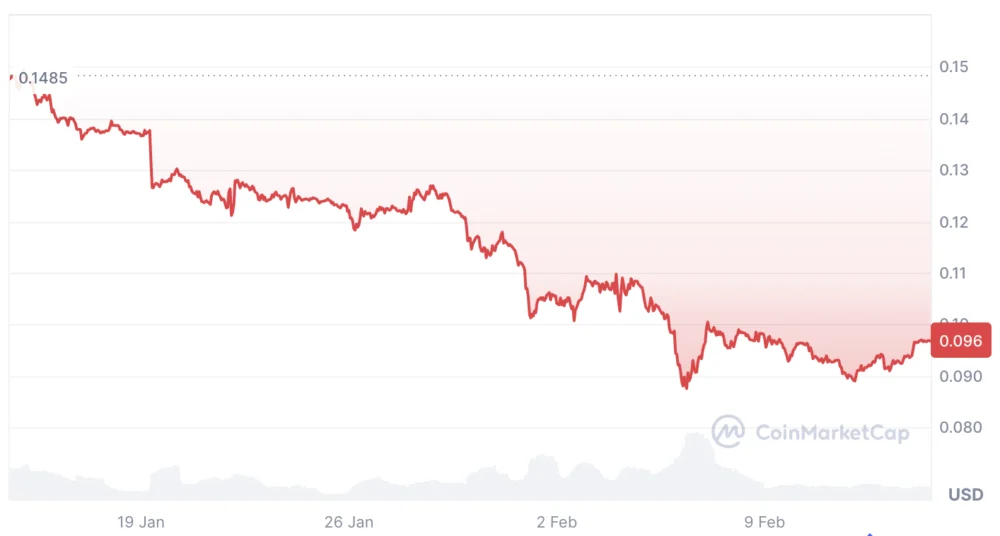
A dramatic reversal in the fortunes of memecoins could be on the horizon, potentially arriving sooner than many traders anticipate, even amidst the prevailing choppy and uncertain conditions across the broader cryptocurrency market, according to insightful analysis from crypto sentiment platform Santiment. This perspective, deeply rooted in historical market patterns and the psychology of crowd behavior, suggests that the current widespread dismissal of memecoins might itself be the strongest indicator of an impending resurgence. Santiment, known for its data-driven approach to understanding market sentiment, argues that the growing narrative portraying memecoins as "permanently dead" is a classic capitulation signal, often preceding significant upward movements.
The platform highlighted this contrarian view in a report published on Friday, noting, “There is a growing narrative of ‘nostalgia’ regarding memecoins, with many traders treating the sector as if it is permanently dead.” This collective acceptance of the "end of the meme era" is precisely what Santiment identifies as a critical turning point. In financial markets, capitulation refers to a period of intense selling pressure where investors, overcome by fear and despair, abandon their positions at any price. This often marks the final stage of a market downturn, as the last remaining weak hands are flushed out, leaving a base from which prices can recover. Santiment elaborates, “This collective acceptance of the ‘end of the meme era’ is a classic capitulation signal,” explaining that when a sector of the market is completely written off, it is often the "contrarian time" to start paying attention. Their advice to traders is clear: “Watch sectors that the crowd has left for dead; max pain often marks the bottom.”
This sentiment is particularly poignant given the tumultuous journey of memecoins. From the meteoric rise of Dogecoin (DOGE) in 2021, fueled by retail enthusiasm and celebrity endorsements, to the subsequent explosions of Shiba Inu (SHIB), Pepe (PEPE), and more recently, Bonk (BONK) and Dogwifhat (WIF), memecoins have carved out a unique, albeit highly speculative, niche in the crypto ecosystem. They often defy traditional valuation metrics, instead deriving their value from community engagement, viral narratives, and cultural relevance. This inherent volatility makes them susceptible to dramatic price swings, but also capable of delivering exponential returns in short periods, drawing both fervent supporters and staunch critics. The current "silence" or "death" narrative, therefore, isn’t just about price action; it’s about the erosion of belief, the fading of the speculative fervor that once defined the sector.
The recent performance of the memecoin market underscores Santiment’s observations. The total memecoin market capitalization has plummeted by a significant 34.04% over the past 30 days, settling at $31.02 billion. This decline hasn’t occurred in isolation; it’s part of a broader crypto market downturn that saw Bitcoin (BTC) dip near $60,000 on February 3rd, marking its lowest point since October 2024, according to CoinMarketCap data. Dogecoin’s price, which has historically served as a bellwether for memecoin uptrends, mirroring the broader sector’s sentiment, is down 32% over the past 30 days. This widespread retraction reflects a period of "max pain" for many holders, creating the very conditions Santiment believes precede a comeback.
Looking at individual performance among the top 100 cryptocurrencies, memecoin gains over the past seven days were largely modest, with a few notable exceptions. Pippin (PIPPIN) emerged as a significant outlier, surging an impressive 243.17%. Other top performers included Official Trump (TRUMP), which saw a more modest gain of 1.37%, and Shiba Inu (SHIB), up 1.11%. These sporadic, often small, upticks in a generally downtrending market can be viewed as attempts at recovery that haven’t yet convinced the broader market of a sustained shift, further entrenching the "dead" narrative. This precisely aligns with Santiment’s thesis: when the market refuses to believe in a recovery, even during minor price pumps, it often signals a healthy disbelief necessary for a potential sustained recovery.

The current market dynamic also prompts a re-evaluation of traditional crypto cycle patterns. In previous cycles, market participants typically expected Bitcoin to reach new all-time highs first, acting as the primary catalyst. This would then be followed by a rotation of capital into Ethereum (ETH), seen as a safer yet still high-growth alternative, and subsequently into higher-risk altcoins, including memecoins. However, as Bitcoin matures and attracts increasing institutional interest—evidenced by the approval and success of spot Bitcoin ETFs—some analysts are now questioning whether this familiar rotation pattern will play out in precisely the same way. The institutionalization of Bitcoin might alter its correlation with the rest of the market, potentially leading to more fragmented and less uniform altcoin seasons.
Indeed, a growing school of thought suggests that, unlike previous altcoin seasons where gains were broadly spread across the market, the next altcoin season may be far more selective. This perspective posits that only certain cryptocurrencies will see significant upside, rather than a "rising tide raises all ships" scenario. Craig Cobb, the founder of The Grow Me, articulated this sentiment in August 2025, telling Magazine that the next altcoin season will not be a universal uplift. This selectivity could stem from various factors, including genuine technological innovation, strong community development, specific utility, or simply a renewed, compelling narrative that captures public imagination. For memecoins, this could mean that only those with enduring communities, novel meme appeal, or perhaps even some nascent utility (however tenuous) might participate in a potential resurgence. The era of any random meme coin pumping simply because it’s a "meme" might be over, replaced by a more discerning market, even within the speculative memecoin sector.
Santiment’s analysis extends beyond mere price action, delving into the collective psychological state of the crypto market, particularly on social media. They point to a growing fear on these platforms, characterized by a significantly higher proportion of bearish comments compared to bullish ones. This overwhelming negativity, paradoxically, can be a potent signal that a market rebound is underway. “Historically, markets move against the crowd’s expectations. This lingering disbelief, even during a price pump, is a healthy sign for a potential sustained recovery,” Santiment observed. When fear is at its peak and optimism is at its nadir, smart money often begins to accumulate, taking advantage of discounted prices offered by those capitulating. This contrarian approach has proven effective across traditional and crypto markets alike, predicated on the idea that the crowd is usually wrong at extreme turning points.
The potential for a memecoin comeback is not without its significant risks and inherent volatility. Memecoins, by their very nature, are highly speculative assets, often lacking tangible utility or strong fundamental backing. Their value is primarily driven by hype, community sentiment, and the virality of their underlying meme. This makes them susceptible to rapid price fluctuations, pump-and-dump schemes, and swift declines once the narrative fades. Regulatory uncertainty also looms large over the broader crypto market, and memecoins, being particularly decentralized and often created anonymously, could face increased scrutiny. However, for those with a high-risk tolerance and an understanding of market psychology, Santiment’s signal suggests that the current quiet period could be an opportune moment for observation, if not strategic entry.
In conclusion, Santiment’s latest report offers a compelling, contrarian viewpoint on the future of memecoins. By identifying the widespread narrative of their demise as a classic capitulation signal, the platform suggests that the very silence and despair surrounding the sector could be the harbinger of a powerful comeback. While the broader crypto market navigates choppy waters and re-evaluates traditional cycle patterns, the deep-seated fear and disbelief observed on social media further reinforce the idea that a bottom may be forming. For investors willing to "watch sectors that the crowd has left for dead," the current period of "max pain" in the memecoin market might indeed mark a pivotal turning point, offering a high-risk, high-reward opportunity for those who heed the contrarian call. As always, independent research, thorough risk management, and a clear understanding of the speculative nature of memecoins remain paramount for anyone considering engaging with this volatile yet potentially rewarding segment of the cryptocurrency market.