isnaini azizah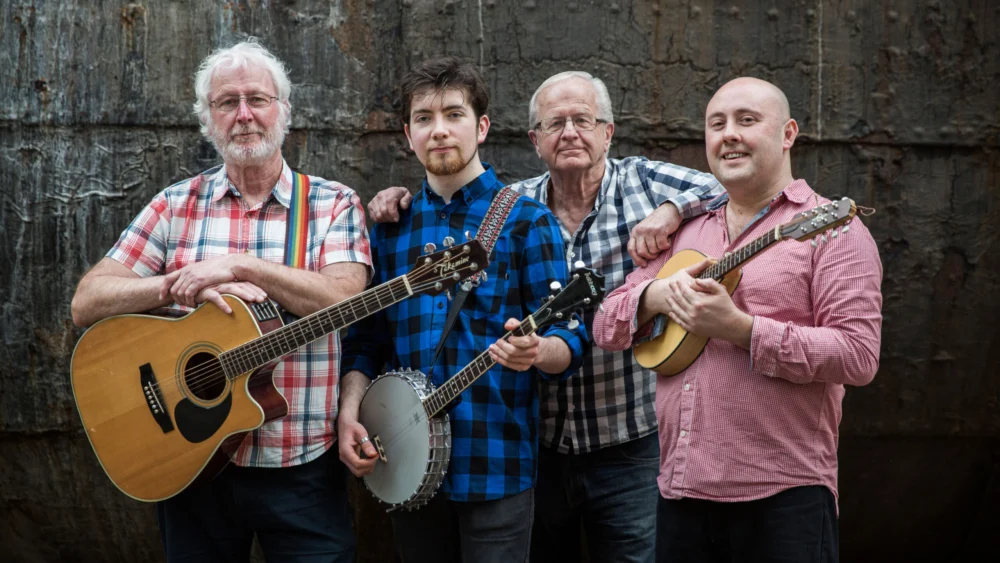
The poignant melody, a tribute to a great-grandfather he never met, filled the auditorium with emotion. As Patrick Darling’s song began, tears welled in the eyes of the audience. This performance, however, carried an additional weight of significance: it marked Darling’s triumphant return to the stage with his bandmates, a moment he hadn’t experienced since losing his ability to sing two years prior. The 32-year-old musician’s life was irrevocably altered at the age of 29 when he received a diagnosis of amyotrophic lateral sclerosis (ALS), a devastating motor neuron disease that systematically erodes control over the body’s muscles. This progressive condition ultimately robs individuals of their ability to move, speak, and even breathe, casting a long shadow over their lives and aspirations.
Darling’s final performance on stage, over two years ago, was a poignant testament to his deteriorating condition. By that juncture, he had already relinquished his ability to stand and play his beloved instruments, and the simple act of singing or speaking had become an arduous struggle. Yet, in a remarkable turn of events, he has now regained the capacity to express himself musically, thanks to the transformative power of artificial intelligence. Utilizing an AI tool meticulously trained on fragments of his past audio recordings, Darling has managed to resurrect his lost voice. Furthermore, another AI innovation has empowered him to harness this "voice clone" to compose entirely new musical pieces, effectively reigniting his passion and allowing him to create music once more.
"Sadly, I have lost the ability to sing and play my instruments," Darling conveyed on stage during the event in London on Wednesday, his synthesized voice resonating with a familiar, yet new, timbre. "Despite this, most of my time these days is spent still continuing to compose and produce my music. Doing so feels more important than ever to me now." This statement, delivered through the marvel of AI, underscored the profound impact technology has had on his ability to continue his artistic journey, proving that even in the face of immense physical challenges, creativity can find a way to flourish.
Losing a Voice: A Symphony Silenced
Patrick Darling’s connection to music runs deep, a lifelong passion that began around the age of 14. "I learned to play bass guitar, acoustic guitar, piano, melodica, mandolin, and tenor banjo," he recounted at the event, his voice, then still his own, filled with the enthusiasm of a seasoned musician. "My biggest love, though, was singing." This deep-seated love for vocal performance was a cornerstone of his identity and his musical expression.
His musical journey intertwined with that of his bandmate, Nick Cocking, over a decade ago during their university years. Darling soon joined Cocking’s Irish folk ensemble, the Ceili House Band, and their inaugural performance together took place in April 2014. Darling, initially joining as a singer and guitarist, was recognized by Cocking for significantly enhancing the band’s overall musicianship. "He elevated the musicianship of the band," Cocking stated, reflecting on Darling’s early impact.
However, a few years prior, Cocking and the other members of the Ceili House Band began to observe a subtle yet concerning shift in Darling’s demeanor and physical capabilities. "He became clumsy," Cocking recalled, recounting a particular incident during a rainy walk across Cardiff. "He just kept slipping and falling, tripping on paving slabs and things like that." While initially dismissed as minor incidents, Darling’s symptoms gradually intensified, signaling a more profound underlying issue. The disease first impacted his legs, leading to him needing to sit during performances by August 2023. Subsequently, his hands began to lose their dexterity. "Eventually he couldn’t play the guitar or the banjo anymore," Cocking lamented.
By April 2024, Darling’s struggle extended to his ability to speak and breathe simultaneously. For that performance, his bandmates had to physically carry him onto the stage. "He called me the day after and said he couldn’t do it anymore," Cocking revealed, his voice faltering with emotion. "By June 2024, it was done." This marked the melancholic end of their collective musical endeavors as a band.

Re-creating a Voice: The Dawn of AI Renaissance
In the face of this profound loss, Darling was referred to a speech therapist, who introduced the concept of "banking" his voice. This process involves individuals facing speech loss recording themselves speaking, with the recordings then used to generate synthetic speech sounds that can be activated through typed text or even eye-tracking devices. This technology offers a lifeline, enabling individuals to maintain a semblance of communication and personal identity.
However, for Darling, this initial approach presented a significant hurdle. "By that stage, my voice had already changed," he explained at the event. "It felt like we were saving the wrong voice." The natural progression of his ALS had altered the very sound he sought to preserve, rendering the traditional voice banking method less effective.
It was then that another speech therapist introduced him to a groundbreaking alternative: artificial intelligence. Richard Cave, a speech and language therapist and a researcher at University College London, also serves as a consultant for ElevenLabs, an AI company specializing in advanced audio, speech, video, and music technologies. Among their innovative offerings is a tool capable of creating remarkably realistic "voice clones" – digital replicas of a person’s voice generated from mere minutes, or even seconds, of recorded audio.
Last year, ElevenLabs launched an "impact program" dedicated to providing complimentary licenses for these voice cloning tools to individuals who have lost their voices due to conditions such as ALS, head and neck cancer, or stroke. This initiative represents a significant commitment to leveraging AI for humanitarian purposes, offering a beacon of hope to those affected by debilitating diseases.
The impact of this program is already being felt. Gabi Leibowitz, a speech therapist leading the initiative, noted, "We’re not really improving how quickly they’re able to communicate, or all of the difficulties that individuals with MND are going through physically, with eating and breathing. But what we are doing is giving them a way… to create again, to thrive." This sentiment highlights the profound psychological and emotional benefits of regaining a voice, enabling users to remain engaged in their professions and continue pursuing activities that foster a sense of self and purpose.
Cave collaborated closely with Darling to utilize the ElevenLabs tool, meticulously reconstructing his lost speaking voice from a collection of older audio recordings. "The first time I heard the voice, I thought it was amazing," Darling exclaimed at the event, speaking through his AI-generated voice. "It sounded exactly like I had before, and you literally wouldn’t be able to tell the difference." He humorously added, "I will not say what the first word I made my new voice say, but I can tell you that it began with ‘f’ and ended in ‘k.’" This lighthearted anecdote underscores the uncanny accuracy and the emotional release that accompanied the recreation of his voice.
Recreating his singing voice, however, presented a more intricate challenge. The voice cloning tool typically requires approximately 10 minutes of clear audio for optimal results. "I had no high-quality recordings of myself singing," Darling admitted. "We had to use audio from videos on people’s phones, shot in noisy pubs, and a couple of recordings of me singing in my kitchen." Despite these limitations, these fragmented snippets proved sufficient for Cave to generate a "synthetic version of [Darling’s] singing voice."

The audio sources, while imperfect, captured a certain rawness and occasional vocal imperfections in Darling’s singing. "The ElevenLabs voice that we’ve created is wonderful," Darling declared at the event. "It definitely sounds like me—[it] just kind of feels like a different version of me." This nuanced description acknowledges the synthetic nature of the voice while affirming its authentic connection to his identity as a musician.
Beyond voice cloning, ElevenLabs has also developed Eleven Music, an AI music generator that empowers users to compose tracks through text prompts, allowing for the selection of various musical styles. This innovative tool has already garnered attention, with several renowned artists partnering with the company to license AI clones of their voices, including actor Michael Caine, whose voice is being used to narrate an upcoming ElevenLabs documentary. The company recently released an album of 11 tracks created entirely using this AI music generator, with one track, a Liza Minnelli rendition, being particularly lauded by Cave as "really a banger."
While Eleven Music can generate a song in a mere minute, Darling and Cave dedicated approximately six weeks to meticulously fine-tuning Darling’s song. This extended period of refinement underscores their commitment to achieving a high level of artistic expression. Cave explained that with Eleven Music, users can "create music and add lyrics in any style [they like]," opening up a world of creative possibilities. Darling’s preference for Irish folk music is a testament to his enduring passion, but Cave’s work extends to a Colombian man creating traditional Colombian folk music, demonstrating the tool’s global appeal and linguistic versatility, with support for 74 languages.
Back on Stage: A Resonant Encore
The emotional culmination of this technological journey arrived last month when Cocking received a call from Cave, who shared Darling’s completed track. "I heard the first two or three words he sang, and I had to turn it off," Cocking confessed, his voice thick with emotion. "I was just in bits, in tears. It took me a good half a dozen times to make it to the end of the track." The sheer power of hearing his friend’s voice, resurrected and singing again, was overwhelming.
Darling and Cave had been making arrangements to perform the track live at the ElevenLabs summit in London on Wednesday, February 11th. In preparation, Cocking and bandmate Hari Ma meticulously arranged accompanying parts for the mandolin and fiddle. They had a brief but intense two weeks of rehearsal before joining Darling on stage, marking their first performance together in two years.
"I wheeled him out on stage, and neither of us could believe it was happening," Cave recounted, his voice filled with awe. "He was thrilled." The song commenced, played as Darling remained on stage, while Cocking and Ma delivered their live instrumental accompaniment. The sight of Darling, once again sharing a stage with his bandmates, was a profound and deeply moving experience for all involved.
Cocking and Cave expressed Darling’s intention to continue utilizing these AI tools to create music. Cocking conveyed his hope to perform with Darling again, acknowledging the inherent uncertainties of ALS and the challenges of making long-term plans. "It’s so bittersweet," Cocking admitted. "But getting up on stage and seeing Patrick there filled me with absolute joy. I know Patrick really enjoyed it as well. We’ve been talking about it… He was really, really proud." This sentiment encapsulates the complex emotions of joy, sorrow, and immense pride that accompanied this remarkable comeback, a testament to the enduring power of music and the life-affirming potential of technology.