isnaini azizah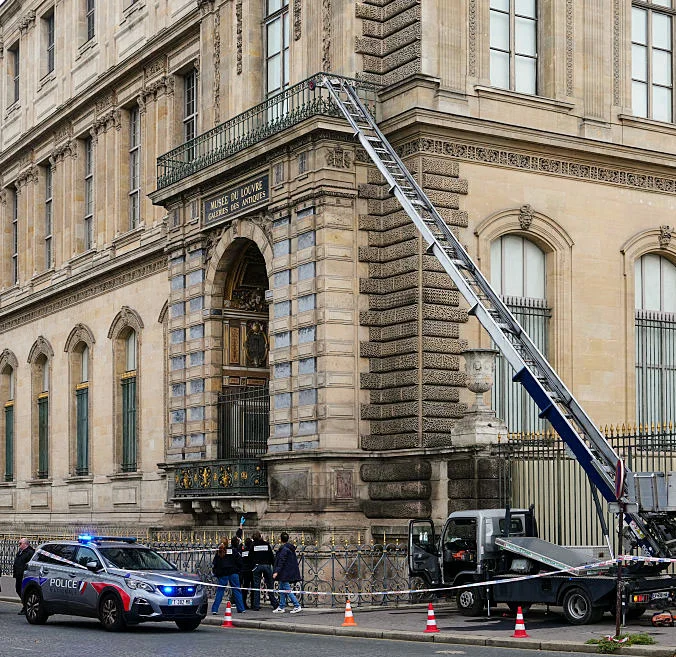
However, the reality of executing a heist diverges significantly from its cinematic portrayal. Sophisticated surveillance cameras, intricate computer-controlled alarm systems, knockout gas, and laser grids are seldom features of major criminal endeavors. In practice, technological countermeasures rarely pose a substantial obstacle, and high-tech gadgets are seldom the key to success. The primary barrier to entry is typically far more prosaic: a physical obstruction, such as a locked door. The most common modus operandi for thieves involves colluding with, deceiving, or coercing an insider. A stark example occurred last year when the Louvre was the target of a heist that resulted in the loss of antique jewelry valued at €88 million. The most advanced piece of technology reportedly employed in this operation was a humble angle grinder.
These low-tech maneuvers at the Louvre align with conclusions drawn from extensive research into heists, which began years ago. In 2014, U.S. nuclear weapons researchers at Sandia National Laboratories ventured into this unconventional field of study, producing a comprehensive 100-page report titled "The Perfect Heist: Recipes from Around the World." Their motivation stemmed from concerns about the potential theft of a nuclear weapon from the U.S. arsenal. To address this, they meticulously compiled data from 23 high-value robberies that occurred between 1972 and 2012, creating a "Heist Methods and Characteristics Database." This database represented a critical accumulation of knowledge regarding successful criminal strategies. The scientists discovered that thieves dedicated considerable financial resources and time to meticulous planning and extensive practice runs, sometimes exceeding 100 attempts. Their methods ranged from brute force, such as tunneling through sewer systems for months as in the 1976 Société Générale bank heist in Nice, France, to elaborate deception, like impersonating police officers to trick guards, as seen in the 1990 Gardner Museum heist in Boston. Crucially, there was no evidence of perpetrators utilizing advanced weaponry like electromagnetic pulse generators to disable electrical grids, such as the one in Las Vegas. The most effective robbers prioritized gaining undetected access to valuable assets and executing a swift escape.

Advancing the timeline, the landscape of criminal activity appears remarkably consistent. Last year, Spanish researchers who analyzed art crimes committed between 1990 and 2022 arrived at a similar conclusion: the least technologically sophisticated methods remain the most successful. Erin L. Thompson, an art historian specializing in art crime at John Jay College of Criminal Justice, observes, "High-tech technology doesn’t work so well." She emphasizes that speed and thorough preparation consistently outperform complex systems and alarm mechanisms. Even the audacious Louvre robbery, at its core, was essentially a smash-and-grab operation lasting mere minutes.
The emphasis on speed does not diminish the requirement for skill or even a certain panache in executing heists. As the adage suggests, amateurs focus on strategy, while professionals meticulously study logistics. Even in the absence of advanced gadgets, heists and the films that depict them continue to celebrate an engineer’s mindset. Anna Kornbluh, a professor of English at the University of Illinois at Chicago, who has researched the subject extensively, notes, "Heist movies absolutely celebrate deep-dive nerdery—’I’m going to know everything I can about the power grid, about this kind of stone and drill, about Chicago at night.’" Her recent publication, a paper released last October, examines how heist films often reflect an Old Hollywood approach to collaborative artistry. In contrast, contemporary series focusing on new forms of financial deception, such as those detailing the rise and fall of WeWork or the elaborate con artistry of Anna Delvey, mirror the more solitary, disruptive, and growth-oriented ethos characteristic of the streaming era.
Kornbluh’s work may offer insights into why law-abiding citizens often find themselves rooting for individuals who would steal a crown from the Louvre or, as happened just weeks later, $100,000 worth of escargot from a farm in Champagne. Kornbluh posits that heists can be viewed as a form of anti-oligarchic praxis. "Everybody wants to know how to be in a competent collective. Everybody wants there to be better logistics," she states, articulating a broader societal aspiration. "We need a better state. We need a better society. We need a better world." These sentiments reflect shared values, and as another well-known saying reminds us, where there is value, there is crime. The enduring appeal of the heist, whether on screen or in its often unglamorous reality, lies in this complex interplay of aspiration, ingenuity, and the fundamental human desire for something more, even if that pursuit takes a decidedly illicit turn. The romanticized notion of the high-tech heist, a staple of cinematic thrillers, stands in stark contrast to the grounded, often low-tech, and meticulously planned operations that characterize real-world criminal undertakings. This discrepancy highlights a fascinating cultural perception, where the allure of advanced technology in crime is far more potent in fiction than it is in practice. The focus on intricate technological defenses in movies, while providing dramatic tension, often obscures the fundamental human elements that remain at the heart of most successful illicit endeavors: insider knowledge, meticulous planning, and swift, decisive action. The myth of the high-tech heist, therefore, serves as a powerful narrative device, but one that is consistently debunked by the empirical evidence of actual criminal activity, which favors the tried-and-true methods of human ingenuity and physical access over the speculative vulnerabilities of complex digital systems. The continued success of such "low-tech" operations, from the Louvre to more recent instances, underscores the enduring principle that understanding human behavior and exploiting physical access often prove more effective than attempting to breach sophisticated technological barriers. This persistent reality challenges the cinematic narrative and forces a re-evaluation of what truly constitutes the "perfect heist." The research from Sandia National Laboratories and the Spanish art crime study both point to a consistent pattern: the most valuable assets are often secured not through a dazzling display of technological prowess, but through careful reconnaissance, strategic manipulation of human elements, and efficient execution. This intelligence-gathering and logistical mastery, honed over countless hours of planning and practice, represent the true "high-tech" of real-world heists, a form of sophisticated engineering applied to the art of acquisition rather than technological disruption. The romanticized image of the lone hacker disabling global networks is, in this context, largely a fiction, a testament to the power of storytelling rather than a reflection of criminal reality. The true masters of the heist, it appears, are less concerned with the intricacies of code and more with the unyielding physics of locks, the predictable nature of human guards, and the unglamorous but effective power of a well-placed tool or a trusted accomplice. This understanding of real-world criminal methodology, rooted in practicality and human interaction, offers a compelling counterpoint to the fantastical portrayals that dominate popular culture, reminding us that sometimes, the most effective solutions are the simplest ones, albeit executed with extraordinary skill and dedication. The allure of the heist, therefore, persists not because of its technological sophistication, but because it embodies a desire for competence, collective action, and a subtle defiance of established order, echoing a yearning for a better system, a more equitable distribution of resources, and ultimately, a more just society.