isnaini azizah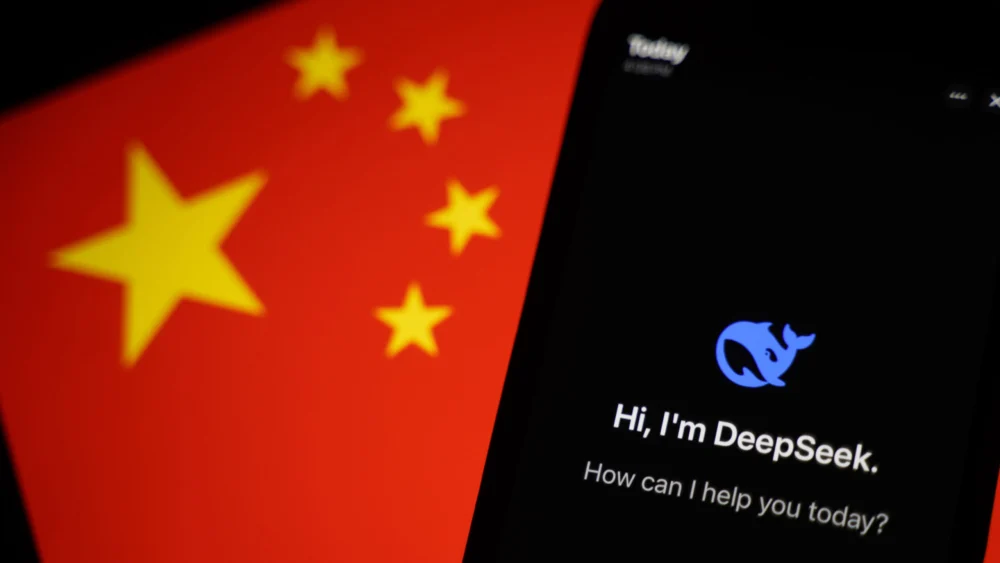
The momentum began in January 2025 with DeepSeek’s release of its R1 reasoning model, an announcement that sent ripples through the AI community. Shortly thereafter, Moonshot AI unveiled its Kimi K2.5, an open-weight model that demonstrated performance levels nearing those of leading proprietary systems like Anthropic’s Claude Opus, yet at approximately one-seventh the price. This trend of high-performance, low-cost open models has become a defining feature of China’s AI output.
On platforms like Hugging Face, the impact is undeniable. Alibaba’s Qwen family of models, which dominated as the most downloaded series in 2025 and 2026, has now surpassed Meta’s Llama models in cumulative downloads. A recent MIT study further validated this trend, finding that Chinese open-source models have collectively outpaced US models in total downloads. This signifies an unprecedented era of broad and affordable access to near-frontier AI capabilities for developers and builders worldwide.
A crucial distinction sets these Chinese models apart from many Western counterparts like ChatGPT or Claude, which are typically accessed via paid APIs and whose internal workings remain proprietary. Chinese firms are releasing their models’ weights—the numerical values determined during training—making them freely available for anyone to download, scrutinize, run, and modify. This open approach fosters transparency and accelerates innovation, allowing for rapid adaptation and improvement by the global developer community. If this trend of increasingly capable open-source AI models continues, they will not only provide the most economical options for accessing cutting-edge AI but will also redefine the hubs of innovation and the entities that set global AI standards.
China’s Unwavering Commitment to Open Source
The initial shock surrounding DeepSeek’s R1 release stemmed not just from its performance but from its origin. A Chinese team had achieved parity with leading US labs in reasoning models, but the true long-term impact lay in its distribution. R1 was released under a permissive MIT license, granting unrestricted access for download, inspection, and deployment. This was complemented by a detailed paper outlining its training process and techniques. Furthermore, DeepSeek offered API access at a significantly reduced cost compared to the then-leading proprietary reasoning model, OpenAI’s o1.
The reverberations of DeepSeek’s release were immediate and far-reaching. Within days, it supplanted ChatGPT as the most downloaded free app in the US App Store, sparking a significant sell-off in US tech stocks that briefly erased approximately $1 trillion in market value. DeepSeek transformed overnight from an obscure spin-off to a prominent symbol of China’s strategic push into open-source AI.
This embrace of open source is not surprising for China. Possessing the world’s second-largest pool of AI talent after the US and a robust, well-funded tech industry, the nation’s AI sector underwent a critical self-assessment following ChatGPT’s mainstream breakthrough. This led to a decisive strategy to rapidly close the gap by leveraging open source to galvanize developers, broaden adoption, and establish industry standards.
DeepSeek’s triumph instilled a newfound confidence in an industry long accustomed to following rather than setting global standards. Alex Chenglin Wu, CEO of Atoms and a key contributor to China’s open-source ecosystem, remarked, "Thirty years ago, no Chinese person would believe they could be at the center of global innovation. DeepSeek shows that with solid technical talent, a supportive environment, and the right organizational culture, it’s possible to do truly world-class work."
However, DeepSeek’s success was not an isolated incident. Alibaba’s Qwen Lab had been diligently releasing open-weight models for years. By September 2024, well before DeepSeek’s V3 launch, Alibaba reported over 600 million global downloads for its Qwen models, which accounted for over 30% of all model downloads on Hugging Face in 2024. Other institutions, including the Beijing Academy of Artificial Intelligence and AI firm Baichuan, were also releasing open models as early as 2023.
The field has exploded in scope and pace since DeepSeek’s breakthrough. Companies like Z.ai (formerly Zhipu), MiniMax, and Tencent, alongside a burgeoning number of smaller labs, have introduced models competitive in reasoning, coding, and agent-based tasks. This rapid proliferation of capable models has accelerated progress, with advancements that once took months to enter the open-source domain now appearing within weeks or even days.
Liu Zhiyuan, a professor of computer science at Tsinghua University and chief scientist at AI startup ModelBest, observes, "Chinese AI firms have seen real gains from the open-source playbook. By releasing strong research, they build reputation and gain free publicity."
Beyond commercial advantages, open source has acquired significant cultural and strategic weight. Liu notes, "In the Chinese programmer community, open source has become politically correct," framing it as a strategic counterpoint to US dominance in proprietary AI systems. This shift is also evident at the institutional level. Universities like Tsinghua are actively promoting AI development and open-source contributions, while policymakers are formalizing incentives. In August, China’s State Council released a draft policy encouraging universities to recognize open-source work, proposing that student contributions on platforms like GitHub or Gitee could eventually count towards academic credit.
The momentum behind China’s push for open-source models is expected to continue, fueled by a reinforcing feedback loop of development and adoption. However, Tiezhen Wang, who leads global AI efforts at Hugging Face, cautions that long-term sustainability hinges on financial viability. The public listings of Z.ai and MiniMax in Hong Kong in January signal a move towards commercialization. Wang summarizes, "Right now, the focus is on making the cake bigger. The next challenge is figuring out how each company secures its share."
The Next Wave: Narrower, Yet Superior Models
Chinese open-source models are not only leading in download volume but also in diversification and specialization. Alibaba’s Qwen has emerged as one of the most comprehensive open model families, offering a wide array of variants tailored for specific applications. These range from lightweight models deployable on a single laptop to massive, multi-hundred-billion-parameter systems designed for data-center infrastructure. The Qwen ecosystem thrives on community-driven task-optimized variants, such as "instruct" models adept at following commands and "code" variants specialized for programming tasks.
While this strategy isn’t exclusive to Chinese labs, Qwen was the first open model family to offer such a broad selection of high-quality, free-to-use options, effectively creating a full product line. The open-weight nature of these releases facilitates adaptation through fine-tuning and distillation, enabling smaller models to emulate the performance of larger ones. According to ATOM (American Truly Open Models), a project by AI researcher Nathan Lambert, by August 4, 2025, model variations derived from Qwen constituted over 40% of new language model derivatives on Hugging Face, a significant increase from Llama’s approximately 15%. This trend positions Qwen as the de facto foundational model for a vast ecosystem of "remixed" AI applications.
This pattern underscores the growing importance of smaller, more specialized models. Liu emphasizes, "Compute and energy are real constraints for any deployment." The rise of smaller models, he explains, is driven by the need to reduce operational costs and enhance accessibility for a broader user base. His company, ModelBest, focuses on developing compact language models designed for local deployment on devices such as smartphones, vehicles, and other consumer hardware.
While average users interact with AI through web interfaces or apps for basic tasks, power users with technical expertise are exploring more autonomous AI applications for complex problem-solving. OpenClaw, an open-source AI agent that has gained significant traction within the AI hacker community, exemplifies this trend. It allows AI to autonomously manage a user’s computer, operating 24/7 to process emails and work tasks without direct supervision.
OpenClaw, like many open-source tools, leverages APIs to connect with various AI models. Within days of its release, the team reported that Kimi’s K2.5 had surpassed Claude Opus to become the most utilized AI model, measured by token count, indicating it processed a greater volume of text across user prompts and model responses.
While cost has been a primary driver for the adoption of Chinese models, Wang cautions against viewing them as mere imitations of Western frontier systems. He suggests that, like any product, a model only needs to be sufficiently capable for its intended purpose. The Chinese open-source model landscape is becoming increasingly specialized. Research groups like Shanghai AI Laboratory are releasing models tailored for scientific and technical domains, while Tencent projects focus on music generation. Ubiquant, a quantitative finance firm similar to DeepSeek’s parent company, High-Flyer, has launched an open model specifically designed for medical reasoning.
Moreover, innovative architectural concepts from Chinese labs are gaining broader adoption. DeepSeek’s research into model efficiency and memory management, particularly techniques for compressing the model’s attention "cache" to reduce memory and inference costs while largely preserving performance, has attracted considerable attention from the research community. Wang highlights, "The impact of these research breakthroughs is amplified because they’re open-sourced and can be picked up quickly across the field."
Chinese Open Models as Global AI Infrastructure
The adoption of Chinese open-source models is also gaining significant traction within Silicon Valley. Martin Casado, a general partner at Andreessen Horowitz, estimates that approximately 80% of startups pitching with open-source stacks are currently utilizing Chinese open models, as noted in a recent X post. Usage data from OpenRouter, an API aggregator, reflects this trend, with Chinese open models surging from near-zero usage in late 2024 to nearly 30% in recent weeks.
Global demand is also on the rise. Z.ai experienced such a surge in demand for its GLM coding plan that it had to limit new subscriptions due to compute constraints. Notably, the user base is primarily concentrated in the United States and China, followed by India, Japan, Brazil, and the UK.
"The open-source ecosystems in China and the US are tightly bound together," observes Wang at Hugging Face. The training and deployment of many Chinese open models still rely on Nvidia hardware and US cloud platforms, maintaining intricate business ties. Talent mobility is also a significant factor, with researchers moving across borders and companies, many continuing to operate as a global community, sharing code and ideas publicly.
This interdependence fosters optimism among Chinese developers, as their work is widely disseminated, remixed, and integrated into products. However, openness also accelerates competition. Dario Amodei, CEO of Anthropic, commented on DeepSeek’s 2025 releases, stating that export controls are "not a way to duck the competition" between the US and China and that US AI companies "must have better models" to prevail.
For the past decade, Chinese tech in the West has often been met with high expectations, followed by scrutiny, restrictions, and political backlash. This time, the export is not merely an app or a consumer platform but the foundational model layer upon which others build. Whether this dynamic will yield a different outcome remains an open question.