anjir abdul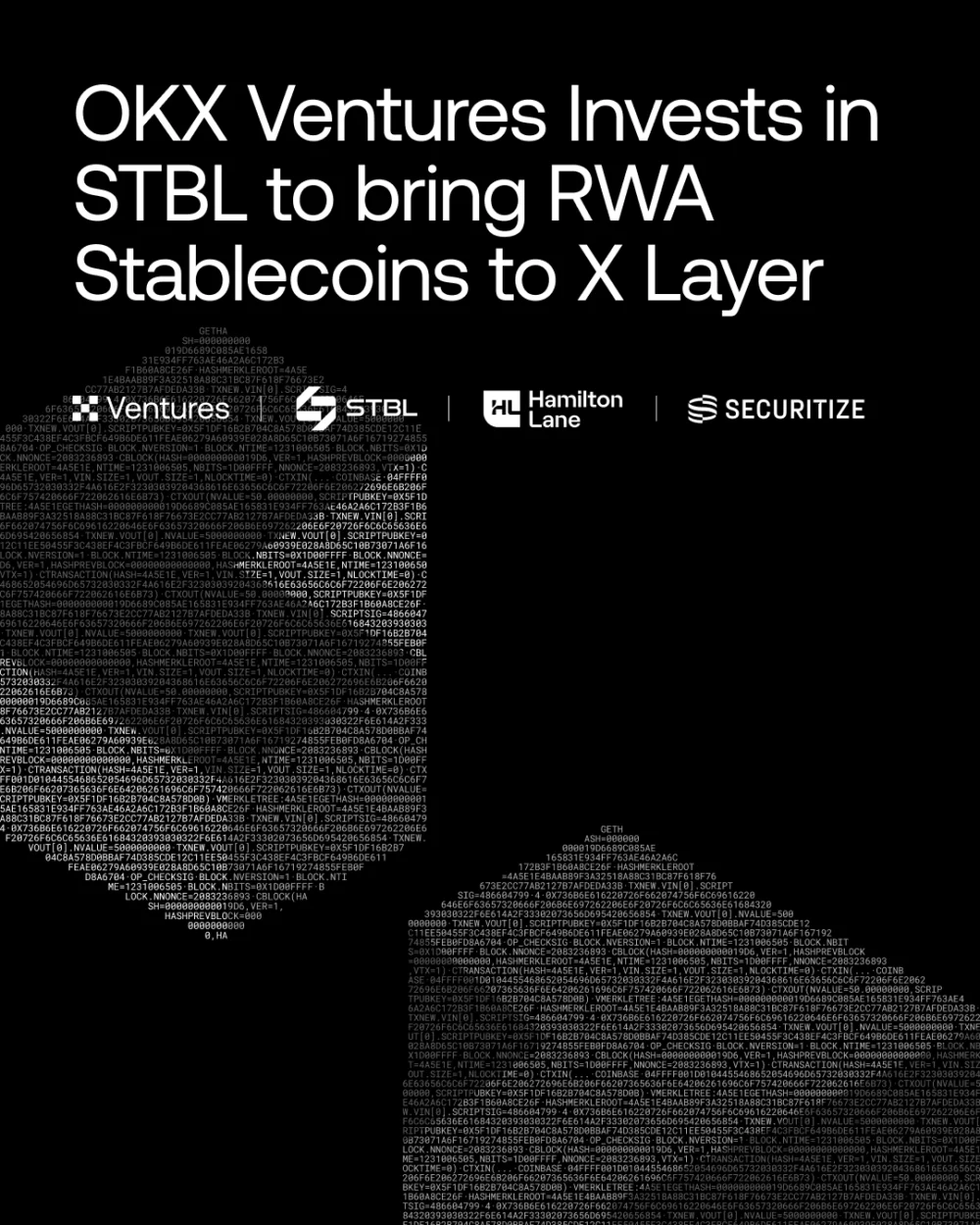
Securitize, a leading digital asset securities firm, is spearheading a transformative initiative to launch an innovative stablecoin backed by tokenized private credit assets, marking a significant leap in bridging institutional finance with blockchain technology. This ambitious endeavor is a collaborative effort, bringing together the formidable expertise of Nasdaq-listed private markets investment manager Hamilton Lane, the strategic backing of OKX Ventures, and the specialized infrastructure of stablecoin firm STBL. The new stablecoin is set to be issued on OKX’s burgeoning X Layer network, promising to expand the frontier of institutional real-world asset (RWA) yield onto compliant blockchain rails and establish a new paradigm for onchain financial infrastructure.
At its core, this partnership represents a powerful convergence of established financial powerhouses and pioneering blockchain innovators. Securitize, already a dominant force in the tokenization space with over $4 billion worth of tokenized assets under its belt, is uniquely positioned to facilitate this integration. Its track record and credibility are further bolstered by significant backing from industry giants like BlackRock, the world’s largest asset manager, and investment banking behemoth Morgan Stanley. Securitize’s role in this collaboration is pivotal, leveraging its regulated tokenization platform to transform traditional private credit assets into digital tokens, making them accessible and programmable on a blockchain. This expertise is crucial for ensuring the integrity, compliance, and institutional-grade quality of the tokenized assets.
Hamilton Lane’s involvement provides the bedrock of institutional quality and expertise in private markets. As a globally recognized investment manager specializing in private markets, their participation lends immense credibility and intrinsic value to the stablecoin. The underlying assets for this new stablecoin will be tokenized exposure to Hamilton Lane’s Senior Credit Opportunities Fund. This fund, renowned for its focus on robust, yield-generating private credit, offers the kind of stable and attractive returns that are highly sought after by institutional investors but have historically been illiquid and difficult to access for a broader audience. Through a feeder structure facilitated by Securitize, this partnership effectively democratizes access to a segment of the private credit market, traditionally reserved for large institutional players, by bringing it onto a blockchain.

OKX Ventures, the investment arm of the prominent crypto exchange OKX, plays a strategic role by providing both financial backing and crucial ecosystem support. Their investment underscores a strong belief in the potential of RWA tokenization and its capacity to revolutionize capital markets. The choice of OKX’s X Layer network as the issuance platform for the stablecoin is also highly strategic. X Layer, an Ethereum Layer-2 network, offers enhanced scalability, lower transaction fees, and EVM compatibility, making it an ideal environment for complex financial applications and institutional-grade transactions. This infrastructure is designed to handle the demands of programmable settlement and deep liquidity, essential components for the "next generation onchain financial infrastructure" envisioned by the partners. OKX Ventures’ commitment to fostering innovation within its ecosystem ensures that the stablecoin will benefit from robust technical support and a growing user base.
STBL, the stablecoin infrastructure provider, is instrumental in designing and implementing the innovative architecture that underpins this new stablecoin. Recognizing the increasing regulatory scrutiny surrounding yield-bearing stablecoins, particularly in the United States, STBL has developed a sophisticated dual-token architecture. This design is specifically engineered to separate the yield generation mechanism from the stable unit itself, a critical feature aimed at aligning with evolving regulatory expectations. The framework ensures that while the underlying RWA assets accrue yield in the background, the stablecoin itself functions purely as a stable payment instrument, avoiding classification as a security that distributes passive returns directly to holders. This proactive approach to regulatory compliance is a cornerstone of the initiative, seeking to address concerns raised by the proposed US market structure bill, which included provisions targeting passive yield on stablecoin holdings.
The dual-token model works by allowing returns to accrue at the collateral layer, meaning the yield is generated by the underlying Hamilton Lane fund, but it is not directly paid out to the stablecoin holders. Instead, the framework enables the acquisition of this yield through a separate mechanism or token, effectively de-linking the stablecoin from the investment product characteristic of yield-bearing assets. This structural innovation is a direct response to the regulatory imperative to distinguish between stable payment instruments and investment products, thereby offering a compliant pathway for institutional capital to access onchain RWA yields without running afoul of securities laws. As STBL emphasized in a statement, this framework is intended to "align with emerging regulatory expectations that seek to distinguish stable payment instruments from investment products," providing "compliant yield management" within the X Layer ecosystem.
This initiative is more than just the launch of another stablecoin; it represents a definitive leap forward in the convergence of institutional private markets and onchain finance. The integration of institutional private credit with regulated tokenization and programmable settlement promises to unlock unprecedented efficiencies, transparency, and liquidity. Private credit assets, known for their typically higher yields and lower correlation to public markets, have long been attractive to institutional investors seeking diversification and robust returns. Tokenizing these assets makes them more accessible, allowing for fractional ownership, instant settlement, and reduced administrative overhead, all while maintaining institutional-grade compliance and security.

The broader context of this development is the accelerating trend of real-world asset (RWA) tokenization, which is rapidly gaining traction across the global financial landscape. Industry analysts and major financial institutions are increasingly recognizing the immense potential of tokenizing everything from real estate and commodities to intellectual property and private equity. Projections from firms like Boston Consulting Group suggest that the market for tokenized illiquid assets alone could reach trillions of dollars by the end of the decade. This Securitize-led stablecoin is a prime example of how blockchain technology can transform illiquid, traditional assets into digital, programmable instruments, thereby expanding access to high-quality investment opportunities for a wider range of participants, both institutional and potentially retail.
For traditional finance (TradFi), RWA tokenization offers a pathway to enhanced operational efficiency, reduced costs, and improved liquidity for traditionally illiquid assets. For decentralized finance (DeFi), it opens up a vast new frontier of capital and reliable, real-world yields, moving beyond volatile crypto-native assets. By bringing compliant, yield-generating institutional assets onto blockchain rails, this partnership injects a new level of stability and credibility into the digital asset ecosystem. It signifies a maturation of the blockchain industry, demonstrating its capability to handle complex financial products within a regulated framework, thereby fostering greater trust and adoption among mainstream financial institutions.
In conclusion, the collaboration between Securitize, Hamilton Lane, OKX Ventures, and STBL to launch this RWA-backed stablecoin on X Layer is a landmark event. It not only introduces an innovative financial product but also establishes a robust, compliant model for integrating high-quality institutional assets with blockchain technology. By addressing critical regulatory concerns through its dual-token architecture and leveraging the strengths of each partner, this initiative is poised to set a new standard for onchain finance, driving deep liquidity, programmable settlement, and compliant yield management within the X Layer ecosystem and beyond. It represents a significant step towards realizing the vision of a truly global, efficient, and interconnected financial system where traditional and digital assets seamlessly converge.