Faris Adani
The potential discovery of extraterrestrial life, a prospect long confined to the realms of science fiction, presents humanity with a communication challenge far more complex and profound than merely announcing a scientific breakthrough; it would necessitate a carefully orchestrated global effort to manage an unprecedented wave of philosophical, social, and existential implications. Despite persistent scientific hope and ambitious missions dedicated to the search for alien biology or technology, definitive proof remains elusive, yet the preparatory work for such an announcement is already underway, recognizing the immense societal "baggage" that accompanies any discussion of life beyond Earth. From ingrained popular culture narratives depicting aliens as either benevolent saviors or hostile invaders to deep-seated fears about the unknown, the public’s preconceived notions are vast and varied, making the task of conveying nuanced scientific findings exceptionally difficult.
As Brianne Suldovsky, a professor at Portland State University, aptly points out, "The search for life in space isn’t just a science question. It’s a moral question, it’s a philosophical question, for some it’s a religious question." This multifaceted nature distinguishes the potential announcement of alien life from nearly any other scientific revelation. Unlike, for example, the discovery of a new subatomic particle or a medical cure, the confirmation of extraterrestrial intelligence would fundamentally challenge humanity’s place in the cosmos, forcing a reevaluation of our uniqueness, our history, and our future. Pop culture, through countless films, books, and television shows, has already primed global audiences with a diverse and often contradictory set of expectations, ranging from advanced, peace-loving beings offering technological salvation to monstrous invaders threatening our very existence. These narratives, while entertaining, create a significant hurdle for scientific communicators attempting to present evidence-based findings that are likely to be far more ambiguous and less dramatic than Hollywood portrayals.
Suldovsky draws a compelling parallel between communicating the unknowns and managing public fear surrounding alien life to the lessons learned during the COVID-19 pandemic. However, she notes that when it comes to xenobiology, "you’re talking about planetary protection," a concept that extends far beyond biological contamination to encompass societal stability, resource allocation, and even potential shifts in geopolitical power dynamics. The pandemic demonstrated the fragility of public trust in science, the rapid spread of misinformation, and the profound impact of evolving scientific understanding on daily life. Now, imagine those challenges amplified to an existential scale. "Managing public fear is going to be incredibly challenging," Suldovsky explains, "however it is possible to communicate in a way that at least gives the public information about how afraid they should be and what they can do to protect themselves." This highlights the critical need for a communication strategy that is not only transparent and accurate but also empathetic and reassuring, providing guidance in the face of profound uncertainty.
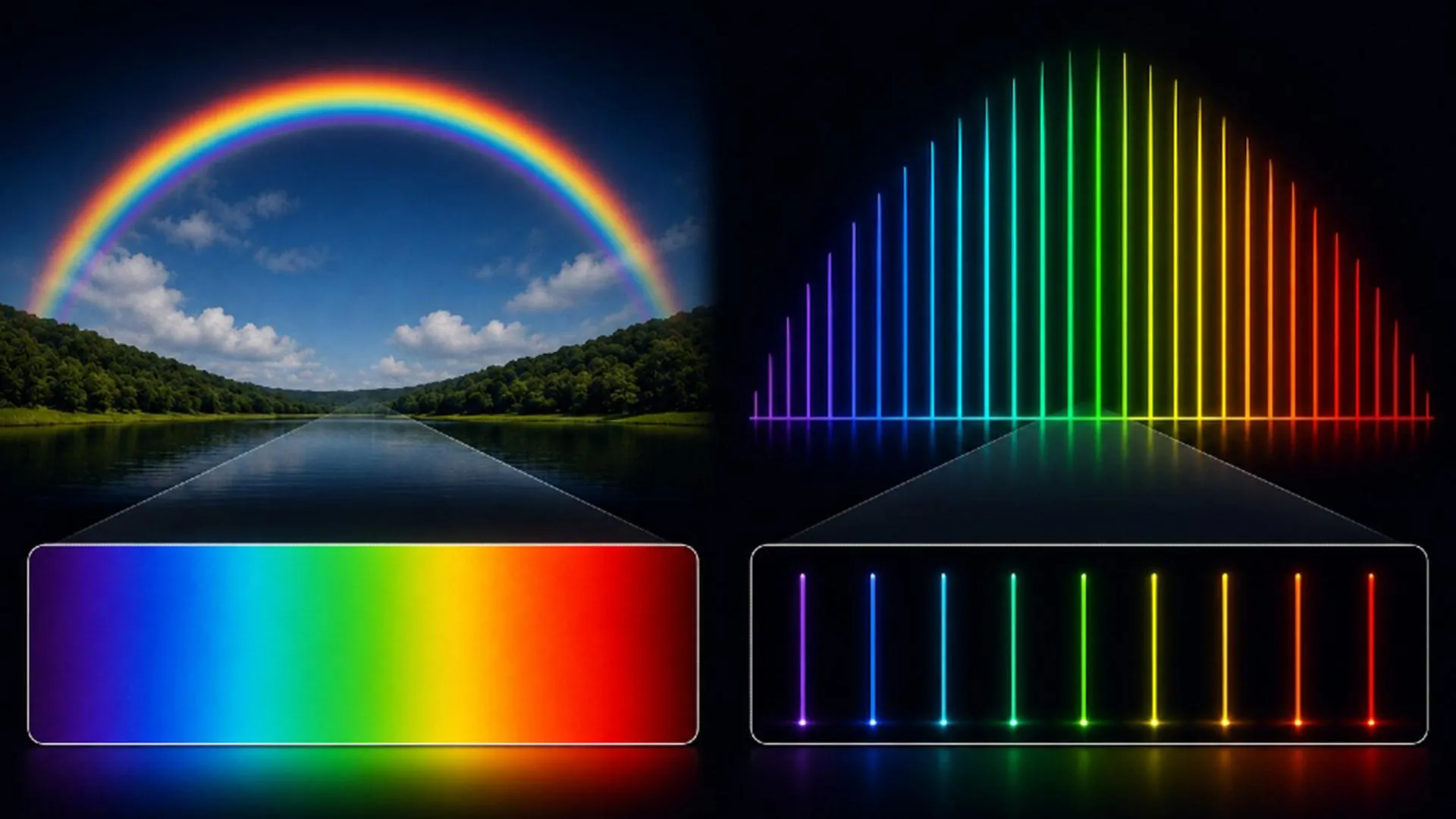
The scientific community is not merely speculating about these communication hurdles; it is actively engaged in the search for extraterrestrial life through a myriad of missions and research initiatives. Over the past few years, space agencies worldwide have launched ambitious probes designed to investigate distant and theoretically habitable worlds. NASA’s Pandora Space Telescope, for instance, was specifically engineered to study transiting exoplanets, scrutinizing their atmospheres for biosignatures – the chemical building blocks and byproducts of life. Similarly, the James Webb Space Telescope is providing unprecedented insights into exoplanet atmospheres, while missions like Europa Clipper and Dragonfly are targeting potentially habitable ocean worlds within our own solar system. The data from these missions, however, will rarely be a clear, unambiguous "smoking gun." Instead, it will likely consist of subtle "spikes of molecules in spectrograph readings," or unusual energy patterns – tantalizing clues that require careful interpretation and contextualization. This inherent ambiguity places an enormous burden on communicators and other intermediaries to translate highly technical findings into understandable, yet scientifically accurate, narratives for a global audience.
Recognizing this challenge, NASA has developed a crucial tool: the Confidence of Life Detection scale. This framework is designed to provide a structured method for evaluating potential evidence of life beyond Earth, ranging from Level 1, defined as "detection of a signal known to result from a biological activity," to Level 7, which signifies "independent, follow-up observations of predicted biological behavior in the environment." This scale is vital for two primary reasons: first, it establishes a rigorous scientific standard for validating claims, preventing premature announcements based on insufficient data. Second, it serves as an invaluable communication tool, allowing scientists to clearly articulate the strength of the evidence to the public, preventing sensationalism and managing expectations. For example, a Level 1 detection might be the presence of a specific organic molecule that could be biological but also has non-biological origins, requiring further investigation. A Level 4 might be multiple independent detections of multiple biosignatures, while a Level 7 would imply direct observation of complex biological processes or structures. Without such a framework, every ambiguous signal could be misconstrued as definitive proof, leading to cycles of excitement and disappointment, further eroding public trust.
The challenge of clear communication is compounded exponentially by the current information landscape. The advent of advanced Artificial Intelligence (AI) has ushered in an era where distinguishing factual information from sophisticated disinformation has become increasingly difficult. AI can generate convincing fake images, videos, and narratives at scale, making it easier for malicious actors or even well-meaning but misinformed individuals to create and disseminate "noise" that drowns out credible scientific voices. Cutting through this pervasive static to confidently convey the stakes involved, the nuances of the evidence, and exactly how far along we are in confirming the existence of alien life will be mission-critical. The public’s ability to discern truth from fabrication will be tested like never before, especially when confronted with a discovery that holds such profound implications for humanity’s self-perception.
In anticipation of these challenges, a 2024 white paper coauthored by Suldovsky alongside a team of communications experts and scientists outlined crucial recommendations. The researchers urged for "fostering inclusivity and collaborating with artists, educators, and communicators." This interdisciplinary approach recognizes that science alone cannot bear the full weight of this communication task. Artists can help humanity visualize the unseeable and grapple with abstract concepts; educators can integrate the search for life into curricula, preparing future generations for the scientific process; and professional communicators can bridge the gap between complex scientific jargon and public understanding, tailoring messages for diverse audiences and cultural contexts.
The paper emphasizes that "It is helpful to view astrobiology discoveries and communication as part of a broader landscape of public trust in science, education, and internal scientific challenges, emphasizing interdisciplinary collaboration, especially with experts in risk and uncertainty communication." This holistic perspective acknowledges that public reaction to alien life will be shaped by pre-existing levels of trust in institutions, scientific literacy, and societal resilience. Proactive efforts, therefore, are not just about crafting the right message, but about building the societal infrastructure of understanding and trust before such a discovery is made. The ethical considerations surrounding the first contact, the potential impact on human belief systems, and the imperative for global unity in response to such a monumental event all underscore the need for a comprehensive and collaborative strategy.
The researchers concluded with a stark yet hopeful statement: "The outcome of a future tentative discovery of life depends partly on these proactive efforts." This underscores the profound responsibility resting upon scientists and communicators alike. The discovery of alien life would undoubtedly be the most significant event in human history, challenging our understanding of the universe and our place within it. How humanity processes this revelation, whether it leads to profound fear or inspiring unity, will hinge critically on the effectiveness of the communication strategies employed. It will require not just scientific rigor, but also profound empathy, cultural sensitivity, and an unwavering commitment to truth in an increasingly complex information environment, preparing the world for a future where we may no longer be alone.