Joko Widodo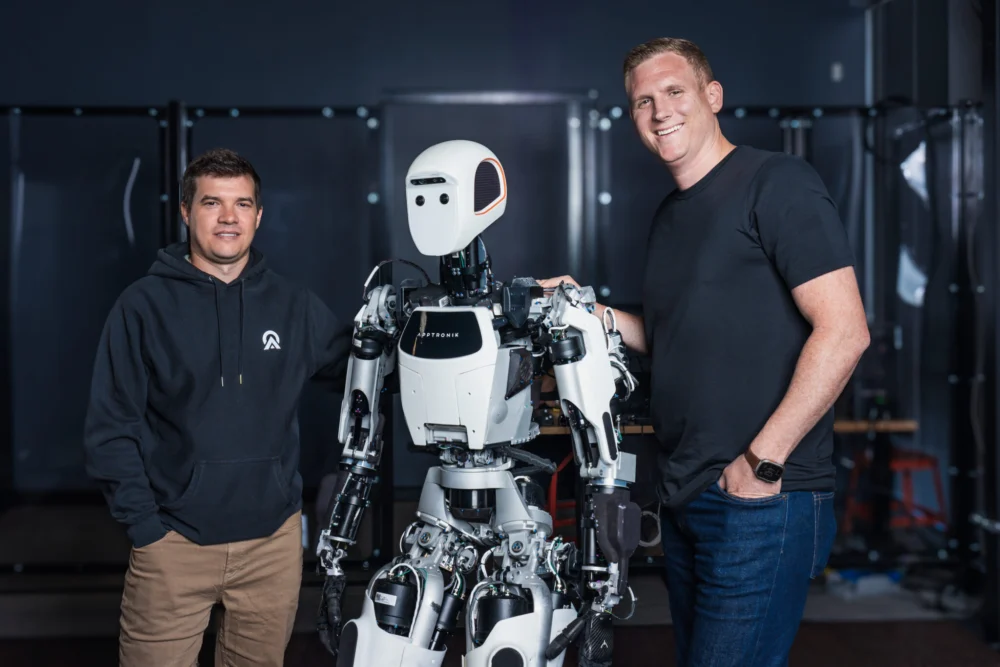
The burgeoning field of AI-powered robotics has witnessed unprecedented investment, and Apptronik, a leading innovator in humanoid robotics, has positioned itself at the forefront of this revolution with a colossal funding round. The Austin-based company announced a staggering $520 million extension to its Series A raise, initially announced in February 2025, catapulting its total Series A funding to an impressive $935 million. This monumental influx of capital underscores surging investor confidence in Apptronik’s vision and its flagship humanoid robot, Apollo, which is poised to redefine human-robot interaction and address critical labor challenges across industries.
This latest extension, which significantly amplifies Apptronik’s financial war chest, brings the company’s total capital raised since its inception in 2016 to nearly $1 billion. The sheer scale of this investment is a testament to the escalating excitement and perceived market opportunity within the robotics sector, particularly concerning general-purpose humanoid robots. Apptronik’s decision to open this extension was driven by “substantial inbound investor interest” following its initial Series A announcement, leading to the round being closed at a valuation three times higher than its initial Series A valuation. While the company refrained from disclosing its new valuation, reports from the Austin-American Statesman in November (presumably 2025, given the article’s timeline references to 2025 and 2026 for broader market data) indicated that Apptronik had already achieved a $5 billion valuation after securing $331 million earlier that month, a sum now confirmed to be part of this expanded Series A extension.
The investor syndicate for this extension round is as impressive as the capital raised, featuring a mix of returning heavyweights and strategic new entrants. Existing backers such as B Capital, Google, Mercedes-Benz, and Peak6 reaffirmed their commitment, signaling continued belief in Apptronik’s trajectory. Their participation, particularly from tech giant Google and automotive titan Mercedes-Benz, highlights the broad applicability and transformative potential of Apptronik’s technology across diverse sectors. Joining this formidable group are new strategic investors, including AT&T Ventures, signifying interest from the telecommunications sector, and manufacturing behemoth John Deere, whose involvement underscores the profound impact humanoid robots are expected to have in industrial and heavy machinery environments. This diverse investor base not only provides capital but also opens doors to invaluable strategic partnerships, industry expertise, and potential future deployments across multiple verticals.
Apptronik’s colossal funding round arrives amid a period of unprecedented growth and investment in the broader robotics industry. Crunchbase data reveals that robotics startup funding reached an all-time high in 2025, with startups in the sector collectively raising nearly $14 billion. This figure represents a substantial leap from the $8.2 billion secured in 2024 and even surpassed the previous peak of $13.1 billion recorded in the venture funding boom year of 2021. This remarkable acceleration underscores a fundamental shift in how investors and industries perceive the readiness and potential of advanced robotics.
The momentum generated in 2025 shows no signs of abating in 2026. Apptronik’s massive raise is one of several indicators. For instance, Skild AI, another innovative robotics company focused on developing an "omni-bodied" brain capable of operating any robot for any task, announced a colossal $1.4 billion raise in January 2026, tripling its valuation to over $14 billion. These staggering figures are reflective of a convergence of factors: rapid advancements in artificial intelligence, particularly generative AI, which is enhancing robot perception, decision-making, and interaction capabilities; persistent global labor shortages across manufacturing, logistics, and service industries; and a growing understanding of the operational efficiencies and safety improvements that automation can bring.
At the heart of Apptronik’s ambitious mission is Apollo, its flagship humanoid robot, meticulously engineered to foster intuitive, safe human-robot interaction and designed for cost-effective manufacturing and deployment. Apptronik was founded on the profound belief that for humanoid robots to achieve mass adoption, they must seamlessly integrate into human environments and workflows without intimidating or complicating interactions. This philosophy is vividly embodied in Apollo’s design. A spokesperson highlighted Apollo’s "approachability," detailing its friendly head and face, eye-level cameras that facilitate natural communication, and a natural color palette. These design choices are deliberate, aimed at making human interactions with the robot feel engaging, comfortable, and less alienating, thereby reducing barriers to widespread acceptance.

Apollo is not merely a technological marvel; it is designed to be a transformative tool. Initially, its focus will be on "revolutionizing" human-robot interaction within demanding industrial sectors such as logistics and manufacturing. In these environments, Apollo is engineered to tackle physically demanding work and labor-intensive operational processes, performing tasks like transporting components, sorting, kitting, and other repetitive or strenuous duties. The vision extends far beyond factories and warehouses, with future planned expansion into retail, healthcare, and eventually, even the home. This phased rollout strategy allows Apptronik to refine Apollo’s capabilities in controlled, high-value environments before addressing the complexities of broader consumer and service applications.
Apptronik’s commercial strategy is already yielding significant traction. The company has secured commercial agreements with prominent players across various industries, including automotive manufacturing, logistics, and consumer packaged goods. Notable partners include Mercedes-Benz, which is not only an investor but also a key automotive manufacturing client, GXO Logistics, a global leader in contract logistics, and Jabil, a diversified manufacturing services company. These partnerships are critical for real-world testing, deployment, and validation of Apollo’s capabilities. Furthermore, Apptronik has forged a strategic partnership with Google DeepMind, the pioneering AI research lab, to "build the next generation of humanoid robots, powered by Gemini Robotics." This collaboration is particularly significant, as it promises to infuse Apollo with cutting-edge AI capabilities, enhancing its autonomy, adaptability, and learning prowess, thus accelerating its evolution into a truly intelligent and versatile assistant.
The company’s deep roots in robotics research provide a strong foundation. Apptronik originated from the esteemed Human Centered Robotics Lab at The University of Texas at Austin, giving it a strong academic and research-driven pedigree. Its expertise extends to a diverse portfolio of 15 robotic systems developed over the years, including the highly advanced humanoid robot Valkyrie for NASA. This experience in developing complex, high-performance robotic systems for demanding applications like space exploration underscores Apptronik’s technical prowess and its ability to deliver on ambitious engineering challenges.
The substantial capital injection will be strategically deployed to ramp up the production of Apollo, transitioning from developmental prototypes and pilot deployments to large-scale manufacturing. A key objective is to expand Apptronik’s global network of commercial and pilot deployments, allowing Apollo to be tested and integrated into a wider array of real-world scenarios. This scaling effort is supported by the company’s rapid growth in human capital; Apptronik has nearly doubled its workforce in the past year, now boasting almost 300 employees, reflecting the intense focus on accelerating development and commercialization.
Apptronik operates on a Robotics as a Service (RaaS) model, a strategic business approach that offers significant advantages to both the company and its clients. Under this model, customers subscribe to the service, which includes not only the Apollo robot hardware but also ongoing software updates, comprehensive service, and continuous support. This approach lowers the upfront capital expenditure for businesses looking to adopt advanced robotics, making the technology more accessible. For Apptronik, RaaS provides a recurring revenue stream, fosters deeper, long-term client relationships, and enables continuous data collection from deployed robots, which is invaluable for iterative improvements and the development of new capabilities.
In conclusion, Apptronik’s record-breaking Series A extension marks a pivotal moment for the company and the broader humanoid robotics landscape. With nearly a billion dollars in funding, strategic partnerships with global leaders, and a meticulously designed, "approachable" humanoid robot in Apollo, Apptronik is exceptionally well-positioned to capitalize on the surging demand for automation and intelligent robotics. As the world grapples with evolving labor dynamics and the need for enhanced productivity, Apollo represents a tangible step towards a future where humans and advanced robots collaborate seamlessly, transforming industries and improving lives, one task at a time. The race for widespread humanoid robot adoption is accelerating, and Apptronik, with its robust financial backing and innovative vision, is clearly a frontrunner.