Faris Adani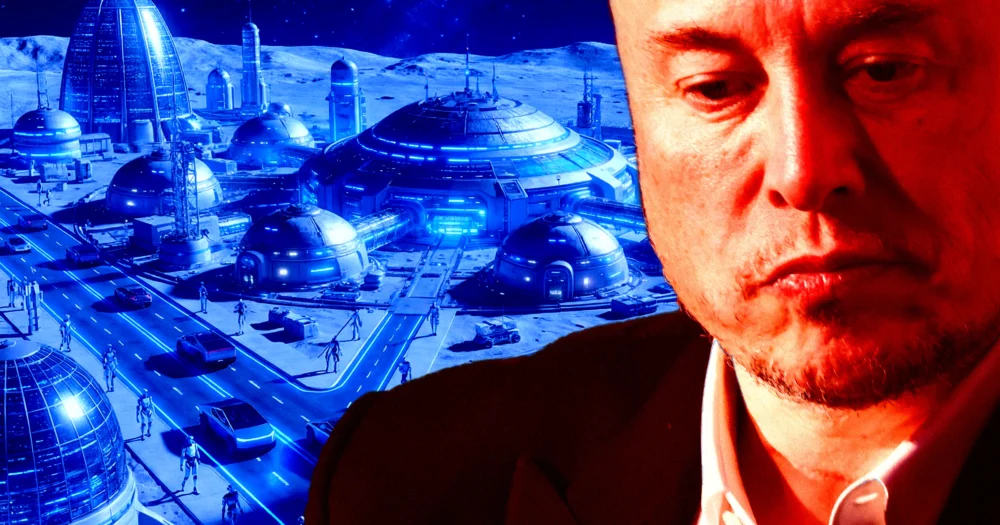
Elon Musk Going Through It After Putting Mars City on Ice
Since the early 2000s, Elon Musk has harbored an unwavering obsession with the idea of colonizing Mars, a planet millions of miles away, renowned for its hostile and arid environment. This long-standing ambition, which has largely defined his public persona and guided his entrepreneurial ventures, appears to have undergone a significant, and perhaps emotionally charged, re-evaluation.
Musk’s initial vision for Mars colonization was surprisingly modest yet profoundly symbolic. In its earliest iteration, he envisioned refurbishing an intercontinental ballistic missile to carry a small greenhouse to the Red Planet. This project, dubbed a “Mars Oasis,” aimed to unfurl a structure capable of growing plants, serving as a beacon of inspiration for humankind and a tangible first step towards interplanetary life. While the “Mars Oasis” never materialized in its original form, the underlying ambition only intensified.
The founding of SpaceX marked a pivotal turning point, transforming Musk’s personal dream into a corporate mission. He dedicated the company to developing groundbreaking space travel technology, specifically with the ultimate goal of establishing a self-sustaining human colony on Mars. Throughout the years, Musk has set highly ambitious, often optimistic, timelines for this endeavor. In 2017, for instance, he famously promised that the inaugural Mars-bound mission would launch by 2022, with the first crewed spacecraft slated to follow just two years later, in 2024. These pronouncements were met with a mix of excitement and skepticism, but they underscored his deep personal commitment to the Martian future.
Musk’s obsession has been evident in myriad ways, from his public appearances wearing an “Occupy Mars” T-shirt, signaling a grassroots movement for interplanetary settlement, to his pointed criticisms of NASA. He has often chided the national space agency for what he perceived as its misplaced priority on the Moon, famously dismissing it as a mere “distraction” from the grander objective of Mars. His rhetoric consistently positioned Mars as the ultimate destination for humanity’s future.
However, in a move that has “flabbergasted” many observers, the mercurial CEO announced over the past weekend that SpaceX’s plans for Mars colonization were officially being put “on ice” for at least half a decade. This abrupt shift was communicated via his social media platform, X (formerly Twitter), where he detailed a dramatic change in strategic focus.
“For those unaware, SpaceX has already shifted focus to building a self-growing city on the Moon, as we can potentially achieve that in less than ten years, whereas Mars would take 20+ years,” Musk tweeted. This statement marked a stark departure from his decades-long fixation on the Red Planet, introducing the Moon as a more immediate and achievable goal for extraterrestrial human settlement.
The reversal appears to be one that Musk is publicly processing, as evidenced by a series of unusually introspective tweets. In one particularly opaque message, which seemed to be missing a crucial word, he reflected on his current emotional state. “Life cannot just be about one sad thing after another,” he wrote, responding to his own tweet about SpaceX building a “system that allows anyone to travel to Moon.” He continued, “There must also be things that make us super excited and inspired about the future. This is one of [sic] things. Bigtime.” The ambiguity of his statement left many wondering whether his excitement was genuinely for the lunar city, or if he was attempting to console himself publicly over the sudden deprioritization of his lifelong Mars dream.
Netizens on X were quick to pick up on the unusually glum and philosophical tone of his missives. “U ok?” read one widely shared response, accompanied by a meme, reflecting the general concern and surprise at the emotional candor from a figure often perceived as unflappable. Beyond personal concerns, the vast majority of other most-liked replies highlighted the pressing issues facing humanity back on Earth. “Most people can’t afford to pay their bills, let alone even look towards the Moon,” one user wrote, articulating a common sentiment that planetary colonization, whether lunar or Martian, remains a distant luxury for many struggling populations.
This public display of introspection comes amidst a period where Musk, who has a documented history of imbibing in substances like ketamine, appears to be grappling with significant personal and professional pressures. Just last week, he tweeted, “Whoever said ‘money can’t buy happiness’ really knew what they were talking about,” a comment that drew little pity given his status as one of the world’s wealthiest individuals. Along with a slew of controversial anti-immigrant posts, Musk has also been actively retweeting optimistic visualizations of what a future Moon city might look like, perhaps signaling an attempt to rally enthusiasm for his new direction.
Several factors likely underpin this strategic pivot towards the Moon. Firstly, the comparative feasibility and timeline are undeniable. The Moon is significantly closer to Earth, reducing travel time, communication delays, and the logistical complexity of supply chains. Establishing a base there would be a far less daunting engineering and financial challenge than a journey to Mars, which presents greater radiation exposure, longer transit times, and extreme environmental conditions. Musk’s own admission that a Moon city is achievable in “less than ten years” compared to Mars’ “20+ years” strongly supports this pragmatic shift.
Secondly, aligning with government contracts, particularly NASA’s Artemis program, appears to be a crucial motivation. NASA has publicly committed to returning humans to the Moon by the mid-2020s and establishing a sustained lunar presence. SpaceX, which has historically relied on substantial government funding—contracts that reportedly saved the company from bankruptcy in its earliest days—stands to gain immensely by prioritizing lunar missions. By focusing on the Moon, SpaceX positions itself perfectly to bid for and secure lucrative contracts from NASA, ensuring a stable revenue stream and strategic partnership.
Thirdly, the timing of this announcement coincides with rumors suggesting SpaceX is planning to go public at a record-breaking valuation of $1.25 trillion, potentially combined with XAI. Such an IPO would bring unprecedented scrutiny to Musk’s space colonization ambitions. Shifting the goalposts to a more immediately achievable lunar objective could be a strategic move to demonstrate tangible progress and a clearer path to profitability for potential investors, rather than holding steadfast to increasingly delayed and complex Mars targets. It allows him to “save face” by pivoting to a more realistic short-term goal while maintaining the long-term vision of multi-planetary existence.
Despite the Moon’s new priority, Mars is still technically on the table, albeit with a significantly delayed timeline. “That said, SpaceX will also strive to build a Mars city and begin doing so in about five to seven years, but the overriding priority is securing the future of civilization and the Moon is faster,” Musk clarified in his Sunday announcement. This statement indicates a re-prioritization rather than an outright abandonment.
However, even this revised Mars timeline remains incredibly ambitious, particularly when considering the current status of SpaceX’s Starship. The company’s website currently still states that it is “planning to launch the first Starships to Mars in 2026.” This goal is enormously challenging, given that the Starship spacecraft has yet to successfully complete an orbital launch and stick the landing, let alone embark on a journey anywhere beyond the immediate vicinity of Earth. The technical hurdles for deep-space missions, including extended life support, radiation shielding, and in-situ resource utilization, are immense. The shift to the Moon, therefore, might also serve as a necessary proving ground for Starship and other technologies essential for eventual Mars colonization.
In conclusion, Elon Musk’s recent pivot from Mars to the Moon represents a complex confluence of personal reflection, strategic business decisions, and the harsh realities of space exploration. While his decades-long dream of Mars remains, it has been temporarily eclipsed by the more immediate and pragmatically advantageous goal of establishing a lunar city. This dramatic shift underscores the dynamic nature of space exploration and the constant balancing act between visionary ambition and technical, financial, and political realities.