anjir abdul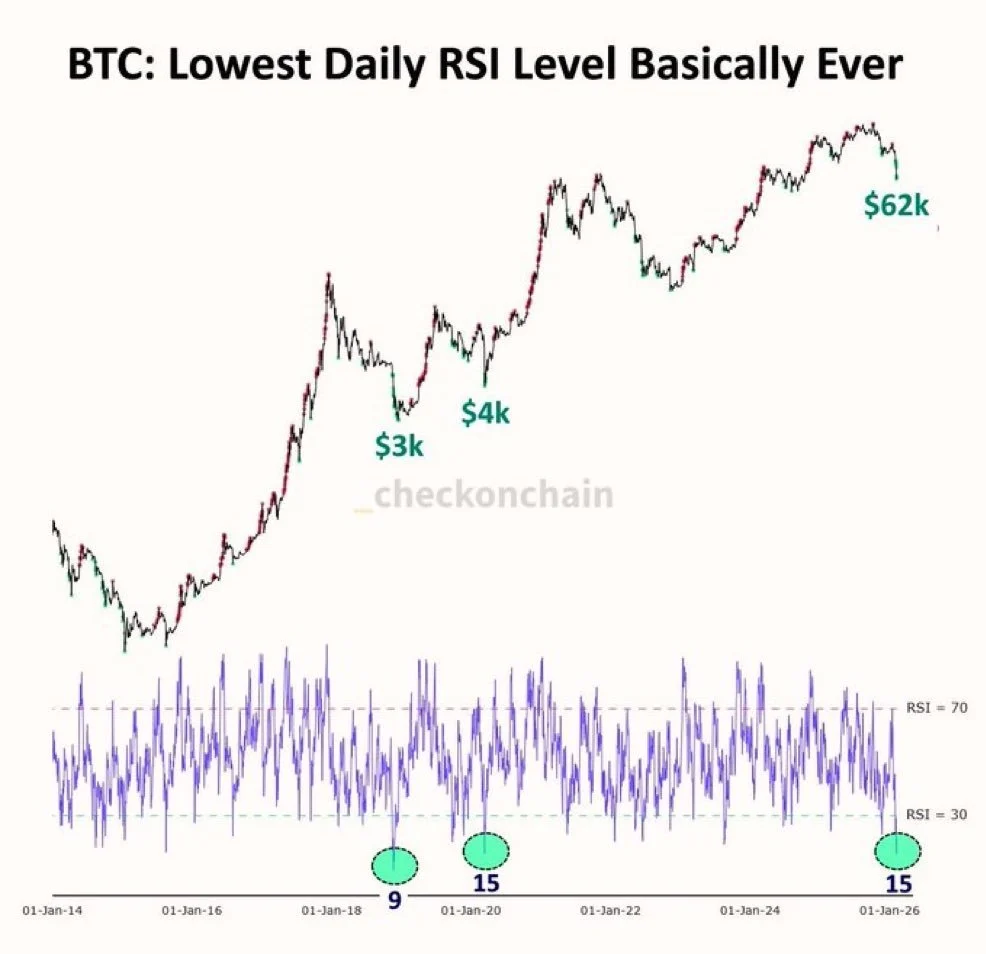
The cryptocurrency market finds itself at a pivotal juncture, with Bitcoin’s recent sharp correction prompting significant debate among analysts regarding the trajectory of the current cycle. According to a comprehensive report by Kaiko Research, this downturn, occurring at the start of the month, could very well represent a critical "halfway point" in the ongoing bear market, setting the stage for what comes next for the flagship digital asset and the broader crypto ecosystem, including Ethereum. Bitcoin (BTC) notably plunged to $59,930 on Friday, marking its lowest valuation since October 2024, a period preceding the re-election of US President Donald Trump, as indicated by TradingView data. This significant decline has sparked intense discussion, suggesting a potential shift away from the "euphoric post-halving phase" that typically follows Bitcoin’s supply-reducing events, moving instead into a more conventional bear market period that Kaiko historically projects to last approximately 12 months before a new accumulation phase takes hold.
In a detailed research note shared with Cointelegraph on Monday, Kaiko underscored the gravity of Bitcoin’s 32% crash, identifying it as the most substantial correction observed since the 2024 Bitcoin halving event. This depth of correction lends considerable weight to their "halfway point" hypothesis for the current bear market. The research emphasizes that a thorough "analysis of on-chain metrics and comparative performance across tokens reveals a market approaching critical technical support levels that will determine whether the four-year cycle framework remains intact." This statement highlights the intricate dance between historical patterns and evolving market dynamics, leaving investors and analysts scrutinizing every data point for clues about Bitcoin’s future direction.
Kaiko’s report meticulously outlines several emerging on-chain bear market signals that paint a picture of cooling investor enthusiasm and deleveraging across the market. A prominent indicator is the substantial 30% drop in aggregate spot crypto trading volume across the 10 leading centralized exchanges. This metric plummeted from approximately $1 trillion in October 2025 to a more modest $700 billion in November, signaling a significant reduction in market activity and liquidity. Furthermore, the combined open interest for Bitcoin and Ether (ETH) futures contracts witnessed a notable decline, shrinking from $29 billion to $25 billion over the past week—a 14% reduction. Kaiko interprets this as a clear reflection of ongoing deleveraging, where traders are unwinding their leveraged positions, often in response to increased volatility or a lack of upward momentum, contributing to selling pressure and reduced market risk.

While Bitcoin has largely realigned with its historical four-year halving cycle since the beginning of the year, accurately determining the ultimate depth and duration of the current bear market remains a complex challenge. Shawn Young, chief analyst at MEXC Research, points out that "many catalysts that fueled BTC’s rally to $126,000 are still in effect," suggesting underlying strength despite the recent downturn. These catalysts could include continued institutional adoption, the expanding ecosystem of Bitcoin spot ETFs, growing global macroeconomic liquidity, and the increasing recognition of digital assets as a legitimate asset class. Young’s perspective offers a glimmer of optimism, noting that "with oversold indicators emerging on multiple timeframes, the rebound conversation around BTC is more a question of when, not if." He further suggests that Bitcoin may be entering a new, potentially less predictable cycle, whose full characteristics will only become apparent over the next year, implying a departure from strictly adherence to past halving cycle patterns.
A critical question currently occupying the minds of investors and analysts alike is whether the recent dip to $60,000 unequivocally represents the low point of the current bear market. This price level holds particular significance as it roughly aligns with Bitcoin’s 200-week moving average, a historically robust indicator that has often functioned as a long-term support level during previous market corrections. However, the path forward is not without its uncertainties. Nicolai Sondergaard, a research analyst at crypto intelligence platform Nansen, cautioned Cointelegraph that "more market volatility is expected in the absence of crypto-specific market catalysts." He elaborated on the ongoing debate, stating, "With that said, it is still very hard to say if it means we are going back to the conventional 4-year cycle. I have seen many prominent figures in the space air the idea, but equally many who do not think so." This divergence of opinion underscores the unique challenges of the current market, which is influenced by a blend of historical patterns, evolving institutional interest, and broader macroeconomic factors.
Adding another layer of complexity to the bottom-finding quest, Kaiko’s analysis highlighted that Bitcoin’s 52% retracement from its previous all-time high is "unusually shallow" when compared to historical bear market cycles. Previous major drawdowns have typically seen retracements in the range of 60% to 68%. If the current cycle were to "align more closely" with these historical drawdowns, Kaiko suggests that a Bitcoin cycle bottom could realistically fall somewhere between $40,000 and $50,000. This projection implies further downside potential, challenging the notion that $60,000 is a definitive floor.
Conversely, some prominent market participants argue strongly that $60,000 has indeed already marked a local bottom. Michaël van de Poppe, a respected analyst and founder of MN Capital, publicly declared the crash to $60,000 as the "local market bottom" for Bitcoin’s price. His conviction stems from a confluence of factors, including a "record low in investor sentiment" and a "critical low in the relative strength index (RSI)." The Relative Strength Index is a momentum oscillator that measures the speed and change of price movements. When RSI sinks to historically low values, similar to those last observed in 2018 and 2020—periods that preceded significant market rebounds—it often signals that an asset is oversold and due for a bounce, attracting contrarian investors looking for opportunities.

Beyond Bitcoin, the broader crypto market, including Ethereum, remains highly correlated and subject to similar forces. The mention of "Trend Research cuts ETH exposure by over 400K as liquidation risk rises" in the original context highlights the cautious stance adopted by some institutional players, indicating concerns about broader market stability. Conversely, "Binance adds $300M in Bitcoin to SAFU reserve during market dip" demonstrates a strategic move by a major exchange to bolster its reserves during a downturn, potentially signaling confidence in long-term recovery and aiming to reassure users. These actions underscore the nuanced and often conflicting signals present in the current market environment.
The path ahead for Bitcoin, Ethereum, and the wider crypto market is likely to be characterized by continued volatility and a dynamic interplay of on-chain data, macroeconomic shifts, and evolving investor sentiment. While historical halving cycles offer a framework for understanding market behavior, the increasing maturity of the crypto market, coupled with its growing integration into traditional finance, introduces new variables. Factors such as global interest rate policies, inflation trends, geopolitical developments, and the regulatory landscape—especially post-2024 US presidential election—will continue to exert significant influence. Furthermore, technological advancements within the blockchain space, from Ethereum’s ongoing upgrades to the proliferation of Layer 2 solutions and decentralized finance innovations, could serve as future catalysts, potentially reshaping market dynamics irrespective of historical patterns. Investors are thus faced with a complex puzzle, where patience, diligent research, and a clear understanding of both risk and opportunity will be paramount in navigating the evolving digital asset landscape.
Cointelegraph is committed to independent, transparent journalism. This news article is produced in accordance with Cointelegraph’s Editorial Policy and aims to provide accurate and timely information. Readers are encouraged to verify information independently. Read our Editorial Policy https://cointelegraph.com/editorial-policy