Faris Adani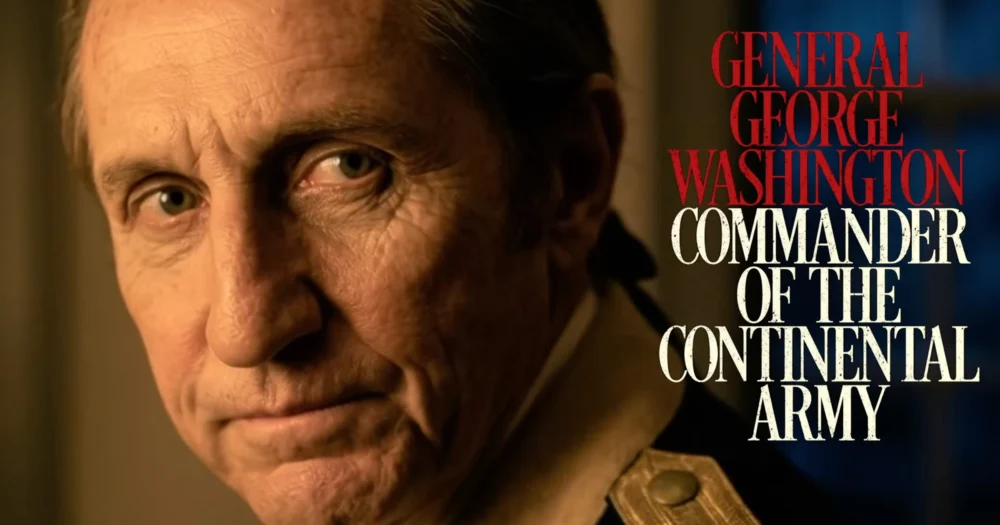
Darren Aronofsky, a filmmaker long celebrated and occasionally reviled for his uncompromising vision and psychologically intense narratives, appears to have spectacularly torpedoed his artistic credibility with the release of an almost entirely AI-generated historical video series, "On This Day … 1776." The director, whose filmography boasts critical darlings like the visceral psychological thriller "Black Swan," the poignant character study "The Wrestler," and the harrowing descent into addiction in "Requiem for a Dream," has always pushed boundaries. However, this latest endeavor, a collaboration with technological behemoths and media powerhouses, has not only pushed boundaries but seemingly obliterated the very foundation of what many consider compelling cinematic artistry, drawing near-universal condemnation for its egregious visual shortcomings and artistic vacuity.
The series, consisting of bite-sized, several-minute "episodes," purports to chronicle significant moments of the American Revolutionary War. Yet, instead of illuminating history, it has inadvertently served as a stark, cautionary tale about the current limitations and inherent pitfalls of generative artificial intelligence in creative production. The most immediate and glaring criticism leveled against "On This Day … 1776" centers on its visuals, which have been widely described as an "awful AI slop." Viewers and critics alike were quick to point out persistent, jarring anachronisms that shatter any semblance of historical immersion. Imagine colonial figures discussing pivotal revolutionary strategies while standing in front of houses adorned with undeniably modern vinyl siding, or soldiers marching through landscapes featuring architectural styles centuries ahead of their time. These are not isolated incidents but recurring visual blunders that underscore a profound lack of historical fidelity and artistic oversight, betraying the very premise of a "historical" series.
The critical reception has been nothing short of brutal, with esteemed publications vying to craft the most scathing indictment. Stuart Heritage of The Guardian, under the aptly titled headline "Requiem for a film-maker," did not mince words. He lambasted the show’s faux-photorealism aesthetic as "ugly as sin," a description that resonated deeply across the internet. Heritage astutely identified the series’ overwhelming reliance on center-framed, back-of-the-head shots – a common tell-tale sign of AI’s current struggle to generate convincing and consistent human faces and expressions. "This is, after all," Heritage incisively noted, "because the back of an AI-generated head is far less likely to send people into screaming fits of trauma than an AI-generated face." This observation cuts to the heart of the uncanny valley effect, where AI-generated human forms fall just short of realism, triggering revulsion rather than engagement. He concluded his review with a stark declaration: "‘On This Day … 1776’ is genuinely very horrible to watch, and everybody involved should be ashamed. It is by far the most disturbing thing Aronofsky has made, and I’ve seen the last eight minutes of ‘Requiem for a Dream.’" Such a comparison, juxtaposing the AI series with one of Aronofsky’s most infamously bleak and disturbing film conclusions, speaks volumes about the perceived artistic offense.
Beyond the immediate visual atrocities, the fundamental "filmmaking" approach of the series has drawn equally severe criticism. The entire show, according to numerous analyses, operates in a mode of "meaningless montage." This isn’t a stylistic choice, but rather a concession to the inherent limitations of current generative AI, which excels at stitching together collections of barely-related, aesthetically generic shots rather than crafting a coherent, emotionally resonant narrative. The effect is akin to watching an extended, endlessly looping advertisement – a visual assault that lacks narrative progression, character development, or any discernible artistic intention. Whereas a commercial usually possesses the good manners to conclude within a minute, Aronofsky’s "monstrosity," as some have termed it, relentlessly "slogs on with its cavalcade of quick-cutting but slowly-moving close-ups, as if to demonstrate to maximum effect how utterly inane this all looks." The absence of genuine human creativity, the lack of a director’s guiding hand in shaping meaning or evoking emotion, leaves viewers with an overwhelming sense of emptiness, a hollow spectacle devoid of soul.
What makes this artistic failure particularly perplexing and disheartening is the sheer weight of the names and resources attached to the project. "On This Day … 1776" is not some bedroom experiment by an amateur AI enthusiast; it is a high-profile collaboration involving Aronofsky’s own AI studio, Primordial Soup, alongside Google’s cutting-edge DeepMind lab, the enterprise software giant Salesforce, and the venerable TIME Studios. This formidable alliance suggests an ambition to present this series not merely as an experiment, but as a "high watermark" – a definitive demonstration of what AI, when paired with visionary human talent and lavish financial backing, could contribute to storytelling. Yet, as Angie Han incisively articulated for The Hollywood Reporter, "keep watching for more than a few seconds, and it quickly becomes apparent that slop is slop, no matter how it’s gussied up."
Han’s critique further dismantled the project’s pretensions: "‘On This Day’ positions itself as a well-funded, high-profile, apparently good-faith effort to demonstrate how AI might be deployed as a tool to enhance rather than replace human artistry. Instead, it only goes to show that the problem with AI in filmmaking runs deeper than its technical limitations." This assessment highlights a crucial distinction: the issue isn’t just that AI can’t perfectly render a face or a period-accurate building. The deeper problem lies in its current inability to imbue content with meaning, to craft a compelling narrative, to surprise, to evoke genuine emotion, or to present a cohesive artistic vision. AI, in its current iteration, struggles with the very essence of human creativity – the nuanced choices, the subtle emotional cues, the intentional imperfections, and the unique perspective that define a filmmaker’s voice.
Han continued to ponder the sobering implications: "How depressing is it that with the guidance of a visionary filmmaker like Aronofsky, with the lavish financial backing of companies like Google and Salesforce, this thing – a pair of shoddy, TikTok-length clips that would barely pass muster as animated illustrations for a high-school history lesson, let alone coherent pieces of storytelling in their own right – was the best anyone could make of the supposedly boundless limitations of AI?" This question hangs heavy, challenging the pervasive hype surrounding AI’s creative potential. If such a powerful confluence of talent and technology yields results so profoundly underwhelming, it forces a re-evaluation of the current narrative surrounding AI’s role in the arts. It suggests that while AI may serve as a potent tool for certain tasks, its capacity for true, original, and meaningful artistic creation remains profoundly limited, perhaps even nonexistent, in a way that can genuinely enhance or replace human artistry without sacrificing soul and substance.
The irony of Aronofsky, once a director known for pushing the boundaries of human-driven cinema, now embracing an AI-centric approach has not been lost on observers. His apparent immersion in the AI hype machine draws parallels to figures like Elon Musk, for whom Aronofsky was, at one point, slated to direct a biopic. This shift signals a broader trend where established figures, perhaps swayed by the allure of technological novelty or the promise of efficiency and funding, might be inadvertently contributing to what researchers increasingly warn against: "cultural stagnation." When AI, trained on existing data, merely regurgitates and remixes what has come before, it risks creating a homogenous, uninspired, and ultimately stagnant cultural landscape, devoid of genuine innovation, unexpected brilliance, or the messy, beautiful spark of human genius. Aronofsky’s "On This Day … 1776" stands as a stark, if unintentional, monument to this potential future – a future where technical proficiency replaces artistic integrity, and historical narrative is sacrificed on the altar of algorithmic "efficiency."