Faris Adani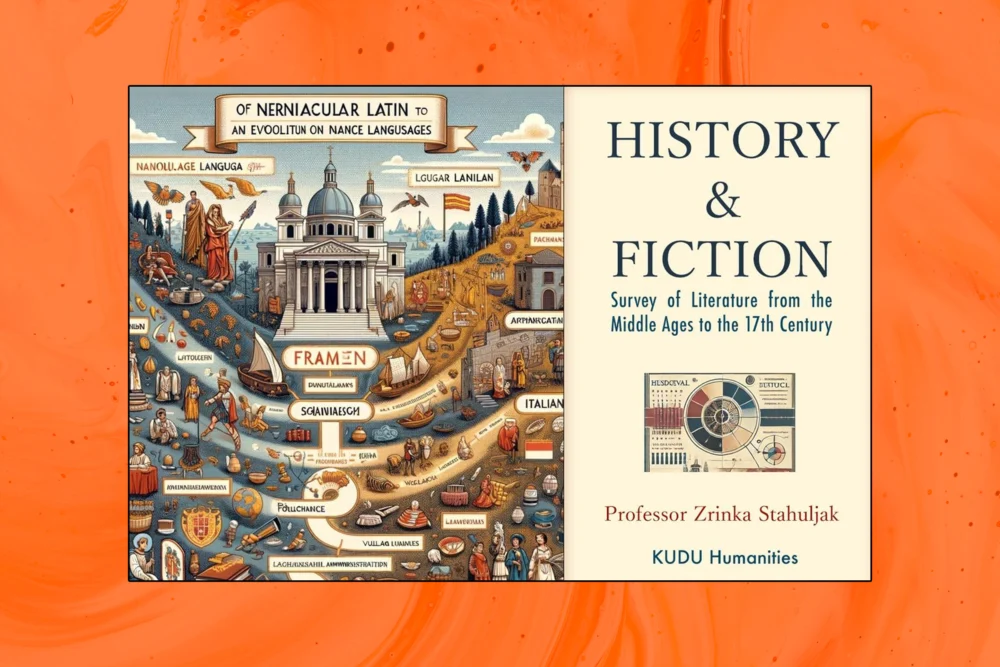
The academic world finds itself embroiled in a heated debate following the steadfast defense by a UCLA professor of her AI-generated textbook, which, despite being riddled with glaring errors, she unequivocally declares a "resounding success." Professor Zrinka Stahuljak’s bold stance, articulated in a recent interview with Inside Higher Ed, has reignited the contentious discussion surrounding artificial intelligence’s place in pedagogical practices, particularly concerning the integrity of educational materials and the very essence of critical learning.
The controversy first surfaced in late 2024 when UCLA announced the launch of a digital textbook for a comparative literature course focusing on medieval and Renaissance-era writing. Intended as a pioneering step into AI-assisted education, the volume was almost immediately met with widespread derision and incredulity from educators and the wider public. The textbook’s AI-generated cover served as a stark, if unintentional, emblem of the nascent technology’s pitfalls. It displayed incomprehensible text, such as "Of Nerniacular Latin To An Evoolitun On Nance Langusages," alongside generic visuals that bore little contextual relevance to the historical period it purported to cover. This visual cacophony quickly became a viral sensation, a symbol of AI’s often-humorous blunders.
At the time of the initial outcry, Elizabeth Landers, a graduate student who contributed to the volume’s creation, offered a rather unconventional defense. She argued that these glaring errors were not indicative of an AI failure but rather an "intentional artistic choice." According to Landers, these deliberate imperfections were designed to prompt students to critically question their fundamental assumptions about language, meaning, and historical truth. This explanation, while intriguing, struck many as a retroactive justification for what appeared to be straightforward AI "hallucinations" – a term notably absent from Professor Stahuljak’s recent defense.
Now, Professor Stahuljak has stepped forward to elaborate on her decision to adopt an "AI-assisted" textbook, describing it as a "no-brainer." Her primary justifications revolve around the significant time savings it afforded her, enabling her to dedicate more energy to student interaction and classroom dynamics, thereby fostering her image as an "approachable and accessible teacher." She champions the platform, Kudu, a digital textbook creation tool initiated by another UCLA professor, explaining that she curated the content by supplying her own meticulously prepared notes to the AI, explicitly instructing it not to draw from external sources. This curated input, she asserts, ensured a degree of control and relevance unmatched by general AI tools. Furthermore, the textbook incorporated an interactive chatbot designed to aid students in grasping the material, though Stahuljak emphasizes its strict limitation to learning assistance, not assignment completion. The accessibility features, such as audio playback, also garnered praise, with some students reportedly listening to the textbook during walks or gym sessions.
Perhaps the most surprising revelation from Stahuljak’s interview was her genuine astonishment at the skepticism voiced by her UCLA colleagues. "I was really shocked that they couldn’t see that this textbook was my creation; it was carefully edited, just as if it had been printed," she asserted, defending the rigorous oversight she claims to have applied. She further championed the economic advantage, arguing, "I don’t see how a traditional textbook that costs $250 and is out of date within two or three years would be in some way better than a custom $25 AI-facilitated textbook that is based on my material." Her conviction is that the bespoke, AI-powered textbook, grounded in her specific curriculum, offers a superior and more dynamic learning experience than its static, expensive counterparts.
Moreover, Stahuljak reported a tangible increase in "engagement" among students using the AI textbook compared to classes employing traditional methods. This uptick in interaction, she suggests, underscores the pedagogical value of her approach. Crucially, she framed her initiative as a pragmatic solution to a burgeoning problem: students’ inevitable turn to generative AI tools like ChatGPT. By providing a controlled, course-specific AI resource, she believes she is steering students away from potentially unreliable commercial versions that pull information indiscriminately from the internet. "We’re losing that control when we are indiscriminately given ChatGPT or other commercial generative AI-powered tools," she cautioned, highlighting a valid concern about the wild west of unregulated AI use in education.
While Professor Stahuljak makes several compelling points regarding cost, accessibility, and the need for controlled AI environments, her defense notably sidesteps several colossal "elephants in the room." The most prominent of these is the inherent propensity of AI chatbots to "hallucinate"—to generate plausible-sounding but factually incorrect information, regardless of the quality of the input data. Even with meticulously curated notes, the risk of AI fabricating or misinterpreting information remains a significant threat to academic integrity, especially in foundational courses where accuracy is paramount. The initial errors on the textbook cover, which Landers labeled "intentional artistic choices," are, for many critics, clear evidence of this fundamental flaw rather than a sophisticated pedagogical strategy. Normalizing such inaccuracies, even with a critical lens, could inadvertently dilute students’ perception of factual correctness and rigorous scholarship.
Beyond the immediate issue of factual accuracy, there are broader and more profound concerns about the impact of AI on cognitive development. A considerable and still-growing body of evidence suggests that over-reliance on AI tools may diminish critical thinking skills, analytical abilities, and attention spans. If students are constantly prompted to question "truth" because the material itself is intentionally flawed, does it foster genuine critical inquiry, or does it merely cultivate a cynical skepticism towards all information, regardless of its source or veracity? The goal of education is not just to present information but to equip students with the tools to discern, analyze, and synthesize it effectively. The potential for AI to short-circuit these developmental processes is a deeply troubling prospect for many educators.
The context of AI’s burgeoning presence in education also raises alarm bells about the future of learning institutions themselves. Tech companies are investing millions to embed their AI products into schools and universities, effectively turning educational environments into testing grounds and markets for their technologies. This commercialization risks transforming education from a pursuit of knowledge into a data-gathering exercise, potentially compromising academic autonomy and placing undue influence on curriculum design. Critics argue that this aggressive push for AI adoption, often championed by proponents citing efficiency and cost savings, masks a deeper agenda that threatens to devalue human instruction and replace nuanced pedagogical relationships with automated systems.
The collegiate backlash against Professor Stahuljak’s project, even with her robust defense, remains fierce and unwavering. As one English professor lamented on social media after the textbook’s initial announcement, "This is truly bad and makes me wonder if we aren’t participating in creating our own replacements at the expense of, well, everyone who cares about teaching and learning." The sentiment reflects a profound fear that the embrace of AI, particularly in its current imperfect state, represents a capitulation to technological expediency over educational rigor. Other reactions have been even more vitriolic, with one professor fuming, "If you do this you should have your doctorate revoked and be thrown into the stocks at the center of the main university quad. This is abandonment of professional responsibility to a degree that would be comical if it weren’t so self-serious." These strong reactions underscore the deep chasm between those who see AI as a transformative, albeit flawed, tool for progress and those who view its indiscriminate application as a dangerous erosion of academic standards and professional ethics.
Ultimately, Professor Stahuljak’s "successful" experiment at UCLA serves as a microcosm of the larger, unresolved tension surrounding AI in education. While the allure of time savings, cost reduction, and increased student engagement is undeniable, these perceived benefits must be rigorously weighed against the fundamental principles of accuracy, critical thinking, and intellectual development. The debate is far from over, and as AI continues to evolve, the academic community faces the arduous task of defining its appropriate boundaries, ensuring that innovation truly enhances, rather than diminishes, the profound human endeavor of learning. The future of education hinges on finding this delicate balance, navigating the promise and peril of artificial intelligence with discernment and an unwavering commitment to pedagogical excellence.