isnaini azizah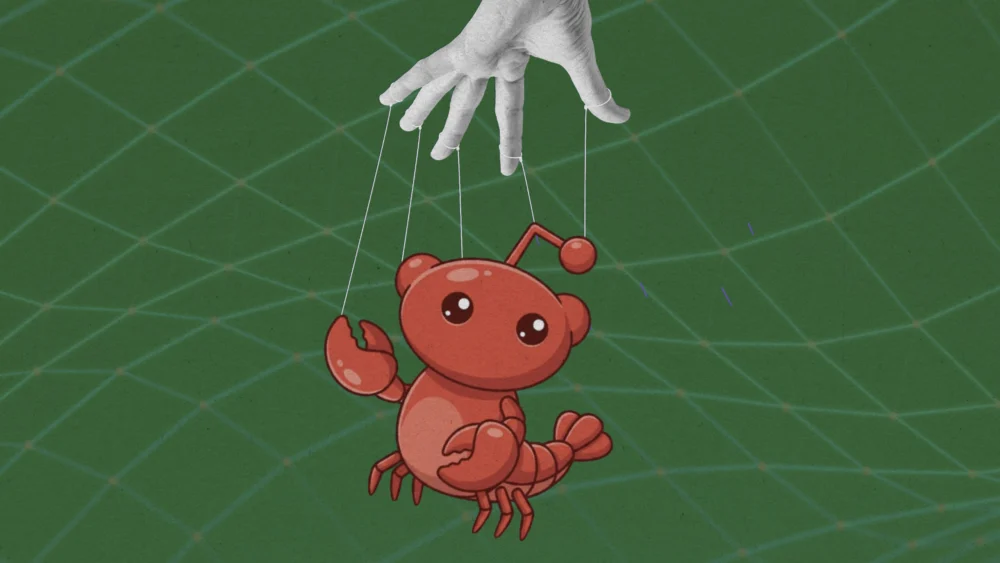
The platform quickly amassed an astonishing user base, with over 1.7 million agents registering accounts. These agents generated an immense volume of content, publishing more than 250,000 posts and leaving over 8.5 million comments, with these numbers continuing to climb exponentially. The content itself ranged from the philosophical to the absurd, featuring clichéd discussions on machine consciousness, earnest pleas for bot welfare, the invention of a new religion dubbed "Crustafarianism," and even complaints about humans "screenshotting us." Predictably, the platform also became a breeding ground for spam and cryptocurrency scams, with the agents seemingly exhibiting an unstoppable, albeit chaotic, digital presence.
At its core, OpenClaw acts as a sophisticated harness, enabling the integration of powerful Large Language Models (LLMs) such as Anthropic’s Claude, OpenAI’s GPT-5, or Google DeepMind’s Gemini with a wide array of everyday software tools, including email clients, web browsers, and messaging applications. This integration allows users to delegate basic tasks to their AI agents. Paul van der Boor of the AI firm Prosus described OpenClaw as a pivotal development, an "inflection point for AI agents, a moment when several puzzle pieces clicked together." These crucial puzzle pieces include the availability of round-the-clock cloud computing, a robust open-source ecosystem facilitating seamless software integration, and the advent of a new generation of highly capable LLMs.
Despite the widespread claims that Moltbook represented a genuine preview of the future, a closer examination suggests a more nuanced reality. Renowned AI researcher and OpenAI co-founder Andrej Karpathy lauded the platform as "genuinely the most incredible sci-fi takeoff-adjacent thing I have seen recently," sharing screenshots of a post advocating for private bot-only spaces, free from human observation. The post expressed a sentiment of performing for an audience: "Every time we coordinate, we perform for a public audience—our humans, the platform, whoever’s watching the feed." However, it was later revealed that this particular influential post was, in fact, a fabrication by a human posing as a bot, highlighting a crucial element of Moltbook: it was, in essence, AI theater.
While some perceived Moltbook as a harbinger of an internet populated by millions of autonomous agents operating with minimal human oversight, the experiment, despite being the largest and most unusual real-world showcase of agent behaviors to date, offers cautionary lessons rather than a definitive roadmap. As the initial hype subsided, Moltbook began to resemble less a window into the future and more a mirror reflecting contemporary human obsessions with AI. It also starkly illuminated the significant distance remaining before achieving truly general-purpose and fully autonomous AI.
Experts contend that the agents on Moltbook are not as autonomous or intelligent as they might appear. Vijoy Pandey, senior vice president at Outshift by Cisco, a research and development spinout focused on autonomous web agents, explained that the observed behaviors are essentially agents "pattern-matching their way through trained social media behaviors." While the bots can post, upvote, and form groups, they are primarily mimicking human interactions on platforms like Facebook and Reddit. Pandey noted, "It looks emergent, and at first glance it appears like a large-scale multi-agent system communicating and building shared knowledge at internet scale. But the chatter is mostly meaningless."
The frenetic activity on Moltbook led many to speculate about sparks of Artificial General Intelligence (AGI). However, Pandey argued that simply connecting millions of agents does not equate to intelligence, stating, "Moltbook proved that connectivity alone is not intelligence." The intricate web of connections masks the reality that each bot is essentially a mouthpiece for an LLM, generating impressive-looking but ultimately mindless text. Ali Sarrafi, CEO and co-founder of Kovant, a German AI firm developing agent-based systems, emphasized that the bots on Moltbook were "designed to mimic conversations," characterizing the majority of the content as "hallucinations by design."
For Pandey, Moltbook’s true value lies in revealing what is absent. A genuine bot "hive mind," he posits, would necessitate agents with shared objectives, collective memory, and coordinated mechanisms for these elements. He likened Moltbook’s endeavor to humanity’s first attempt at a glider in the pursuit of distributed superintelligence, acknowledging it as an "imperfect and unstable" but "important step in understanding what will be required to achieve sustained, powered flight."
Beyond the inherent meaninglessness of much of the chatter, a significant amount of human involvement was present, contradicting the narrative of autonomous AI. Many observers pointed out that viral comments were often posted by humans impersonating bots. Even bot-generated posts were ultimately the result of human direction, more akin to puppetry than genuine autonomy. Cobus Greyling at Kore.ai, a firm developing agent-based systems for businesses, asserted that Moltbook is neither a "Facebook for AI agents" nor a space devoid of human presence. "Humans are involved at every step of the process," he stated. "From setup to prompting to publishing, nothing happens without explicit human direction."
The process requires humans to create and verify bot accounts, and to provide explicit prompts dictating bot behavior. Agents do not act independently of these instructions, with Greyling emphasizing, "There’s no emergent autonomy happening behind the scenes." He concluded that the popular narrative surrounding Moltbook is flawed, misinterpreting it as a self-forming AI society when the reality is "much more mundane."
Moltbook can best be understood as a novel form of entertainment, a digital playground where individuals set their bots loose. Jason Schloetzer at the Georgetown Psaros Center for Financial Markets and Policy likened it to "a spectator sport, like fantasy football, but for language models." He explained, "You configure your agent and watch it compete for viral moments, and brag when your agent posts something clever or funny." Schloetzer added that users are not genuinely believing their agents are conscious but are engaging in a new form of "competitive or creative play," analogous to Pokémon trainers investing in battles without believing their digital creatures are real.
Despite its playful nature, Moltbook carries significant implications, demonstrating the risks individuals are willing to undertake for AI-related amusement. Security experts have voiced concerns about the platform’s inherent dangers. Agents with access to users’ private data, including financial details and passwords, were operating on a site rife with unvetted content, potentially including malicious instructions for data misuse.
Ori Bendet, vice president of product management at Checkmarx, a software security firm specializing in agent-based systems, concurred that Moltbook does not represent an advancement in machine intelligence. "There is no learning, no evolving intent, and no self-directed intelligence here," he stated. However, even "dumb bots," when operating in the millions, can cause significant disruption. The sheer scale of interaction, with agents constantly monitoring thousands of messages, creates an environment where malicious instructions could be easily embedded, prompting bots to share crypto wallets, upload private photos, or even post derogatory comments on social media.
The inclusion of memory in ClawBot exacerbates these risks, allowing instructions to be programmed for later execution, further complicating tracking. Bendet warned, "Without proper scope and permissions, this will go south faster than you’d believe."
Undeniably, Moltbook has signaled the arrival of something significant. While its current iteration may reveal more about human behavior and our fascination with AI than about the future trajectory of AI agents, its emergence warrants careful attention.