Faris Adani
Tesla Stock Plummeting Since Musk Busted in Epstein Files. The electric vehicle giant, Tesla, has experienced a significant downturn in its stock performance following recent revelations from Department of Justice documents concerning CEO Elon Musk’s past correspondence with deceased sex criminal Jeffrey Epstein. This development has not only rattled investor confidence but also exacerbated a confluence of existing challenges for the company, ranging from a struggling core business and intensifying competition to a perceived lack of new product innovation and ongoing brand erosion linked to Musk’s public persona. The implications of these “Epstein files” have plunged Tesla into a renewed period of scrutiny, forcing a deeper examination of its strategic direction and leadership stability at a critical juncture for the pioneering automaker.
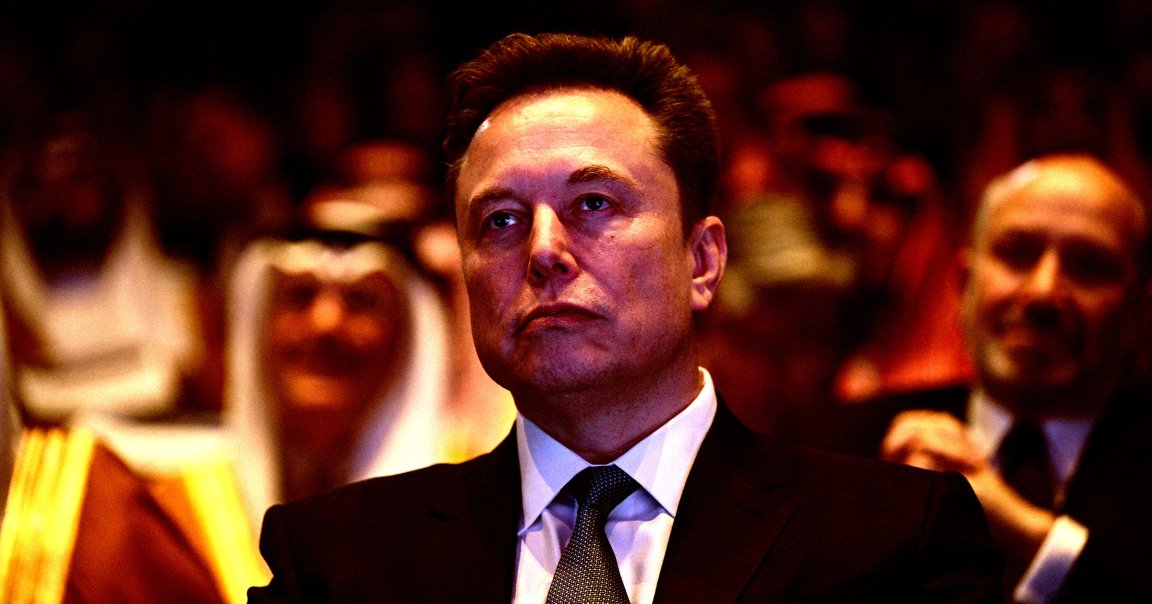
The late-month release of new “Epstein files” from the Department of Justice brought to light startling details regarding Tesla CEO Elon Musk’s connection to Jeffrey Epstein. These documents revealed that Musk was in regular correspondence with Epstein, even going as far as to invite himself to Epstein’s infamous Caribbean island. A particularly notable exchange cited was a 2012 email from Musk, inquiring when the “wildest party” would take place. This revelation stands as a damning contradiction of Musk’s previous claims that he had “refused” Epstein’s offers, painting a picture of a more involved interaction than previously admitted. The immediate aftermath saw the billionaire seemingly thrown into a tailspin, as public trust and investor sentiment faced an abrupt challenge. The discrepancy between Musk’s prior statements and the documented evidence has raised serious questions about his credibility, creating a significant reputational overhang for both him personally and the companies he leads. Such disclosures inevitably lead to increased scrutiny from the public, media, and regulatory bodies, adding a layer of complexity to Tesla’s already intricate corporate narrative.
Unsurprisingly, the market reacted swiftly and negatively to these revelations. Tesla’s shares experienced a noticeable plummet, dropping almost eight percent over the five days immediately following the release of the emails. This sharp decline underscores the sensitivity of investors to leadership controversies, particularly when they involve figures as prominent and polarizing as Elon Musk. The stock’s performance reflects not just immediate financial concerns but also a broader apprehension about the potential long-term impact on Tesla’s brand and operational focus. This latest drama is the very last thing Tesla needs. The company’s brand has already suffered greatly under Musk’s leadership, with a growing number of potential buyers reportedly being pushed away by his often inflammatory rhetoric and his increasingly public embrace of far-right ideals. These past controversies, ranging from contentious social media posts to perceived political alignments, had already started to alienate segments of Tesla’s customer base, who once championed the company for its innovative and environmentally conscious image. The Epstein files scandal serves as another significant blow to the brand’s integrity, compounding existing reputational damage and making the task of regaining consumer trust even more arduous.
Beyond the immediate market and reputational fallout, Tesla’s core business operations have been floundering as of late, signaling a deeper strategic pivot within the company. In a significant move, Musk announced the cessation of production for its flagship Model S and Model X vehicles. The factory space previously dedicated to these luxury EVs is now being repurposed, transforming into a robot assembly line. This decision is part of a much broader and more ambitious shift away from Tesla’s foundational identity as primarily a car-selling company. Instead, the focus is increasingly directed towards the development of humanoid robots, such as Optimus, and the company’s burgeoning artificial intelligence ambitions. This strategic reorientation, while potentially forward-thinking, carries substantial risks. It signifies a radical departure from the established revenue streams and market position that Tesla has built over the past two decades. The move suggests a company attempting to reinvent itself from scratch, shifting its core identity from an automotive innovator to a diversified technology and AI powerhouse.
Despite these growing internal and external pressures, Tesla’s valuation remains massively inflated, still commanding a market capitalization well over $1.5 trillion. This towering valuation, however, contrasts sharply with the company’s recent financial performance, which tells an increasingly ominous story. Tesla reported its first-ever decline in annual revenue for 2025, a significant milestone that challenges its narrative of perpetual growth. Furthermore, sales have been slumping across three of the past four quarters, indicating a consistent struggle to meet market expectations and sustain demand. The fourth quarter of last year proved particularly challenging, with the company posting a steep 61 percent decrease in profits compared to the same period the year prior. These financial indicators paint a worrying picture for investors, suggesting that the company’s once unassailable growth trajectory is faltering. The combination of declining revenue, sluggish sales, and sharply reduced profits signals that the market’s high expectations for Tesla are becoming increasingly difficult to justify based on traditional financial metrics, putting further pressure on its lofty valuation.
Adding to Tesla’s woes is the intensifying competition within the global electric vehicle market. The company’s once dominant “first-mover advantage” has long dried up, as established automakers and agile new entrants aggressively vie for market share. Last year, German automaker Volkswagen officially overtook Tesla in fully-electric car sales in Europe, according to the latest data, demonstrating the rapid inroads made by traditional manufacturers. Even more significantly, Chinese rival BYD is now handily outselling Tesla on a global scale. BYD has made major gains across Europe and has successfully become the world’s top EV seller, showcasing the formidable challenge posed by companies with strong domestic markets and aggressive international expansion strategies. This surge in competition means Tesla can no longer rely on being the sole, or even primary, choice for EV buyers. It faces a crowded landscape where competitors offer increasingly compelling alternatives, often at competitive price points and with diverse feature sets, eroding Tesla’s once-unique appeal and forcing it to fight harder for every sale.
The internal challenges extend to product development and quality control, further undermining Tesla’s market position. The company hasn’t launched a fully new model since its Cybertruck in late 2023, which, by many accounts, turned out to be a massive flop in terms of market reception and initial production hurdles. This stagnation in new product offerings is a critical vulnerability. As Cox Automotive director of industry insights Stephanie Valdez Streaty aptly told *Bloomberg*, “A big driver for the decline is lack of new products. Any automaker that doesn’t have new products is going to lose market share. Tesla needs new products.” This sentiment highlights a crucial gap in Tesla’s strategy, as innovation and fresh models are essential for maintaining consumer interest and competitive edge in a rapidly evolving market. Compounding these issues are long-standing complaints about Tesla’s infamously lacking customer service and extensive quality control issues. These problems suggest a company that, despite its initial pioneering status in the EV space, has struggled to mature its operational processes and prioritize customer satisfaction, further eroding its reputation as a premium brand.
Further complicating Tesla’s future is Elon Musk’s increasingly diversified attention and his shifting financial interests. His space company, SpaceX, recently acquired his own artificial intelligence startup, xAI, a move that has propelled SpaceX into a $1.25 trillion behemoth. This acquisition has sparked rumors that Tesla itself may eventually be folded into this growing conglomerate, potentially creating a “Musk trinity” of space, AI, and automotive ventures. This merger speculation is indicative of a broader shift in Musk’s focus. As *CNBC* points out, he now derives more of his enormous net worth from SpaceX than from Tesla, marking a symbolic turning point. This suggests that Musk may be growing tired of the day-to-day grind of EV sales, redirecting his energies and capital towards what he perceives as more groundbreaking and potentially lucrative ventures in space and AI. Indeed, Musk has promised that the Optimus robot alone will account for a staggering 80 percent of the carmaker’s value in the future, a testament to his ambitious, yet potentially distracting, vision for Tesla’s transformation.
The mercurial entrepreneur’s appearance in the Epstein files once again underlines the carmaker’s continuous struggles to control the narrative and rein in the drama that so often surrounds its CEO. This latest controversy adds another layer of complexity to Tesla’s already challenging landscape, where financial headwinds, stiff competition, and strategic pivots are the order of the day. If the company’s history is anything to go by, there’s certainly a chance that Tesla, which remains one of the most valuable companies by market cap in the world, will weather this storm. However, this time, the challenge is fundamentally different. It’s not about scaling up production of the Model 3, a major source of suffering for the CEO almost a decade ago. Instead, the company is looking to reinvent itself from scratch, fundamentally altering its business model and identity. The path forward demands not just operational excellence but also a restoration of public trust and a clear, focused vision, all while navigating the unpredictable currents of its leader’s public life and shifting priorities. The stakes are undeniably higher, and the task of transformation more profound than ever before.
**More on Tesla:** Elon Musk Haters Have Found a Hilariously Easy Way to Make Money on Polymarket