isnaini azizah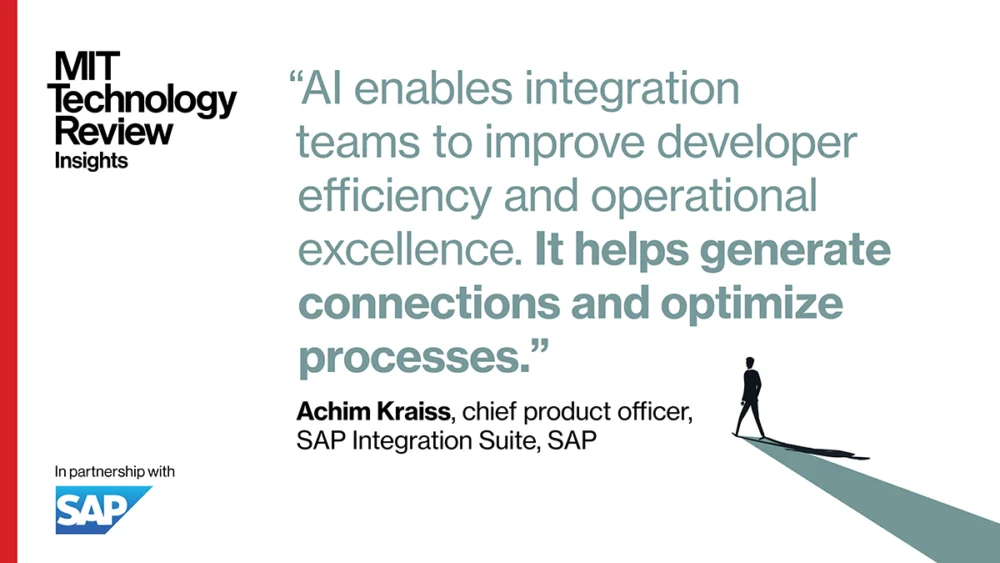
The tangible consequences of this fragmented IT landscape are becoming increasingly evident. A recent survey reveals that a mere 48% of Chief Information Officers (CIOs) believe their current digital initiatives are meeting or exceeding their targeted business outcomes. Further underscoring this sentiment, a separate study from 2025 indicated that operations leaders consistently pinpoint integration complexity and data quality issues as the primary impediments to realizing the full potential of their technology investments. Achim Kraiss, Chief Product Officer of SAP Integration Suite, articulates the pervasive challenges associated with these patchwork IT environments. "A fragmented landscape makes it difficult to see and control end-to-end business processes," Kraiss explains. "Monitoring, troubleshooting, and governance all suffer. Costs go up because of all the complex mappings and multi-application connectivity you have to maintain." This lack of unified visibility and control not only inflates operational expenses but also creates significant hurdles in diagnosing and resolving issues, slowing down critical business processes.
These existing challenges are amplified exponentially as enterprises embark on their AI adoption journeys. The integration of AI, whether in the form of generative AI, machine learning, or agentic AI, into everyday workflows necessitates a fundamental shift in how data is managed and moved. AI systems demand the rapid, high-volume, and precisely coordinated flow of data that yesterday’s siloed architectures were simply not designed to support. The expectation is for systems to not only process vast amounts of information but to do so with an unprecedented level of speed and interdependency. This places immense strain on existing integration mechanisms, revealing their inherent limitations and exposing the fragility of systems built on ad-hoc solutions. As companies increasingly recognize that the efficacy of their AI initiatives hinges not just on the insights generated but on the seamless and efficient movement of data, a critical re-evaluation of their integration strategies is underway.
The realization that the foundational infrastructure for data flow is as crucial as the AI models themselves is driving a significant paradigm shift. Organizations are moving away from the proliferation of scattered, point-to-point integration tools, which have historically contributed to the complexity and cost of IT management. Instead, the focus is shifting towards consolidated, end-to-end integration platforms. These platforms are designed to restore order to the chaotic IT landscape, streamline how diverse systems interact, and establish a robust, unified framework capable of supporting the demands of modern AI. This transition is not merely about adopting new software; it’s about embracing a strategic approach to integration that prioritizes agility, scalability, and a holistic view of business processes.

The core of this transformation lies in the adoption of Integration Platform as a Service (iPaaS). iPaaS solutions offer a cloud-based, comprehensive approach to connecting applications, data, and processes across an organization and beyond. Unlike traditional, on-premises integration tools, iPaaS provides a flexible, scalable, and managed environment that simplifies the complex task of weaving together a multitude of systems. This includes connecting legacy applications, modern cloud-based services, mobile applications, and increasingly, the sophisticated data pipelines required by AI. By offering pre-built connectors, robust workflow automation capabilities, and advanced data transformation tools, iPaaS significantly reduces the time and expertise required to establish and maintain integrations. This allows IT teams to move from reactive firefighting to proactive system management and strategic innovation.
One of the key advantages of iPaaS in the context of AI is its ability to handle the massive data volumes and high velocity that AI applications demand. Traditional integration methods often struggle with the sheer scale of data required for training machine learning models or for real-time decision-making by generative AI agents. iPaaS platforms are architected to handle these demands, offering elastic scalability that can adjust to fluctuating data loads. Furthermore, iPaaS facilitates the creation of real-time data pipelines, ensuring that AI models have access to the most up-to-date information, which is critical for their accuracy and effectiveness. The ability to ingest, transform, and route data seamlessly across disparate systems without manual intervention is a game-changer for AI deployments.
Beyond raw data throughput, iPaaS also addresses the critical issue of data quality and consistency. The effectiveness of any AI model is directly proportional to the quality of the data it is trained on and the data it consumes. Fragmented systems often lead to data silos, inconsistencies, and inaccuracies, which can severely compromise AI performance. iPaaS solutions provide tools for data cleansing, validation, and enrichment, ensuring that the data flowing into AI systems is reliable and accurate. This unified approach to data management also enables better data governance, allowing organizations to track data lineage, enforce compliance, and maintain a single source of truth across their operations.
The consolidation of systems through iPaaS also directly impacts the ability to manage and govern complex business processes end-to-end, as highlighted by Achim Kraiss. By providing a centralized platform for integration, iPaaS offers a clear and unified view of how different applications and services interact. This enhanced visibility simplifies monitoring, troubleshooting, and the implementation of governance policies. Instead of wrestling with a multitude of individual connection points, IT teams can manage their entire integration landscape from a single pane of glass. This not only reduces operational overhead but also improves the overall resilience and agility of the IT infrastructure. When business processes are well-defined and consistently executed, the integration points become more predictable, allowing for smoother AI-driven automation and optimization.

Moreover, iPaaS empowers organizations to build and deploy AI-powered workflows more rapidly. The pre-built components and low-code/no-code capabilities often found in iPaaS solutions accelerate the development and deployment of integrations that are essential for AI initiatives. This could involve connecting a customer relationship management (CRM) system to a generative AI chatbot for personalized customer service, integrating an enterprise resource planning (ERP) system with a machine learning model for demand forecasting, or linking an IoT platform with an agentic AI system for automated predictive maintenance. The ability to quickly assemble and deploy these complex integrations significantly shortens the time-to-value for AI investments.
The content of these AI-driven initiatives also benefits from consolidated systems. As AI models generate new content, insights, or actions, the ability to seamlessly push this output to relevant downstream systems is crucial. Whether it’s generating marketing copy, drafting reports, creating personalized product recommendations, or automating complex decision-making processes, the output of AI needs to be integrated back into the business workflow. iPaaS provides the necessary connectors and automation capabilities to ensure that AI-generated content and actions are effectively utilized, amplifying the impact of AI across the enterprise. This creates a virtuous cycle where AI not only drives insights but also facilitates the dissemination and application of those insights.
In essence, the move towards consolidating systems for AI with iPaaS represents a strategic evolution in enterprise IT. It is a recognition that the future of business, heavily influenced by AI, demands a more integrated, agile, and robust technological foundation. By moving away from the era of patchwork solutions and embracing unified integration platforms, organizations can unlock the full potential of their AI investments, drive operational efficiencies, and achieve superior business outcomes in an increasingly complex and data-driven world. The report, "Consolidating systems for AI with iPaaS and content," offers a deeper dive into this critical transformation, providing actionable insights for enterprises looking to navigate this new technological frontier.