Faris Adani
The city of Dearborn, a prominent suburb of Detroit, has recently launched a groundbreaking "Drone as First Responder" (DFR) initiative, marking a significant escalation in the deployment of autonomous surveillance technology within Michigan’s law enforcement landscape, an unsettling development for many that echoes the dystopian visions of classic science fiction. This program, the first of its kind in the state, utilizes sophisticated drone "dock hives" to rapidly deploy aerial units to emergency calls, fundamentally altering the initial police response paradigm. The choice of Detroit’s orbit for such an initiative is particularly poignant, given the city’s recent unveiling of an 11-foot monument to RoboCop, the titular character from Paul Verhoeven’s 1987 film, a brutal depiction of a crime-ridden, corporatized Detroit policed by advanced, often malfunctioning, cyborgs and robots. This latest technological leap in Dearborn suggests that some in local governance might be taking inspiration from fiction, perhaps not always for the best reasons.
Dearborn Police Chief Issa Shahin champions the DFR program as a vital tool to "reduce uncertainty" for officers and other first responders heading into potentially dangerous situations. Instead of dispatching a patrol car immediately, which can face traffic and delays, the department can now launch a drone to rapidly assess the scene. This aerial reconnaissance capability promises to provide officers with crucial real-time intelligence, allowing them to better understand the nature of an emergency, identify potential threats, and allocate resources more efficiently before human personnel even arrive. Shahin emphasized, "This program will enable us to assess situations almost instantly when someone calls for help. By supporting our officers in real-time as critical situations develop, it acts as a force multiplier, ensuring we cut down on response time, allocate resources appropriately, and provide robust service every time." The concept of a "force multiplier" through automation aims to stretch limited police resources further, theoretically improving safety for both the public and officers.
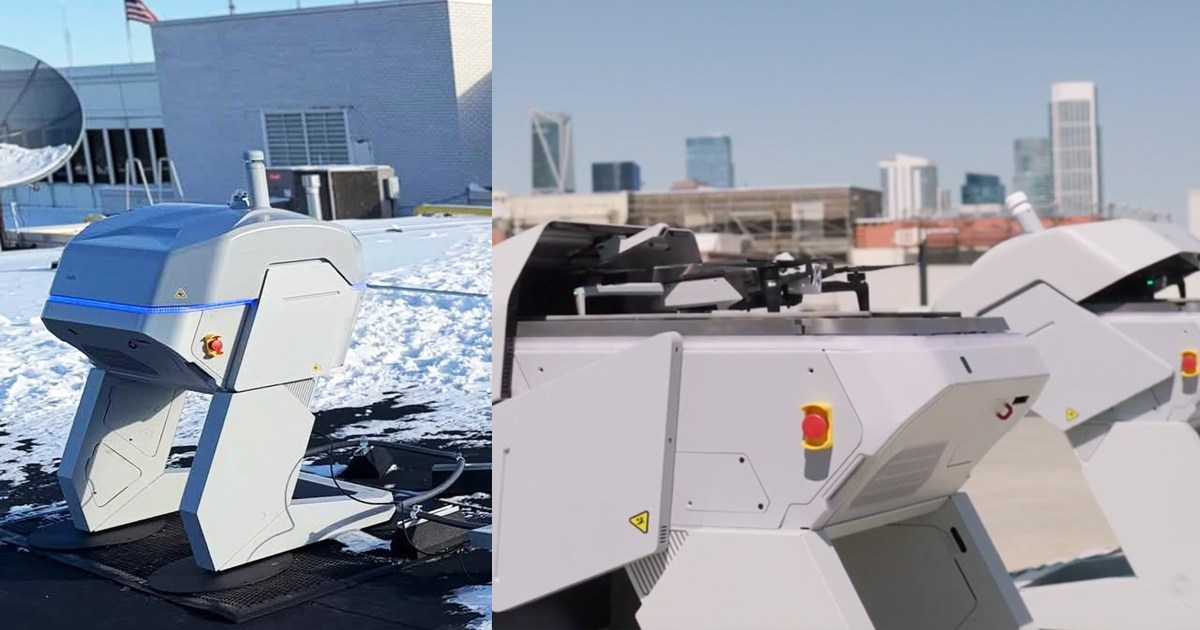
The technology underpinning Dearborn’s DFR program is supplied by Skydio, a leading American drone manufacturer known for its advanced autonomous flight capabilities. Skydio’s innovation includes its "dock hives," which are essentially automated charging and launch stations for their remote quadcopters. These futuristic structures allow police departments to remotely deploy drones on demand, transforming them into instant eyes in the sky. The hives are designed for resilience, capable of operating in extreme temperatures ranging from a bone-chilling -4 degrees Fahrenheit to a scorching 122 degrees. However, Michigan’s notoriously frigid winters, which can plummet far below the drone’s operational threshold, pose a practical challenge, potentially limiting the program’s effectiveness during the harshest months. Beyond functionality, Skydio isn’t shy about embracing a distinctly cyberpunk aesthetic. Each time a drone launches, the hives illuminate the night sky with an array of "cyberpunk warning strobes," an almost theatrical display that wouldn’t feel out of place in Ridley Scott’s "Blade Runner," a film renowned for its iconic, rain-soaked, neon-drenched dystopian cityscapes.
This deliberate design choice, combined with the drones’ general form factor, bears a striking resemblance to the ED-209 "urban pacification" robot from "RoboCop." In the film, ED-209 famously malfunctions during a boardroom demonstration, gruesomely murdering a corporate executive, serving as a stark warning about unchecked technological power and corporate negligence. The visual parallels between Skydio’s "dock hives" and the dystopian machines of fiction are unsettling for many, raising questions about the future of policing and the increasing automation of law enforcement.
Dearborn is not an isolated case; Skydio proudly states that its drones are already active in over 1,000 police departments across the United States. This includes smaller municipalities like Redmond, Washington, as well as major metropolitan areas such as Los Angeles and Cincinnati, where DFR programs are actively being piloted or fully implemented. The widespread adoption highlights a growing national trend towards integrating autonomous systems into routine police operations. One notable testimonial comes from Anita Koester, Support Services Division Chief of the Lakewood Police Department in Colorado, which has been utilizing Skydio DFR. Koester reported impressive statistics: "In 22 weeks, we have handled over 1200 calls for service in our deployment area, we have cleared, as of this week, 41 percent of those calls for service with any officers needed. We are now at 80 percent [where] the drone is on scene first, and we have made 115 arrests, 100 percent because the drone was on scene and it was the critical component of making that arrest."
While these statistics appear compelling, they also warrant closer scrutiny and critical analysis. What does "cleared… with any officers needed" truly signify? Does it mean the situation was resolved, or merely assessed as not requiring immediate human intervention? Furthermore, attributing 100 percent of 115 arrests to the drone being a "critical component" raises questions about causation and the degree of the drone’s actual role versus other investigative factors. The data suggests an efficiency gain and perhaps an enhanced ability to gather evidence, but it doesn’t fully address the qualitative impacts on community relations or the potential for errors.
The parallels to "RoboCop" extend beyond mere aesthetics. The film explored themes of corporate control over public services, urban decay, and the dehumanizing aspects of militarized policing. Omni Consumer Products (OCP), the film’s mega-corporation, takes over Detroit’s police force, replacing human officers with technologically advanced, often flawed, machines. While Dearborn’s initiative isn’t a direct corporate takeover, it represents a significant step towards automating critical public safety functions, raising similar concerns about accountability, transparency, and the potential for a detachment between law enforcement and the communities they serve. The dystopian vision of "RoboCop" was a cautionary tale about society’s overreliance on technology to solve complex social problems, often at the expense of human empathy and due process. The sight of flashing drone hives and hovering surveillance craft in real-world cities brings these once-fictional anxieties into sharp focus.
Perhaps the most significant area of concern revolves around privacy and civil liberties. The constant aerial surveillance enabled by DFR programs raises fundamental questions about the right to privacy in public spaces. Drones equipped with high-resolution cameras can record and transmit video footage, potentially capturing intimate details of individuals’ lives without their knowledge or consent. This data, once collected, can be stored, analyzed, and even shared, creating extensive databases of citizens’ movements and activities. Civil rights organizations frequently voice concerns about the potential for mission creep, where drones initially deployed for emergency response might later be used for routine surveillance, protest monitoring, or even discriminatory targeting based on algorithmic bias. The lack of human judgment in the initial assessment phase, coupled with the potential for technical glitches or misinterpretation of drone data, could lead to unwarranted suspicion or escalation of minor incidents. Community trust, a cornerstone of effective policing, could erode if residents feel constantly monitored by an impersonal, unblinking eye in the sky.
As policing continues its inexorable march towards technological integration, DFR programs like Dearborn’s represent a critical juncture. They promise enhanced efficiency, reduced response times, and increased officer safety, but at what cost to individual privacy, civil liberties, and the foundational relationship between police and public? The debate over the efficacy and ethics of drone policing will undoubtedly intensify as these systems become more prevalent. Striking a balance between leveraging technological advancements for public safety and safeguarding fundamental rights will require robust regulatory frameworks, transparent policies, and ongoing public discourse to ensure that the future of policing serves the best interests of all citizens, rather than inadvertently constructing the very dystopia science fiction warned us about.