Faris Adani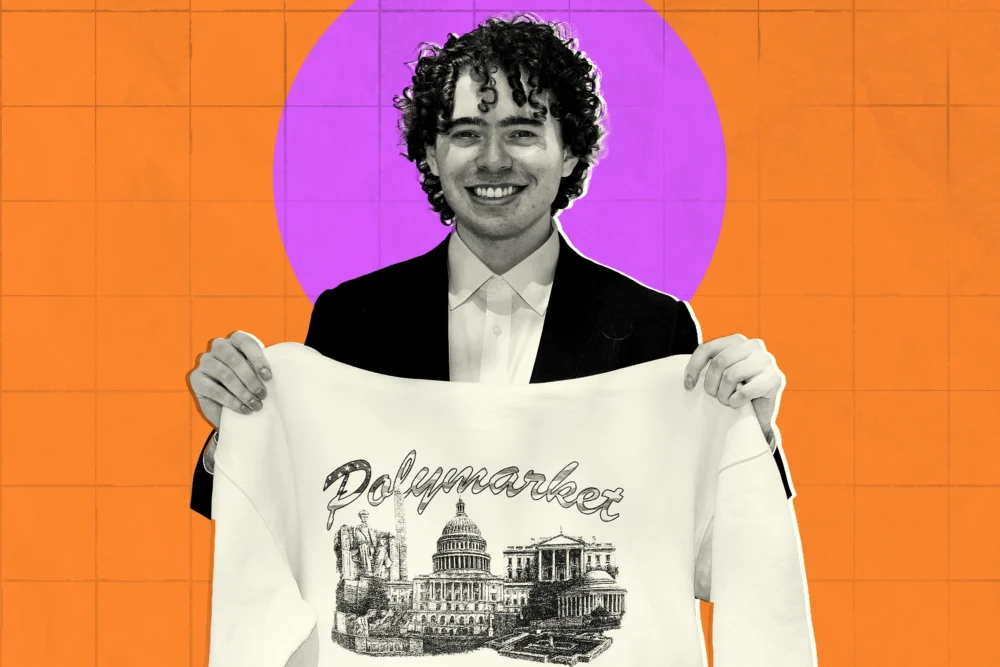
In a landscape increasingly defined by audacious entrepreneurs and digital disruption, Shayne Coplan, the 26-year-old CEO of Polymarket, has emerged as a figure embodying both the meteoric rise and the controversial swagger of the new tech elite. His journey to becoming one of the youngest billionaires on Earth, heading a company valued at $8 billion, has been anything but conventional, marked by federal investigations, a defiant public persona, and a management style that has reportedly raised eyebrows among even seasoned investors.
The first major public glimpse into the high-stakes world of Polymarket and its enigmatic founder came in late 2024, when FBI agents conducted a dawn raid on Coplan’s Manhattan penthouse. Descending in force early one Wednesday morning, the agents, without issuing an arrest warrant or even a subpoena, seized Coplan’s phone and laptop, plunging the young CEO into an unnerving silence that rippled across social media and financial circles. As Coplan would later discover, this dramatic intrusion was part of a high-level investigation into Polymarket, his prediction market platform. The core issue? Polymarket, while operating internationally, was not cleared for use by US citizens. Despite this regulatory barrier, a significant portion of its user base, leveraging VPNs and other methods, were actively placing "prop bets" on real-life events, most notably the highly contentious US presidential election. Federal regulators, it was believed, had gathered evidence suggesting Coplan was acutely aware of this circumvention of US gambling and derivatives laws.
The silence from Coplan’s camp was palpable, fueling speculation and concern among investors and users alike. Then, at 4 PM on the day of the raid, Coplan broke his silence with a succinct, almost flippant post on X (formerly Twitter): "new phone, who dis?" This seemingly innocuous phrase, a common internet meme, served as a perfect, albeit provocative, pitch to Polymarket’s core demographic. It was a dog whistle to those who viewed government regulation as an impediment to innovation and individual freedom, and who found kinship in the irreverent, often "smarmy" humor of tech bros challenging the status quo. Whether a calculated PR move or a spontaneous, compulsive reaction, Coplan’s public persona was rapidly becoming inseparable from Polymarket’s narrative, framing the company as a rebellious force pushing against bureaucratic constraints.
Beyond the public-facing bravado, Coplan’s internal leadership style, as revealed in new reporting by the Wall Street Journal, paints a picture of a demanding and often unconventional boss. Operating from Polymarket’s lower Manhattan headquarters, Coplan has been described as ruling like a "petty tyrant," known to frequently holler at his employees. Perhaps even more unconventionally, he has reportedly shown up to company Zoom calls shirtless, a move that would be unthinkable in most corporate environments but, in the freewheeling world of crypto startups, might be interpreted by some as a sign of authenticity or disdain for formality. Early on, this unorthodoxy presented a significant hurdle for fundraising. Polymarket investor Samir Vasavada candidly told the WSJ, "a lot of people wouldn’t invest because they thought Shayne was nuts." Yet, Vasavada also highlighted the flip side of this intensity: "It was to an extreme the amount he believed in himself." This unwavering self-belief, coupled with a willingness to disregard established norms, became a hallmark of Coplan’s leadership, driving the company forward even as it alienated more traditional stakeholders.
Despite initial investor apprehension, Polymarket’s trajectory was nothing short of astonishing. The platform experienced explosive growth, ballooning into an $8 billion company and catapulting Coplan into the ranks of the youngest billionaires on Earth. This ascent was fueled by a confluence of factors: a surging interest in prediction markets as an alternative form of information aggregation and entertainment, the inherent virality of controversial political betting, and a user base eager to engage with real-world events through a decentralized, often unregulated, lens. The platform’s success demonstrated a significant market appetite for transparent, immediate, and often high-stakes betting on everything from election outcomes to scientific breakthroughs, financial trends, and geopolitical events.
Crucially, Polymarket’s rapid expansion was significantly aided by a sympathetic political climate. The Trump administration, known for its skepticism towards federal oversight and its embrace of anti-establishment rhetoric, ultimately dismissed two federal probes targeting Polymarket. These included the very investigation that prompted the FBI raid, which involved the Department of Justice (DOJ) and the Commodity Futures Trading Commission (CFTC). The CFTC, in particular, had long viewed unregistered prediction markets as illegal gambling operations or unauthorized derivatives exchanges. The administration’s decision to drop these investigations effectively cleared a major regulatory hurdle for Polymarket, legitimizing its operations in the eyes of many, even if the underlying legal questions remained complex. Further solidifying its position and lending it a significant public profile was a handsome investment from Donald Trump Jr. himself, an endorsement that not only provided capital but also associated Polymarket with a powerful political brand known for its embrace of unconventional media and its challenge to traditional institutions. This political alignment, whether intentional or coincidental, provided a shield and a powerful marketing narrative that differentiated Polymarket from its more regulated competitors.
With his net worth now in the stratosphere, Coplan’s confidence has soared, as have his ambitions for Polymarket. He envisions a future where the platform transcends its current role as a "crypto casino," evolving into a global phenomenon with billions of users. In Coplan’s audacious vision, the aggregated wisdom of "anonymous bookies" — the collective predictions of Polymarket users — would become a potent force, not only informing government policy but also serving as the primary, go-to source for fact-checking information in an increasingly fragmented and distrustful media landscape. This vision taps into the philosophical underpinnings of prediction markets, which proponents argue can aggregate dispersed information more efficiently and accurately than traditional expert panels or polls. However, it also raises profound ethical and practical questions about accountability, manipulation, and the very nature of truth in a world where anonymous market participants dictate policy and verify facts.
"The vision that I know that my team and I want to build has not come to life fully yet," Coplan told the Wall Street Journal. "We still have a long way to go." This statement encapsulates the boundless ambition that defines Coplan and Polymarket. It’s a vision of a world where markets, not institutions, are the ultimate arbiters of truth and the architects of policy, a world perfectly suited for a CEO who revels in disrupting norms, challenging authority, and perhaps, occasionally, conducting business without a shirt on. The journey ahead for Polymarket will undoubtedly be as turbulent and transformative as its ascent, continuing to test the boundaries of regulation, entrepreneurship, and public perception.