Faris Adani
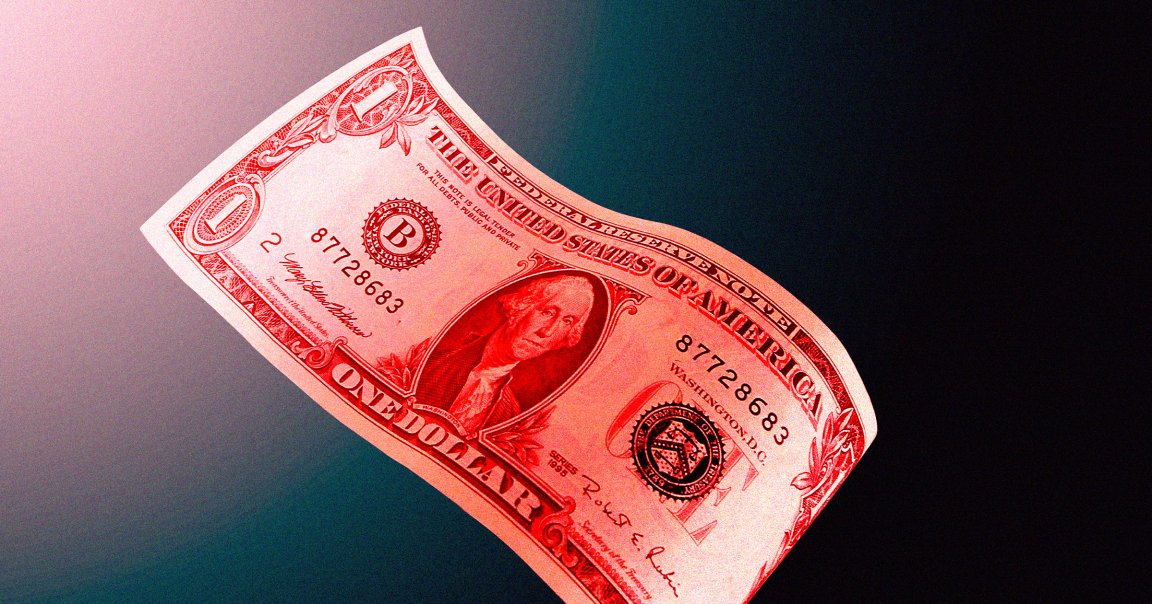
For decades, the United States stock market stood as an unassailable titan on the global stage, its stability and innovation drawing capital from every corner of the world. Concurrently, the US dollar cemented its role as the de facto global reserve currency, underpinning international trade, finance, and commodity markets. This dual dominance reflected a prevailing trust in American economic policy, institutional stability, and robust legal frameworks. However, this long-held supremacy is now facing unprecedented challenges, casting a shadow of uncertainty over its future trajectory.
A recent report by the New York Times underscores a palpable shift in investor sentiment, revealing a growing trend of capital reallocation away from American assets. This exodus is largely attributed to a series of disruptive policies and rhetoric emanating from the Trump administration. Foremost among these concerns is the administration’s persistent undermining of the central bank’s independence, a cornerstone of sound monetary policy and investor confidence. Political interference in central banking functions, typically designed to be insulated from short-term political cycles, risks compromising the institution’s ability to manage inflation, maintain price stability, and ensure financial system integrity. Such threats erode the predictability and reliability that international investors demand, raising fears of arbitrary policy shifts that could destabilize markets.
Compounding these domestic pressures, the administration’s initiation of a trade war with Europe has further rattled global markets. Trade conflicts, characterized by escalating tariffs and retaliatory measures, disrupt established supply chains, increase production costs, and dampen overall economic growth. For investors, these actions introduce significant uncertainty regarding market access, profitability, and the broader health of international commerce. Simultaneously, the implementation of what are perceived as self-conflicting monetary policies has created a confusing economic landscape. These contradictory signals, often pitting fiscal expansion against calls for monetary tightening or vice versa, breed an environment of unpredictability that is anathema to long-term investment. The cumulative effect of these policies has been a sustained weakening of the US dollar, which in turn renders foreign investments in the more stable and predictable markets of Europe and Asia considerably more lucrative.
Amidst this backdrop of geopolitical and policy-induced volatility, Wall Street has embarked on an audacious and highly speculative gambit: an enormous, concentrated bet on artificial intelligence (AI). While AI represents a transformative technological frontier, the current investment frenzy is raising red flags among economic observers. Many tech companies, despite their soaring valuations, have yet to demonstrate consistent, substantial returns on their AI investments, with widespread profitability still appearing years, if not a decade, away. This speculative fervor has led to an unprecedented concentration of market power, with the “Magnificent Seven” tech giants—Apple, Microsoft, Alphabet, Amazon, Meta, NVIDIA, and Tesla—now accounting for well over a third of the entire S&P 500 index. Experts are increasingly vocal in warning that this AI-driven boom might be artificially propping up a fundamentally rough-looking US economy, creating a precarious illusion of strength.
The International Monetary Fund (IMF) has lent its authoritative voice to these concerns, cautioning that a potential weakening of the pervasive hype surrounding AI constitutes one of the gravest risks to global economic growth. The IMF’s analysis highlights the danger that if current expectations about AI’s immediate impact and profitability prove to be overly optimistic, a significant market correction could ensue. Such a correction, given the sheer scale of investment and market capitalization tied to these AI-centric firms, would not merely be a sectoral downturn but could unleash systemic shockwaves across global financial markets, potentially triggering a broader economic recession. The parallels to historical market bubbles, such as the dot-com bust of the early 2000s, are increasingly being drawn, fueling anxieties about a looming reckoning.
Further exacerbating investor apprehension was President Donald Trump’s nomination for the next chair of the central banking system, Kevin Warsh. The selection of Warsh, perceived by some as more aligned with the administration’s political agenda than with traditional central banking independence, did little to stem the continued weakening of the US dollar. In fact, the dollar recently hit a four-year low, signaling a significant loss of confidence among currency traders and international investors. Conversely, the Euro and the British pound saw their values soar against the beleaguered US dollar, reflecting a clear flight of capital towards perceived havens within the European economic zone. This currency divergence underscores the growing skepticism about the future stability and independence of US monetary policy.
In a move that further alarmed financial markets, President Trump—himself a vocal AI booster, creating a circular dynamic where political endorsement fuels speculative investment—publicly celebrated the weakening dollar. He argued that a weaker currency would make American products more affordable on international markets, thereby boosting exports. While a weaker currency can indeed make exports more competitive, such direct interventionist commentary on currency policy from a head of state is highly unusual and typically disruptive. It signals a departure from the long-standing US Treasury policy of supporting a strong dollar, which is generally seen as beneficial for attracting foreign investment and maintaining global financial stability. The New York Times reported that officials were compelled to swiftly step in to “smooth things over,” reiterating that despite the President’s comments, the US government officially maintains its support for a strong dollar. This public dissonance between political rhetoric and established economic policy further heightens market uncertainty and fuels distrust.
The question of whether Wall Street’s enormous and increasingly concentrated appetite for AI can continue to serve as a weakening economy’s saving grace remains profoundly open. The market’s recent movements are sending clear and unequivocal signals: riskier, highly speculative bets are no longer a hot commodity. This sentiment was starkly demonstrated by the recent plummet in the value of cryptocurrencies, with bellwethers like Bitcoin experiencing significant crashes. Once touted as the future of finance and a hedge against traditional market volatility, the sharp decline in crypto valuations reflects a broader investor retreat from assets perceived as overly speculative or lacking fundamental intrinsic value during times of heightened economic anxiety.
Instead, capital is flowing back into historically safer and more tangible assets. Gold, the perennial safe haven during periods of economic and geopolitical uncertainty, has proven far more lucrative, reaching record highs of $5,500 an ounce in January. Despite a massive but brief drop last week, the precious metal is trading a staggering 70 percent higher year over year. This dramatic surge in gold prices is a powerful indicator of profound investor unease, reflecting deep-seated concerns about inflation, currency debasement, and the overall stability of the global financial system. The shift from speculative tech and digital assets to a centuries-old store of value underscores a fundamental re-evaluation of risk and reward in a rapidly changing economic landscape. As global investors reassess their portfolios, the future of American economic leadership and the stability of the dollar hang precariously in the balance, challenged by both internal policy shifts and the inherent risks of a speculative AI boom.
More on AI: Microsoft Stock Takes Most Massive Single-Day Loss Since Pandemic as Its AI Efforts Flail