isnaini azizah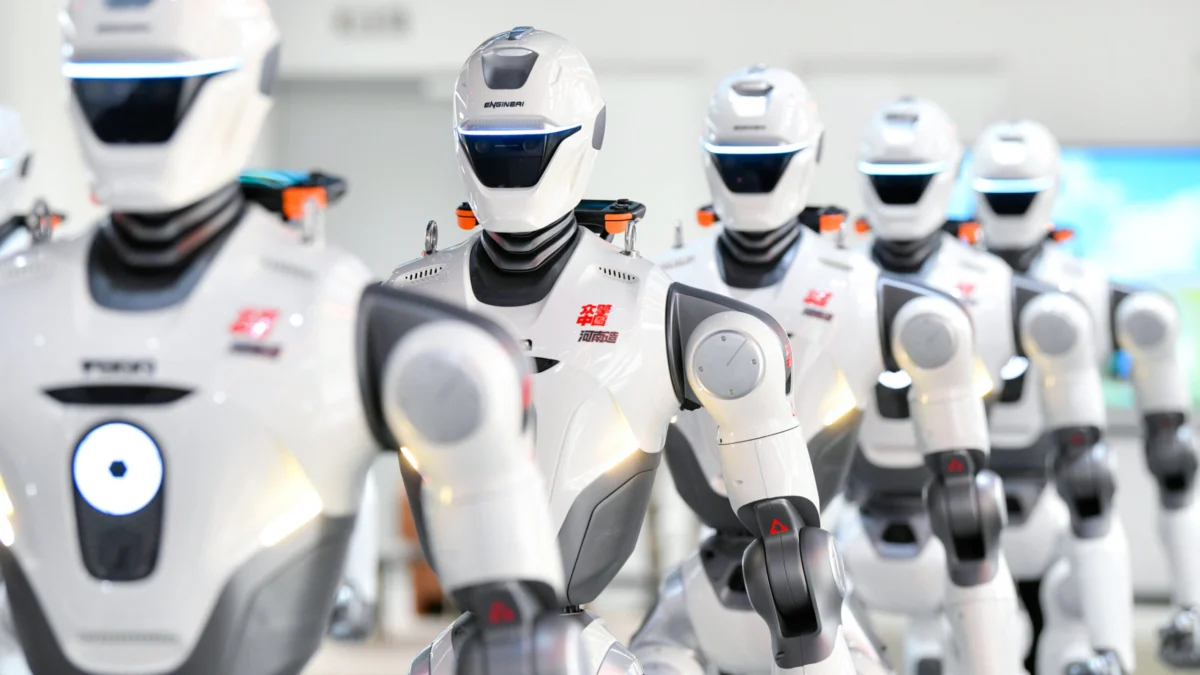
This strategy of aligning political and industry interests to counter perceived foreign dominance in strategic technologies is not new. Historically, whenever China has achieved success in offering cost-effective versions of critical technologies such as solar panels, electric vehicles, and drones, the U.S. government has intervened. These interventions have typically taken the form of tariffs or restrictive purchasing rules for government agencies, aimed at preventing market saturation. Such protectionist measures invariably spark debates about the economic trade-offs, particularly the potential for increased consumer prices, versus the purported benefits of fostering domestic industries and safeguarding national interests.
However, the current FTC ruling transcends these traditional trade disputes by recognizing robotics as an integral and cutting-edge component of the broader artificial intelligence (AI) industry. The Trump administration is adopting an increasingly assertive approach to protect and cultivate the U.S. AI sector. Reports indicate the administration is also contemplating a ban on open-source Chinese AI models, which often rival the capabilities of leading U.S. firms like OpenAI and Anthropic at a significantly lower cost. Such a prohibition could prevent American businesses from realizing an estimated $25 billion in annual savings, highlighting the economic implications of this protectionist push.
Therefore, the ban on imported humanoid robots should be interpreted not as a mere continuation of past trade protectionism, but as a clear indication that the Trump administration is extending its protective umbrella over the AI industry beyond established leaders. The administration is now willing to actively support an emerging robotics sector that is still in its formative stages, attempting to nurture its growth by limiting foreign influence.
The FTC’s decision has garnered a mixed reception. Some U.S. robotics companies, like Ghost Robotics, which specializes in four-legged robots for inspection purposes, have welcomed the move. Gavin Kenneally, CEO of Ghost Robotics, acknowledges the genuine cybersecurity risks associated with foreign-made robots, referencing an FTC document that cited an incident where an individual gained control of 7,000 robot vacuum cleaners. Kenneally believes that the FTC’s announcement, by encouraging enhanced cybersecurity and a more equitable competitive landscape, ultimately benefits both consumers and the robotics industry.
Despite these perceived benefits, the ruling presents a significant challenge for the very U.S. robotics companies it aims to support. Many of these companies, alongside academic robotics research labs, are heavily reliant on affordable robots from China for their research and development activities. They frequently procure Chinese humanoids to build fleets of robots designed to learn new tasks, from complex domestic chores like laundry to specialized industrial applications. Aaron Prather, director of market intelligence for the Association for Advancing Automation, a prominent robotics trade group, notes that the ban "creates a challenge for U.S. humanoid researchers" because "Chinese models offer the best price-to-capability ratio available." His organization’s internal review revealed that a striking 90% of recent robotics research papers from U.S. universities utilized robots from Unitree, China’s leading humanoid robotics company.
The economic disparity in pricing is substantial. A four-legged robot from Unitree can be purchased for approximately $4,600, whereas a comparable model from a U.S. competitor like Boston Dynamics could cost as much as $278,000. If the availability of these cost-effective Chinese robots is curtailed, it could stifle robotics research and development, potentially hindering the industry’s progress rather than accelerating it, contrary to the FTC’s stated objectives.
The U.S. and Chinese robotics industries are currently at vastly different stages of development. Unitree is poised to go public this week, with an estimated valuation nearing $6 billion. In contrast, there are no U.S. robotics companies that offer a comparable market presence or scale. While U.S. companies are actively engaged in humanoid robotics development, their progress in bringing products to market at scale remains limited. Figure’s humanoids are not yet selling in significant volumes, and 1X’s robots have yet to be widely distributed to consumers. Nevertheless, the field of humanoid robotics is rapidly advancing, as evidenced by a recent announcement from Google. The tech giant unveiled a new AI model designed to expedite the learning process for humanoids, enabling them to acquire new tasks more efficiently. While its most notable current capability is tying a trash bag, this demonstrates tangible progress in overcoming the intricate challenges of robotic manipulation.
While the practical impact of the FTC’s order remains somewhat uncertain due to various exemptions and carve-outs, its symbolic significance is profound. The administration clearly views humanoid robotics not as a niche novelty but as a critical strategic frontier within AI, one that warrants protection from foreign competition. For a technology that, until recently, was largely recognized for its occasional onstage stumbles, this elevated status marks a significant shift in perception and policy. This protectionist stance, extending to advanced robotics, underscores a broader trend of prioritizing domestic AI development through government intervention, potentially reshaping the global landscape of AI innovation and trade.