anjir abdul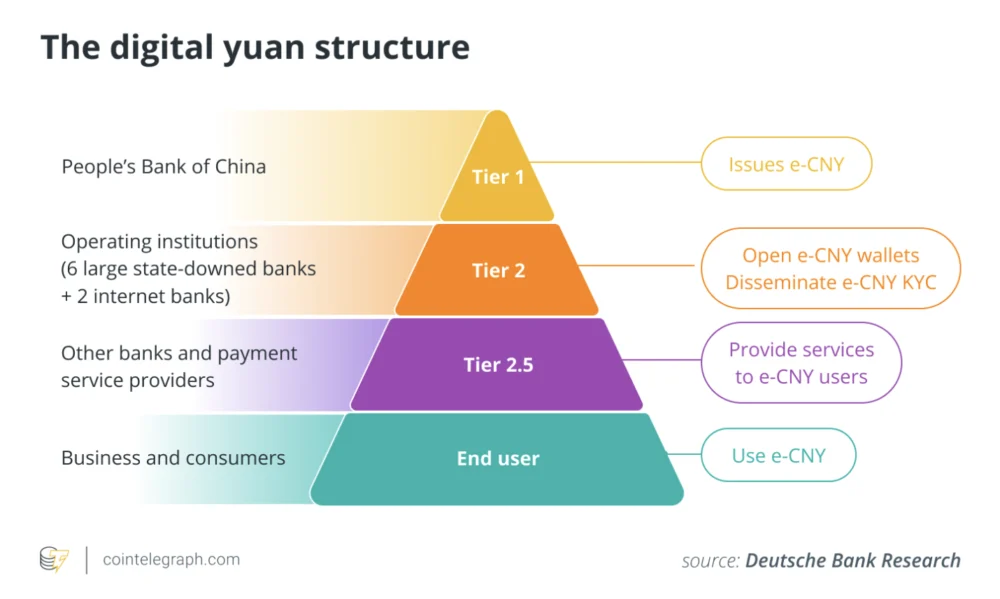
Crypto-Focused Erebor Bank Secures Landmark US National Charter, Signaling New Era for Digital Asset Integration
In a move set to reshape the intersection of traditional finance and the burgeoning crypto industry, the United States has formally approved a national bank charter for Erebor Bank, a new crypto-friendly startup. This landmark decision marks the first new national bank greenlit during President Donald Trump’s second term, as reported by the Wall Street Journal, citing sources familiar with the matter. The Office of the Comptroller of the Currency (OCC), the independent bureau within the U.S. Treasury Department responsible for chartering, regulating, and supervising all national banks and federal savings associations, confirmed the approval on Friday. This crucial authorization grants Erebor Bank the ability to operate nationwide, offering a broad spectrum of financial services tailored for the digital age.
Erebor Bank launches with a substantial capital base of approximately $635 million, signaling strong investor confidence and a robust foundation for its operations. Its strategic focus lies in serving a specific, yet increasingly vital, segment of the market: startups, venture-backed companies, and high-net-worth clients. This demographic has historically found itself underserved by traditional banking institutions, a void exacerbated by the dramatic collapse of Silicon Valley Bank (SVB) in 2023. The demise of SVB, a critical financial artery for the tech and startup ecosystem, highlighted the urgent need for specialized banking services that understand the unique demands and risks associated with innovative, high-growth enterprises, many of which are deeply embedded in the digital economy.
The leadership and backing behind Erebor Bank further underscore its potential impact. The project was founded by Palmer Luckey, the visionary co-creator of Oculus VR, who will contribute his strategic insights as a board member, though he will not be involved in the daily management of the bank. The institution boasts an impressive roster of prominent technology investors, including industry giants such as Andreessen Horowitz (a16z), Founders Fund, Lux Capital, 8VC, and angel investor Elad Gil. This confluence of tech entrepreneurship, venture capital, and substantial financial backing positions Erebor Bank as a formidable new player capable of bridging the gap between cutting-edge technology and regulated financial services.
The significance of this national charter extends beyond Erebor Bank itself. For the broader crypto industry, it represents a pivotal step towards mainstream acceptance and regulatory clarity. A national bank charter confers a high degree of regulatory legitimacy, allowing Erebor to offer traditional banking services like deposits, loans, and payments, but with an integrated understanding of blockchain technology and digital assets. This could include compliant crypto custody solutions, fiat-to-crypto on/off-ramps, and specialized lending products collateralized by digital assets, all within a federally regulated framework. The OCC’s approval signals a growing willingness by U.S. regulators to integrate crypto-native businesses into the traditional financial system, potentially setting a precedent for other crypto firms seeking to operate under robust regulatory oversight. This development could pave the way for increased institutional adoption, reduce regulatory arbitrage, and foster greater consumer and investor protection within the evolving digital asset landscape. The "Hobbit-inspired" name, while a playful nod to fantasy literature, perhaps also hints at a desire to build a secure, treasure-filled haven for its clients in the often-turbulent world of crypto finance.

China Intensifies Crypto Clampdown with Comprehensive Ban on Unapproved Stablecoins and RWAs
China has once again demonstrated its unwavering commitment to maintaining stringent control over its financial system and digital economy, issuing a sweeping ban on the unapproved issuance of yuan-pegged stablecoins and tokenized real-world assets (RWAs). This latest move, a joint statement from the People’s Bank of China (PBOC) and seven other powerful regulatory bodies, including the Cyberspace Administration of China, the Ministry of Public Security, and the China Banking and Insurance Regulatory Commission, represents a significant escalation in the nation’s long-standing crackdown on cryptocurrencies. It underscores Beijing’s deep-seated concerns regarding financial stability, capital controls, and the sovereignty of its monetary policy.
The core of the new directive explicitly prohibits any entity or individual, whether operating inside or outside China, from creating or issuing Renminbi-linked stablecoins without explicit, prior approval from Chinese regulators. This prohibition is particularly impactful as it deliberately targets "offshore versions tied to the yuan," effectively closing a perceived loophole that some market participants had hoped might allow for limited crypto activity around China’s borders. The Chinese government views any stablecoin pegged to its national currency, even if issued abroad, as a potential threat to its control over the yuan’s value and its ability to manage capital flows, which are tightly regulated to prevent illicit outflows and maintain economic stability.
Furthermore, the ban formally extends China’s existing restrictions on cryptocurrencies by folding the tokenization of real-world assets (RWAs) into its comprehensive risk framework. RWAs, which involve converting tangible or intangible assets like real estate, art, commodities, or intellectual property into digital tokens on a blockchain, have been gaining traction globally as a means to enhance liquidity and fractionalize ownership. However, Chinese authorities view the unauthorized conversion of real assets into tradable tokens as a potentially illegal financial activity. Their concerns stem from the potential for RWA tokenization to facilitate unregistered securities offerings, enable speculative trading outside regulated channels, and circumvent capital controls by allowing wealth to be digitized and moved across borders without state oversight. This move effectively blocks a nascent but promising sector of the blockchain industry from developing within China’s jurisdiction.
This aggressive regulatory posture is not an isolated event but rather a consistent thread in China’s approach to digital assets. Since the initial crackdown on Initial Coin Offerings (ICOs) in 2017, followed by bans on cryptocurrency exchanges and, most notably, the comprehensive prohibition on crypto mining in 2021, China has systematically sought to eradicate decentralized, privately-issued digital currencies from its financial ecosystem. The current ban reinforces this "walled garden" strategy, aiming to keep speculative digital assets and their associated risks firmly outside China’s formal financial system.
In stark contrast to its stance on private digital currencies, China has been a global leader in the development and deployment of its own central bank digital currency (CBDC), the digital yuan (e-CNY). Regulators explicitly state that this latest ban is part of a broader strategy to promote the use of the state-controlled e-CNY. By eliminating potential competitors and alternative digital payment rails, the government aims to solidify the e-CNY’s position as the primary digital currency for domestic payments and potentially for future international trade. The e-CNY offers the PBOC unprecedented levels of control, traceability, and data collection capabilities over financial transactions, aligning with Beijing’s broader goals of economic oversight, data sovereignty, and enhancing the efficiency of its monetary policy. The ban on unapproved stablecoins and RWAs, therefore, serves a dual purpose: mitigating perceived financial risks and clearing the path for the ubiquitous adoption of China’s sovereign digital currency. The move sends a clear message to both domestic and international players that China’s digital financial future will be tightly managed by the state.

Trend Research Dumps Over 400,000 ETH Amidst Soaring Liquidation Risks
The recent market downturn has sent ripples across the cryptocurrency ecosystem, forcing significant deleveraging from major players. Among them, Ethereum investment vehicle Trend Research has undertaken a massive sell-off of its Ether (ETH) holdings, offloading over 400,000 ETH to mitigate escalating liquidation risks and repay outstanding loans. This dramatic move highlights the inherent volatility and leverage-related dangers prevalent in the decentralized finance (DeFi) landscape, particularly during periods of intense market pressure.
According to on-chain data platform Arkham Intelligence, Trend Research’s Ether exposure saw a precipitous decline. On Sunday, the entity held approximately 651,170 Ether in the form of Aave Ethereum wrapped Ether (AETHWETH). By Friday, this amount had plummeted by 404,090 ETH, leaving its balance at around 247,080 ETH. The data further reveals that Trend Research transferred a staggering 411,075 ETH to the cryptocurrency exchange Binance since the beginning of the month, indicating a deliberate and substantial effort to de-risk its position. At the time of the sell-off, with ETH trading as low as $1,748 and then recovering to $1,967, this liquidation represents hundreds of millions of dollars in value, estimated to be between $700 million and $800 million.
Trend Research’s strategy, common among aggressive crypto investment firms, involved leveraging its Ether holdings. The entity, reportedly tied to Jack Yi, the founder of Hong Kong-based crypto venture firm Liquid Capital, accumulated its ETH holdings by purchasing Ether on an exchange. It then used these ETH tokens as collateral on Aave, a prominent decentralized lending protocol, to borrow stablecoins. These borrowed stablecoins were subsequently used to acquire even more ETH, creating a highly leveraged "recursing" position designed to amplify gains during bull markets. Aave Ethereum wrapped Ether (AETHWETH) is a tokenized representation of ETH deposited into Aave, allowing users to earn interest and use it as collateral within the protocol.
However, this high-risk, high-reward strategy proved vulnerable as the price of ETH experienced a sharp decline. In the past week alone, Ether’s value dropped almost 30%, plunging to lows of $1,748 before stabilizing slightly around $1,967 at the time of writing, according to CoinMarketCap. Such a significant price drop directly impacts the collateral ratio of leveraged positions. As the value of the collateral (ETH) falls, the risk of liquidation—where the lending protocol automatically sells the collateral to repay the loan—increases dramatically. To avoid forced liquidation, which often incurs penalties and can lead to greater losses, Trend Research proactively sold a substantial portion of its ETH to repay its stablecoin loans, effectively reducing its debt and de-risking its portfolio.
The massive ETH sell-off by Trend Research serves as a stark reminder of the inherent risks associated with leveraged trading in volatile cryptocurrency markets. While such strategies can yield substantial profits during upward trends, they expose investors to significant downside during market corrections. This event also highlights the transparency provided by blockchain analytics platforms like Arkham, which allow for real-time tracking of large movements of digital assets, offering insights into institutional behavior and market dynamics. For the broader ETH market, a sell-off of this magnitude, while absorbed by the market’s liquidity, can contribute to bearish sentiment in the short term. However, it also represents a deleveraging event, which can be seen as a necessary cleansing process that strengthens the market in the long run by removing over-leveraged positions. The episode underscores the ongoing maturity of the crypto markets, where both innovation and risk management continue to evolve at a rapid pace.