Joko Widodo
While the previous weeks might have boasted multiple entries crossing the billion-dollar threshold, this period witnessed a concentration of rounds in the hundreds of millions, topped by a formidable $550 million for AI infrastructure leader Temporal Technologies and a significant $308 million injection into space vehicle innovator Impulse Space. This shift from ultra-mega-rounds to merely mega-rounds suggests a potential recalibration or perhaps a more selective deployment of capital, yet it certainly doesn’t indicate a slowdown in overall investment appetite for promising ventures. The broader list of top deals continued to be heavily populated by AI-centric companies, spanning critical areas such as investment management, high-performance networking, enterprise software development, AI-driven marketing, and foundational AI models. Beyond AI, the week also saw considerable activity in vital sectors like sustainable energy and advanced biotechnology, reinforcing the multifaceted nature of venture interest in 2026. Notably, data center developer Crusoe Energy Systems officially confirmed its previously reported and truly colossal $3 billion-plus raise, co-led by Atreides Management, Valor Equity Partners, and Mubadala Capital, underscoring the immense capital requirements and investor conviction in the infrastructure supporting the AI revolution.
The Crunchbase Megadeals Board continues to serve as an indispensable resource for tracking these substantial $100 million-plus venture deals to U.S.-based companies, offering a real-time pulse on the market’s biggest movements. As the venture capital world navigates the complexities of technological acceleration and economic shifts, the week’s top 10 funding rounds provide a compelling snapshot of where smart money is flowing, highlighting the strategic importance of core enabling technologies and industries poised for transformative growth.
Here’s a deeper dive into the week’s most impactful funding rounds:
-
Temporal Technologies, $550M, AI infrastructure: Leading the pack, Bellevue, Washington-based Temporal Technologies secured an impressive $550 million in Series E funding, catapulting its valuation to a staggering $12.55 billion. Temporal is at the forefront of AI infrastructure, providing an open-source platform that is absolutely critical for building and operating robust, long-running AI agents and complex enterprise systems. Its technology ensures the reliable execution of distributed applications, managing state and orchestrating workflows even in the face of failures, a non-negotiable requirement for sophisticated AI deployments. The substantial investment, co-led by top-tier firms like Lightspeed, Wellington Management, Goldman Sachs Alternatives, and Tiger Global, underscores the immense market demand for scalable, fault-tolerant infrastructure solutions that can support the burgeoning AI ecosystem. Investors are clearly betting on Temporal as a foundational layer for the next generation of AI-powered applications, recognizing its pivotal role in the operationalization and reliability of AI at enterprise scale.
-
Impulse Space, $308M, space tech: Hailing from Redondo Beach, California, Impulse Space garnered $308 million in a Series D extension funding round, bringing its combined Series D total to an astounding $808 million. Impulse Space is a key player in the rapidly expanding space tech sector, specializing in the development of innovative space vehicles designed for moving payloads across and between orbits. This includes critical capabilities like in-orbit servicing, last-mile delivery for satellites, and orbital transfer vehicles, which are essential for the deployment, maintenance, and future expansion of satellite constellations, lunar missions, and commercial space stations. The massive capital injection reflects the significant investment required to develop and scale advanced propulsion and in-space logistics solutions, as well as the profound confidence investors have in the long-term growth and strategic importance of the in-space economy. Impulse Space is positioning itself as a vital enabler of future space exploration and commercial utilization.
-
Ridgeline, $250M, investment management: Ridgeline, an Incline Village, Nevada-based company, closed a $250 million Series E funding round, which valued the AI-enabled investment management platform at $1.45 billion. Founded and chaired by industry veteran Dave Duffield (known for co-founding PeopleSoft and Workday), Ridgeline is revolutionizing the investment management sector by leveraging AI to enhance various functions. Its platform likely integrates AI for advanced data analytics, predictive modeling for market trends, automated compliance checks, personalized client portfolio management, and streamlining operational workflows. Duffield’s personal leadership in this round signifies a deep commitment and belief in the platform’s transformative potential. This investment highlights the ongoing digital transformation within financial services, where AI is becoming indispensable for competitive advantage, operational efficiency, and delivering superior client experiences.
-
Cornelis Networks, $205M, networking: Wayne, Pennsylvania-based Cornelis Networks secured $205 million in new funding from IAG Capital Partners. The company is a crucial provider of cutting-edge networking technology specifically designed for the demanding requirements of AI and high-performance computing (HPC) workloads. As AI models grow exponentially in size and complexity, the ability to move vast amounts of data quickly and efficiently between processing units (GPUs, CPUs) and memory becomes a critical bottleneck. Cornelis Networks develops low-latency, high-bandwidth interconnect solutions that are essential for optimizing the performance of large-scale AI training, scientific simulations, and complex data processing. This investment underscores the strategic importance of specialized networking infrastructure as a foundational element for unlocking the full potential of advanced AI and HPC applications.
-
Factory, $200M, AI software development: San Francisco-based Factory announced a substantial $200 million funding round at a $5 billion valuation, backed by a consortium of venture firms and individual investors. Factory is at the forefront of the "developer productivity AI" trend, providing AI tools that empower enterprises to accelerate and enhance their software development lifecycle. These tools likely include AI-powered code generation, intelligent debugging assistants, automated testing frameworks, code refactoring tools, and security vulnerability detection. The impressive valuation reflects the widespread industry recognition that AI can profoundly augment human developers, leading to faster development cycles, higher code quality, and reduced costs. Investors are clearly bullish on the future of AI-assisted software engineering, positioning Factory as a key enabler for enterprises striving for digital agility and innovation.
-
Profound, $180M, AI marketing: New York-based Profound raised $180 million in Series D funding, achieving a $1.8 billion valuation. Profound is innovating in the rapidly evolving field of AI marketing, offering software designed to help businesses appear more prominently in AI-generated search results, recommendations, and conversational AI interactions. This represents a significant shift from traditional SEO to "AI-first" optimization strategies, involving techniques like prompt engineering, generative AI content optimization, and ensuring brand visibility within AI models. The investment, led by prominent venture capital firms Sequoia Capital and Kleiner Perkins, highlights the urgent need for businesses to adapt their marketing strategies to an AI-dominated digital landscape. Profound is poised to become a critical tool for brands seeking to maintain relevance and discoverability as consumers increasingly interact with AI-powered interfaces.
-
(tied) Arcee AI, $150M, foundational AI: San Francisco-based Arcee AI closed on $150 million in Series B funding, pushing its valuation past the $1 billion mark. Arcee AI specializes in developing open-weight AI models, offering a compelling alternative to proprietary, closed-source foundational models. Open-weight models provide greater flexibility, customization, transparency, and often more cost-effective solutions for enterprises that need to fine-tune AI for specific tasks or domain expertise. The investment, led by Vista Equity Partners, Cambium Capital, and Emergence Capital – firms often focused on enterprise software and B2B platforms – signals strong confidence in the commercial viability and strategic importance of specialized, adaptable AI models. Arcee AI is addressing a critical need for businesses that want to leverage cutting-edge AI without being locked into a single vendor or requiring massive compute resources for training from scratch.
-
(tied) Nex, $150M, gaming: Also tying for seventh place, San Francisco-based Nex secured $150 million in new equity and debt financing, including a Series E round co-led by Baillie Gifford and BAI Capital. Nex is pioneering the next generation of family-oriented digital games that emphasize body motion rather than traditional controllers. This innovative approach points towards highly immersive and interactive experiences, likely leveraging advanced computer vision, sensor technology, or augmented reality to track player movements. The substantial funding, a mix of equity and debt, underscores the significant growth stage and investor belief in the potential of interactive, accessible gaming experiences that move beyond conventional inputs. Nex is tapping into the growing market for active entertainment and blurring the lines between physical activity and digital play.
-
Mazama Energy, $135M, geothermal energy: Seattle-based Mazama Energy picked up $135 million in a Series B round, led by Centaurus Capital and Doerr Capital. Mazama Energy is a geothermal energy developer focused on superhot rock geothermal power, a cutting-edge approach that involves drilling deeper to access extremely high-temperature reservoirs. This "superhot" method promises significantly higher energy yields and greater efficiency compared to conventional geothermal, offering a reliable, baseload source of clean energy with a minimal environmental footprint. This investment highlights the growing interest in advanced geothermal systems as a crucial component of the global energy transition, providing a consistent, renewable power source that can complement intermittent renewables like solar and wind. Investors are backing technologies that can unlock new frontiers in sustainable energy production.
-
Sling Therapeutics, $123M, biotech: Ann Arbor, Michigan-based Sling Therapeutics closed on $123 million in Series C funding, led by Forbion Capital Partners. Sling Therapeutics is dedicated to developing a small-molecule therapy for thyroid eye disease (TED), a debilitating autoimmune condition that can cause inflammation and damage to tissues around the eyes. Small-molecule therapies are typically orally administered drugs that target specific biological pathways involved in a disease, offering a potentially less invasive and more accessible treatment option compared to biologics. This substantial funding round, led by a specialized life sciences VC, underscores the critical need for effective treatments for rare and underserved diseases. Sling Therapeutics is poised to advance its therapy through clinical development, potentially offering a significant new option for patients suffering from TED and contributing to the broader field of precision medicine.
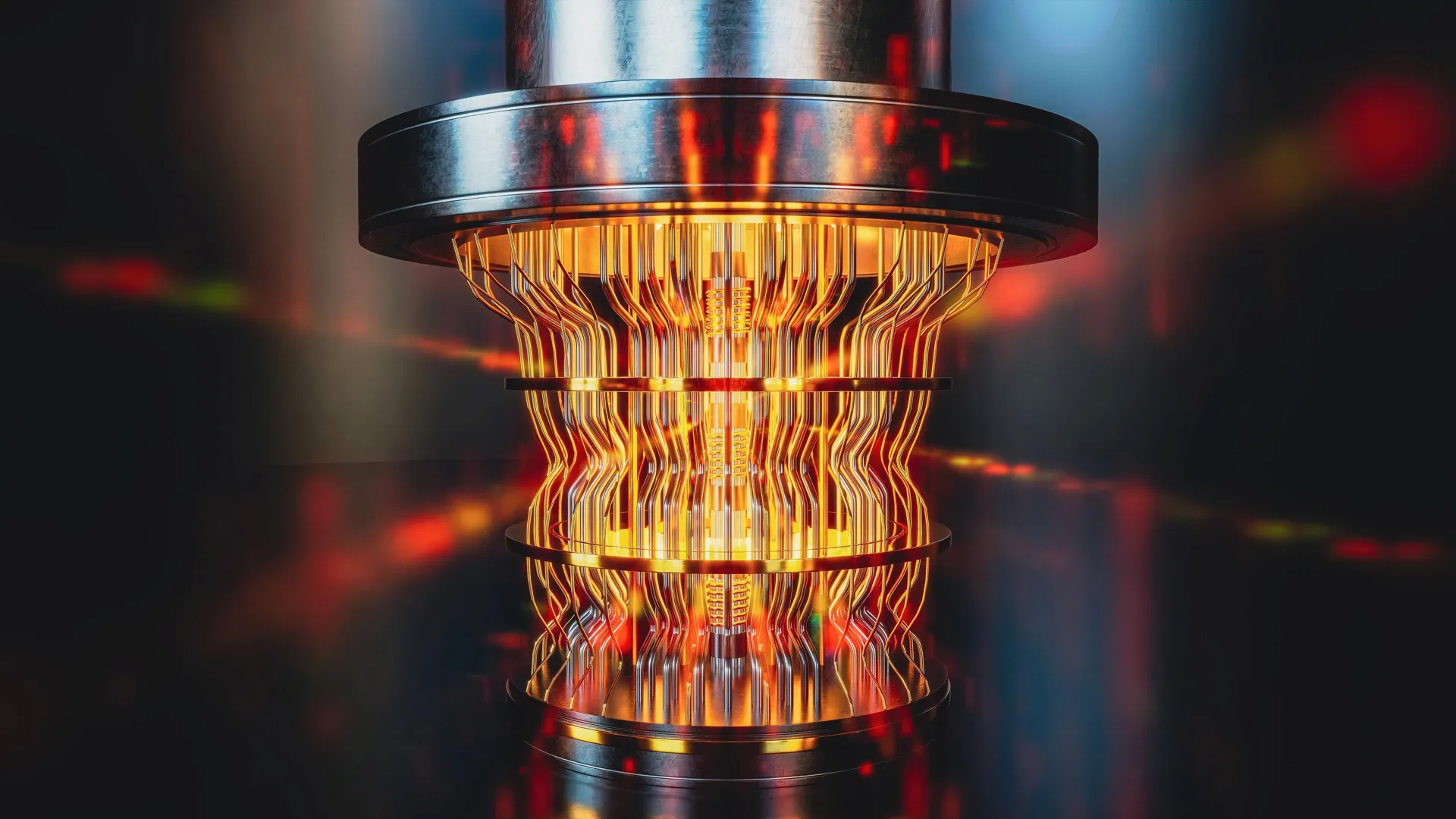
The methodology for this report involved tracking the largest announced rounds in the Crunchbase database for U.S.-based companies between September 12-18, 2026. While most significant rounds are captured, a slight time lag may occur for deals reported later in the week. The illustration by Dom Guzman visually encapsulates the dynamic nature of this week’s venture capital landscape. This week’s funding activity, though not dominated by the multi-billion-dollar outliers of previous periods, nonetheless paints a picture of robust investment in transformative technologies, particularly those underpinning the AI revolution and the continued expansion into space. It reflects a discerning yet highly active venture market, poised to fuel the next wave of innovation across diverse industries in 2026.