Faris Adani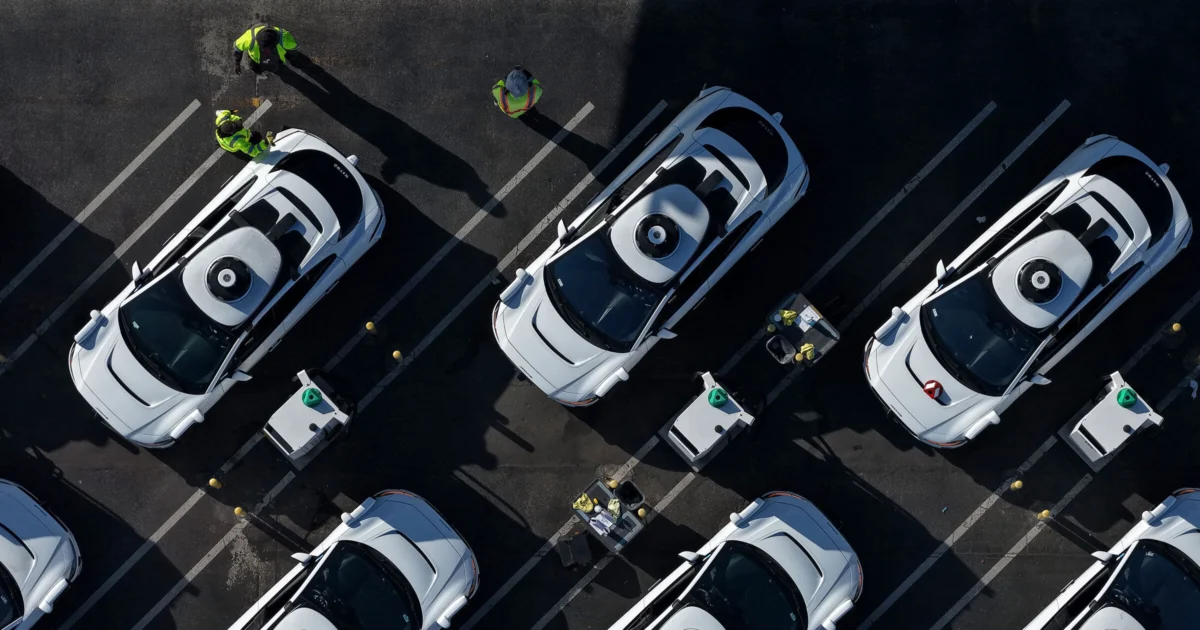
The trajectory of urban transportation employment in the United States has seen a relentless decline in worker conditions, a trend starkly highlighted by the emergence of the "robotaxi handler" industry. What began with the erosion of stable, unionized taxi jobs, giving way to the precarious "gig economy" of rideshare platforms like Uber and Lyft, has now reached a new nadir. Where human managers once provided some semblance of accountability, drivers found themselves navigating labyrinthine algorithms, their livelihoods dictated by opaque digital systems. The burden of vehicle maintenance, once a fleet responsibility, shifted entirely to individual drivers, piling financial stress onto already meager earnings. Yet, as self-driving robotaxis from tech giants like Waymo and Tesla increasingly proliferate across major US cities, even the Uber-fied gig economy is proving untenable, paving the way for a new class of contract jobs that are, by many accounts, even more grueling and demeaning.
This bleak reality was laid bare in a startling interview conducted by Bay Area Current with an anonymous Waymo contractor, identified only as a "Robotaxi Handler." The account paints a vivid, disturbing picture of a poorly organized, high-pressure work environment riddled with surveillance, inadequate training, and profoundly unsanitary tasks. It details a system where human labor, largely invisible and exploited, underpins the shiny, futuristic facade of autonomous vehicles.
The handler clarified that while their work directly serves Waymo vehicles, their actual employer is Transdev US, a third-party company tasked with managing the complex logistical and operational demands behind these self-driving cabs. Neither Waymo nor Transdev offered comments to Bay Area Current regarding the interview’s damning revelations, a silence that speaks volumes about the companies’ potential desire to distance themselves from these labor practices.
According to the worker, Transdev’s hiring process is disturbingly impersonal and ruthlessly efficient, akin to a "Soylent Green" approach to human resources. Potential contractors are rounded up en masse, onboarded with minimal instruction, and then subjected to a brutal culling process as they inevitably struggle to keep pace with the demanding, often chaotic, workflow. "There’s no interview process," the worker explained. "They weed people out over time based on whether or not you can keep up with that process and adapt really quickly." This method ensures a constant churn of disposable labor, filtering for only those who can endure the high-stress, low-support environment, effectively normalizing precarity from the outset.
Following this rapid-fire, sink-or-swim orientation, workers find themselves assigned to various Waymo facilities scattered across their home city, with job duties fluctuating on a daily basis. The allocation of tasks, the handler revealed, is far from meritocratic or structured. "Who gets placed in those specific jobs gets decided by managers the day of," the robotaxi handler told Bay Area Current. "So your job changes every day depending on how much experience you have, how long you’ve been there, and how friendly you are with the managers." This capricious assignment system fosters an environment of intense competition and favoritism, further eroding job security and worker morale. It also means that crucial, complex tasks might be assigned to undertrained individuals, or that experienced workers might be sidelined, depending on the whims of management.
Some of these roles involve critical troubleshooting, which includes updating software, meticulously cleaning sensors to ensure optimal vehicle performance, and uploading vast quantities of Waymo data to company servers for analysis and improvement. However, a significant and increasingly common duty involves physically "unsticking" Waymos when they malfunction and clog up traffic, a frequent occurrence in bustling urban centers like San Francisco. This particular task places handlers in a precarious ethical and practical dilemma. Company policy, as articulated by the worker, dictates that handlers should allow the autonomous vehicle to "sit there and figure it out" on its own. The rationale is that human intervention, or "disengagement," prevents the AI from learning to resolve issues independently, hindering the long-term development of truly autonomous systems.
Yet, this directive often clashes violently with the immediate, real-world consequences of a stalled robotaxi. When dozens of cars are backed up, and exasperated members of the public are "yelling at us and threatening us," as the worker described, adhering strictly to policy becomes an impossible, even dangerous, proposition. Handlers are forced to choose between following company orders and mitigating public safety hazards and widespread civic disruption. This highlights a fundamental tension: the idealized vision of seamless autonomy vs. the messy, unpredictable reality of urban environments, and the human workers caught in the middle, bearing the brunt of public frustration. It also underscores that these supposedly self-sufficient vehicles are still very much "in their infancy," requiring substantial human oversight and intervention despite marketing claims of advanced capabilities.
Other assignments are even more overtly unpleasant, particularly those involving cleaning tasks. These duties become especially grueling towards the end of the week, when weekend revelers leave behind an array of disgusting surprises for the handlers to confront. "Typically that’s when there’s the most throw-up, the most disgusting things in the back," the handler recounted to Bay Area Current. The revelations quickly escalate in their sheer repulsiveness: "Even poop, there’s a lot of cleaning up poop. Way more than you think." This isn’t just an occasional incident; it’s a routine, expected part of the job, exposing workers to biohazards and profound indignity.
The anecdotes become even more bizarre and unsettling. The worker shared a particularly memorable, albeit horrifying, incident: "One time there were two pig heads in the backseat of the car and the cleaner had to clean it up. I assume they just went to the market to make a stew or something, but they forgot their pig heads. They were just rolling around in the back of the car." This grotesque detail encapsulates the utter degradation of the job, where workers are tasked with cleaning up not just human bodily fluids, but also forgotten animal remains, a stark contrast to the clean, futuristic image Waymo projects. These are not the sophisticated troubleshooting roles one might associate with cutting-edge technology; these are menial, hazardous, and deeply unglamorous tasks that no one else wants to do.
The experiences of this anonymous Waymo contractor in San Francisco are not isolated incidents but rather a potential harbinger of things to come as robotaxis continue their expansion across the United States. The robotaxi industry, while promising a revolution in transportation, appears to be simultaneously creating a new underclass of manual laborers. These individuals perform the undesirable, often invisible, tasks necessary to keep the autonomous dream afloat. This hidden human layer extends beyond local handlers; as previous reports have indicated, Waymos that are "stumped" by complex real-world scenarios often receive intervention from remote workers located as far away as the Philippines, further illustrating how "autonomy" remains heavily reliant on extensive, often outsourced, human intelligence and labor.
The transition from licensed taxi cabs to rideshare, and now to robotaxi handling, represents a worrying trend of diminishing worker rights, increased precarity, and the outsourcing of dirty work to third-party contractors, allowing major tech companies to maintain a veneer of innovation while skirting direct responsibility for labor conditions. The promise of efficiency and safety through automation is coming at a significant human cost, transforming what were once stable careers into a series of precarious, degrading gigs. The story of the robotaxi handler serves as a powerful reminder that even in the most technologically advanced sectors, the human element remains crucial, yet often exploited, forming the hidden foundation upon which the future is being built. As self-driving cars become a more common fixture on our roads, it is imperative to critically examine the full societal impact, including the conditions of the unseen workforce that keeps the wheels of autonomy turning.