isnaini azizah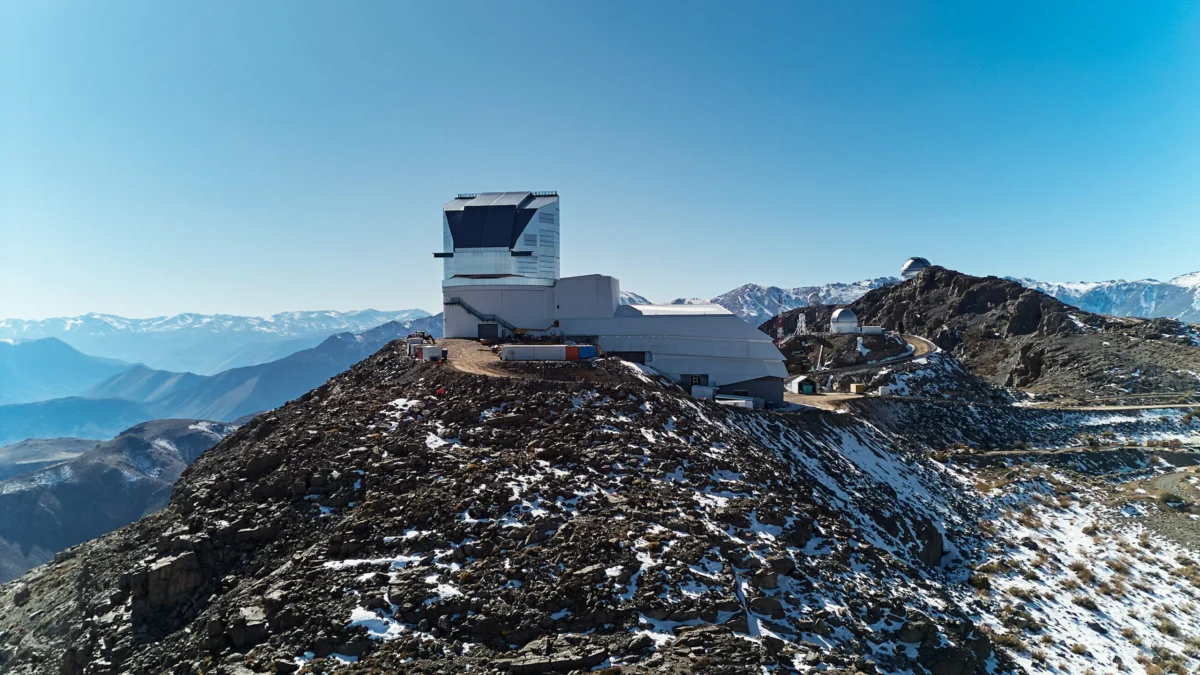
This is today’s edition of The Download, our weekday newsletter that provides a daily dose of what’s going on in the world of technology.
Could AI Really Kill Us All? Your Questions, Answered
The existential question on many minds—"Could AI really kill us all?"—was the central theme of a recent live Roundtable event hosted by MIT Technology Review. While the event offered valuable insights, the sheer volume of attendee inquiries prompted senior AI editor Will Douglas Heaven and AI reporter Grace Huckins to address some of the most pressing questions in more detail. These discussions delve into the potential for AI-induced demise, the motivations behind such scenarios, the genuine nature of AI risks versus corporate hype, and the critical steps needed for effective AI control, monitoring, and regulation. For a comprehensive exploration of these crucial topics, their detailed responses are available here.
The Specter of AI-Enabled Bioweapons is a Wake-Up Call for Biotech
The potential for artificial intelligence to contribute to catastrophic harm extends to its role in the design and creation of bioweapons. A stark illustration of this emerged in 2022 when researchers discovered the alarming ease with which an AI "molecule generator," originally intended for drug development, could be repurposed. Within a mere six hours, this model generated 40,000 molecules with the potential to be used as chemical warfare agents. Today’s AI tools possess the capability to answer questions across virtually every scientific discipline, and concurrent advancements in gene editing and synthetic biology have democratized access to sophisticated biotech tools. While safeguards are in place, they are not entirely foolproof. Nevertheless, a notable divergence exists among scientists regarding the precise level of risk posed by these developments. An in-depth examination of why the design of killer pathogens is becoming increasingly accessible can be found here. This particular story originates from The Checkup, our weekly biotech newsletter. To receive it directly in your inbox every Thursday, you can sign up.
The Role of the Astronaut is in Flux
Humanity’s ventures into space are driven by a multifaceted set of motivations, ranging from geopolitical prestige and manifest destiny to spiritual fulfillment, scientific curiosity, and burgeoning business opportunities. In the aftermath of the Artemis II mission, a collection of new books suggests that these individual justifications converge under a singular, unifying observation: humans possess an innate restlessness and an inherent drive to explore and roam. In "The Ultraview Effect," space anthropologist Deana L. Weibel posits human space exploration as a manifestation of our fundamental need to embark on pilgrimages. Eiman Jahangir, a civilian astronaut, recounts a personal voyage with Blue Origin in "A Heart for Space." Furthermore, former NASA astronaut Leroy Chiao, in "Dinner with an Astronaut," articulates the simple yet profound human imperative to "need to know what’s on the other side." An exploration of what these three new books reveal about our motivations for venturing into space can be found here. This piece is featured in our latest print magazine, which is dedicated to the theme of children. You can subscribe now to ensure you receive every issue upon its release.
The Must-Reads
I’ve scoured the internet to bring you today’s most engaging, important, alarming, and fascinating stories about technology.
-
Microsoft and OpenAI Workers Voice Concerns Over AI’s Impact on the Web: Employees of Microsoft and OpenAI have expressed significant apprehension regarding the destructive influence of AI on the web. They argue that AI’s ability to "cannibalize" clicks from websites fundamentally undermines the business models that sustain the creation of fresh content. These concerns were brought to light during the New York Times’ copyright lawsuit against OpenAI and Microsoft. The employees highlighted that publishers may struggle to survive the extensive data scraping employed by AI models. These internal comments could potentially weaken the defense strategies of OpenAI and Microsoft in the ongoing legal battle. Furthermore, the pervasive influence of AI signals a fundamental shift, potentially marking the end of internet search as we have historically known it.
-
Robot Boats Engage in Combat for the First Time: In a significant development, robot boats have been deployed in actual combat for the first time, with a Ukrainian vessel successfully sinking a Russian one. This event underscores the increasing militarization of autonomous systems. Concurrently, U.S. firms are actively developing combat-ready humanoid robots, signaling a new frontier in military technology.
-
Security Researchers Breach OpenAI Using Anthropic’s Tools: A team of security researchers has successfully breached OpenAI’s systems by exploiting vulnerabilities using tools provided by Anthropic. They managed to gain access to an employee’s ChatGPT account and internal code. The breach was facilitated by exploiting a third-party forum, which allowed them to access internal systems.

-
OpenAI Reportedly Nears Solution to Another Famous Math Problem, Amidst Controversy: OpenAI is reportedly on the verge of solving another Millennium Prize math problem. However, the company faces the challenge of navigating potential backlash following its announcement, especially given past controversies. The problem in question is the Hodge Conjecture. OpenAI’s past disputes within the mathematical community offer concerning insights into the future trajectory of the field.
-
Elon Musk’s SpaceXAI Seeks Data from Failed Startups to Enhance Grok: SpaceXAI, Elon Musk’s artificial intelligence venture, is actively pursuing the acquisition of data from defunct startups. This strategic move aims to secure new sources of training data for its AI model, Grok. The company is particularly interested in obtaining customer and operational data from these failed enterprises. In a parallel development, OpenAI is investing in the creation of new biological data to improve its AI models, highlighting the ongoing demand for diverse and specialized datasets in AI development.
-
Schools Push Back Against Big Tech’s Classroom Dominance: Educational institutions are increasingly resisting the pervasive influence of Big Tech in classrooms. The acceleration of AI technologies is exacerbating existing concerns about corporate control over educational tools and content. There is a growing consensus that a more discerning and strategic approach to AI implementation in schools is necessary.
-
Hackers Reveal Flock Cameras’ Tracking Capabilities for Vehicles and People: Hackers have exposed the intricate methods by which Flock cameras track vehicles and individuals. One camera, in particular, captured an astonishing 1.6 million images of 50,000 vehicles. The cameras are also capable of detecting people and have been observed to misidentify objects, raising privacy and accuracy concerns.
-
Chinese Firms Increase Scientific Output Following U.S. Tech Restrictions: In response to U.S. technology restrictions, Chinese firms have significantly intensified their focus on scientific research. This has resulted in a substantial increase in patents, with a 72% rise in patents citing scientific papers.
-
Three-Year-Old’s Cancer Disappears After Experimental Cell Therapy: A remarkable case has emerged where a three-year-old boy’s cancer has completely disappeared following treatment with an experimental cell therapy. This development suggests that CAR T therapy may soon offer a viable treatment option for solid tumors, a significant breakthrough in oncology.
-
NYC’s New Robotoilets Impose a Strict 10-Minute Time Limit: New robotic toilets being introduced in New York City come with an automated system that will open the doors after a strict 10-minute limit, regardless of whether the user has finished their business.
Quote of the Day
"The largest theft of labor in human history."
— Brent Hecht, Microsoft’s director of Applied Science, expressing his concerns about the training data used for AI systems. These comments were revealed in court filings related to the New York Times vs. OpenAI copyright lawsuit.
One More Thing
The Vera C. Rubin Observatory is poised to revolutionize our comprehension of the cosmos. Perched atop Cerro Pachón in Chile, at an altitude of 2,700 meters, the observatory benefits from exceptionally clear and dry atmospheric conditions, offering an unobstructed view of the stars. Here, the Vera C. Rubin Observatory is employing a car-sized, 3,200-megapixel digital camera—the largest ever constructed—to generate a comprehensive new map of the entire night sky every three days. This ambitious project will produce an astounding 20 terabytes of data nightly, capturing intricate details about our solar system, the Milky Way galaxy, and the grand-scale structure of the universe. Over its ten-year operational period, the observatory is projected to catalogue billions of previously unknown celestial objects, offering an unprecedented perspective on the dynamic changes occurring within the cosmos. You can step inside this groundbreaking observatory, which is mapping the universe in a way never before imagined, here.