Joko Widodo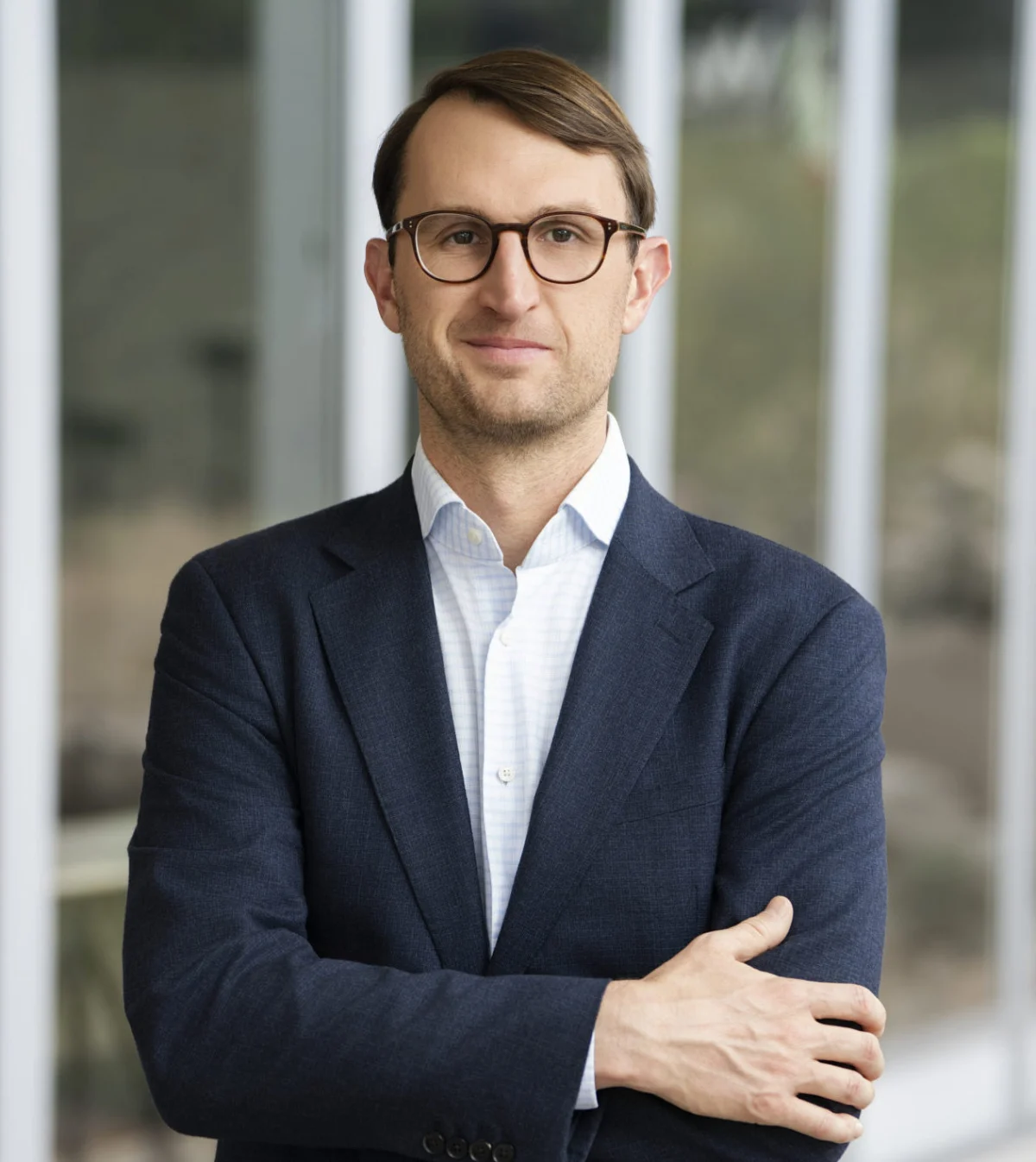
The funding round was spearheaded by Summit Partners, a leading global alternative investment firm known for its focus on growth equity. Joining Summit Partners in this strategic investment were several other prominent institutions, including Goldman Sachs Alternatives, Wells Fargo, and DocuSign, underscoring the widespread confidence in Socure’s market position and future trajectory. The $156 million investment comprises both primary capital, which will fuel Socure’s operational growth and expansion, and a secondary tender offer for employees, providing liquidity to early team members and reinforcing talent retention. While the specific terms of the Fravity acquisition remain undisclosed, its strategic importance to Socure’s roadmap is clear.
This latest financial milestone brings Socure’s total disclosed funding since its inception in 2012 to over $742 million, marking a continuous upward trajectory. The company’s valuation has seen a healthy appreciation, rising from $4.5 billion at the time of its Series E round in 2021 to the current $5.2 billion, reflecting sustained growth and market leadership in a rapidly evolving sector. The undisclosed split between primary and secondary capital indicates a dual benefit: providing essential growth capital for the company while also offering an attractive return opportunity for existing shareholders and employees.
The double announcement comes at a critical juncture, as Socure is experiencing not only robust growth within its own operations but also observing an alarming surge in the sophistication and volume of fraud across the digital landscape. The company has demonstrated remarkable transparency regarding its financial health, reporting an annual recurring revenue (ARR) of $364 million at the close of the second quarter, representing a formidable 63% year-over-year increase. During the same quarter, Socure successfully onboarded 95 new enterprise customers, further solidifying its market penetration. This impressive roster of new clients includes industry giants such as Circle, Cox Automotive, MoneyLion, and the government’s Login.gov. Crucially, Socure also proudly states that its rapid expansion is occurring "profitably," a rare and commendable achievement for a high-growth technology company in today’s environment.
At its core, Socure leverages cutting-edge artificial intelligence and machine learning technologies to empower banks, fintech companies, and government agencies with unparalleled identity verification capabilities. Its mission is clear: to "approve real customers instantly while stopping fraud." This dual capability is vital in an era where digital transactions are the norm, yet the threat of sophisticated fraud looms large. Socure’s platforms are designed to differentiate genuine users from malicious actors with high accuracy, minimizing friction for legitimate customers while erecting robust barriers against fraudsters.
The company’s extensive client base now spans over 3,000 enterprise customers, a testament to the effectiveness and reliability of its solutions. This includes an astounding 19 of the top 20 largest U.S. banks, more than 600 fintech companies, major players in the sportsbook and prediction-market sectors, and 160 public-sector organizations. High-profile customers such as Capital One, Citi, Chime, Robinhood, DraftKings, and Revolut rely on Socure’s technology to secure their operations. Socure’s revenue model is built on a flexible, usage- and transaction-based SaaS (Software as a Service) structure, aligning its success with the volume and value it delivers to its clients.
A key theme articulated by Socure co-founder and CEO Johnny Ayers is the dual nature of AI, presenting both a profound opportunity and a significant challenge for businesses. The challenge is stark: Socure reported an astonishing 8,000% increase in AI-driven fraud across its network last year. The advent of generative AI and other advanced tools has drastically lowered the barrier for fraudsters, enabling them to create highly convincing fake identities and automate complex attack vectors with unprecedented ease and scale. This escalation in AI-powered fraud necessitates an equally advanced defense.

Conversely, AI also offers a potent solution to one of the most resource-intensive aspects of fraud prevention: the investigation of flagged cases. Automated systems often generate a large volume of alerts, many of which traditionally require manual human review – a process that is both costly and time-consuming. This is precisely where the acquisition of Fravity becomes strategically invaluable.
Fravity has developed an innovative AI-native platform that utilizes "agents" – autonomous or semi-autonomous AI programs – to streamline and automate fraud, risk, and compliance investigations. By integrating Fravity’s technology into Socure’s existing RiskOS platform, it will manifest as RiskOS_Agents, initially focusing on critical areas such as watchlist screening and monitoring, as well as comprehensive know-your-business (KYB) checks. This integration promises to transform the efficiency of fraud investigation.
The synergy between Socure and Fravity is already evident, with several enterprise customers reportedly using both products in tandem prior to the acquisition. The results from these existing deployments are compelling: Fravity’s technology has demonstrated an 80% reduction in cost per case, a fivefold acceleration in case resolution times, and a significant cut of up to 70% in false positives. These metrics highlight the immense potential of agentic AI in optimizing the fraud investigation lifecycle.
This acquisition positions Socure more firmly within the burgeoning financial crime investigation market, which identity intelligence firm Liminal estimates to be a colossal $71.1 billion industry. The urgency for such solutions is particularly acute within financial institutions, where a staggering 53% of banks spend at least an hour reviewing each fraud alert, and 37% still manually review over 40% of all alerts. As AI continues to amplify both the volume and sophistication of fraudulent activities, Ayers argues that the "identity layer" – the fundamental process of verifying who or what individuals and increasingly, AI agents, claim to be – is becoming an indispensable foundation for all online business operations.
In a powerful statement, Ayers encapsulated his vision for the future: "I believe there are two types of companies that matter in the AI-driven global economy: those that are AI-native, and those that fight the consequences of AI acceleration." Socure, through its continued innovation and strategic acquisitions like Fravity, clearly aims to be a leader in both categories, leveraging AI to combat AI-driven threats.
Beyond its core financial services stronghold, Socure has been actively expanding its footprint into diverse sectors. A notable achievement in May was securing a five-year, $163 million federal contract to provide identity-proofing technology for Login.gov, a critical platform for U.S. government services. The company is also aggressively pursuing international expansion, recognizing the global nature of both digital commerce and fraud. This growth is mirrored in its workforce, with Socure recently reporting over 550 employees, a significant increase of more than 100 staff members compared to approximately a year prior, as stated by Ayers. This expansion of talent is crucial for supporting its accelerating product development and customer acquisition efforts.
In summary, Socure’s latest funding round and the strategic acquisition of Fravity underscore its unwavering commitment to leading the charge in identity verification and fraud prevention in an increasingly AI-dominated world. By combining substantial financial backing with cutting-edge agentic AI technology, Socure is not just keeping pace with the evolving threat landscape but is actively shaping the future of secure digital interactions, enabling legitimate growth while diligently combating the rising tide of sophisticated financial crime.