Imroatul Nasiyah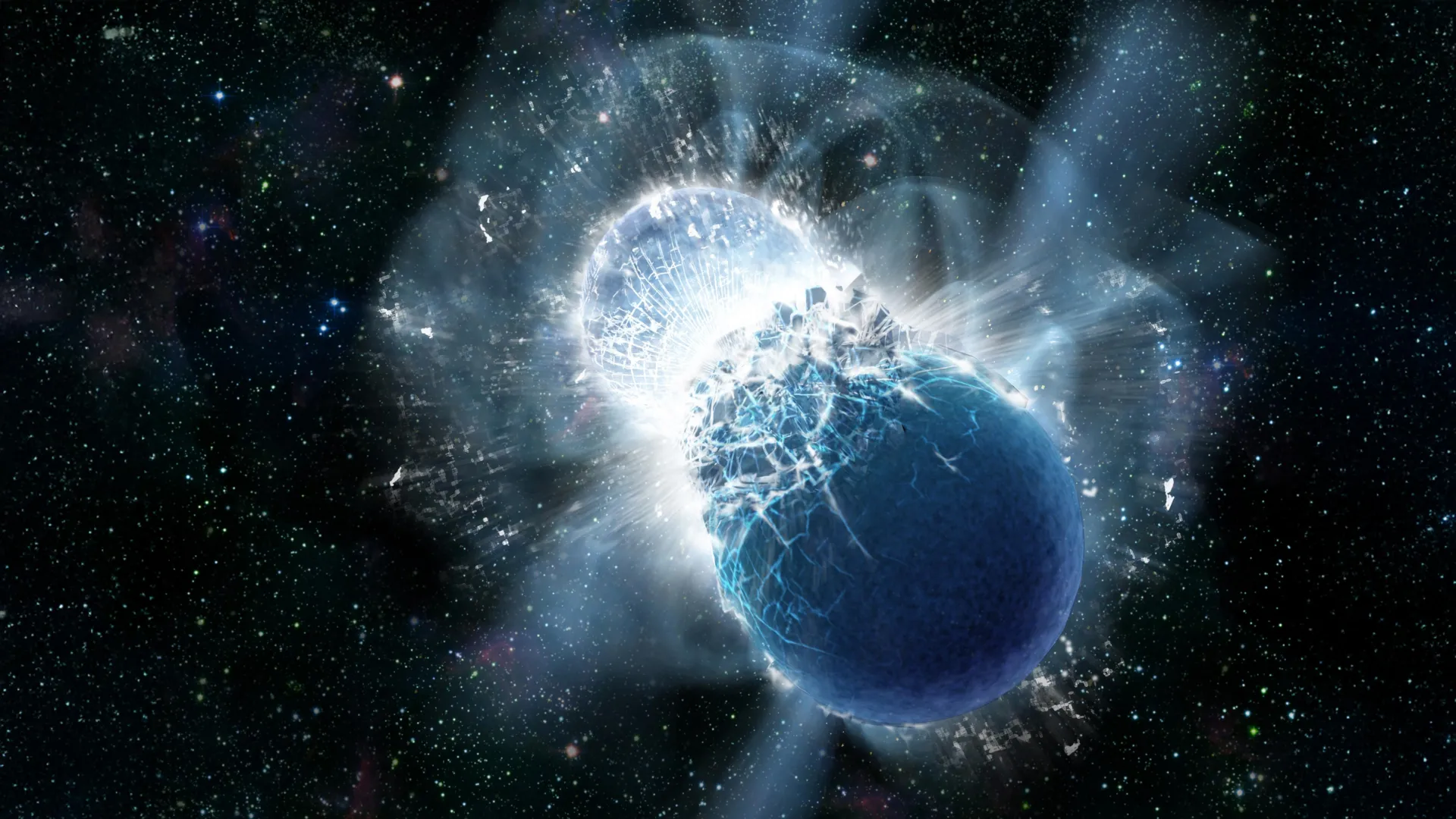
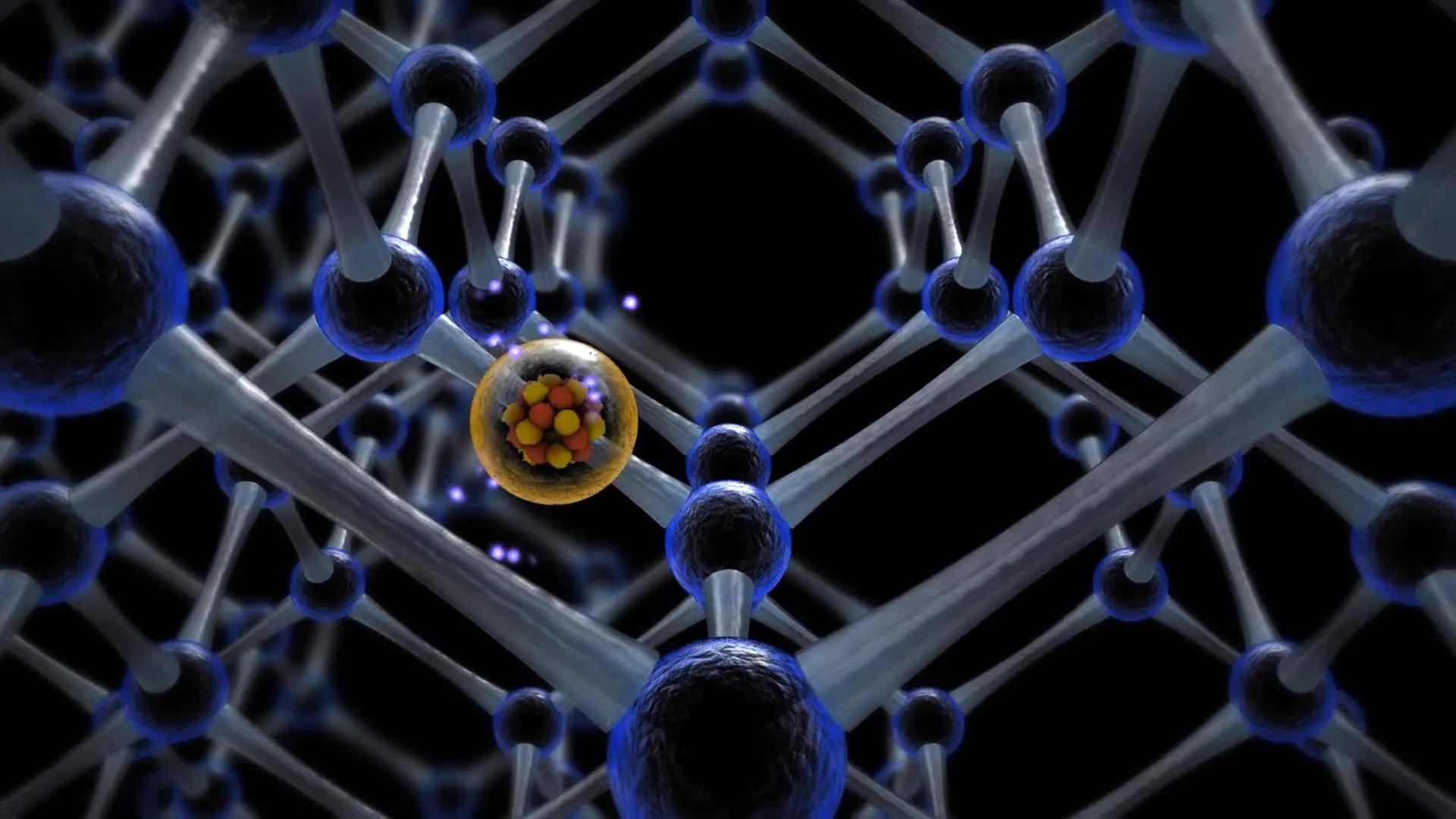
The formation of many chemical elements, from the hydrogen and helium forged in the Big Bang to the heavier elements that constitute planets and life itself, is a tale of cosmic alchemy. While lighter elements are born in the fiery hearts of stars through fusion, the creation of many of the heaviest elements, those beyond iron on the periodic table, requires a different, more extreme process: rapid neutron capture, or the r-process. This is where neutron star mergers and supernovae truly shine. These colossal cosmic explosions unleash an immense torrent of neutrons, providing the raw material for the r-process. In these chaotic environments, atomic nuclei are bombarded by a relentless stream of neutrons. They absorb these neutrons at an astonishing pace, far faster than they can undergo radioactive decay. As a nucleus captures more and more neutrons, its nucleus becomes increasingly unstable. Some of these captured neutrons then transform into protons through a process called beta decay. Each proton added to the nucleus increases its atomic number, effectively transforming one element into another, heavier one. This intricate dance of neutron capture and beta decay, repeated countless times, builds up the incredibly heavy atomic nuclei that are scattered throughout the cosmos.
The sheer complexity of modeling these nuclear reactions has been a persistent thorn in the side of astrophysicists. The number of possible nuclear species and the rates of their interactions are staggering, requiring an astronomical amount of computational power to simulate accurately. Historically, researchers have been forced to make significant simplifications to their models to make them computationally tractable, sacrificing detail and potentially introducing inaccuracies. "Researchers around the world strive to make these complex reactions understandable through theoretical simulations," explains Dr. Oliver Just, the lead author of the study and a researcher in the "Nuclear Astrophysics & Structure" department at GSI/FAIR. "However, modeling all parameters requires incredible computing power, which is why the models often have to be simplified. Our new model RHINE, which uses artificial intelligence, offers an efficient alternative."
RHINE represents a paradigm shift by leveraging the power of deep learning, a subfield of machine learning. Instead of painstakingly calculating every single nuclear reaction in real-time during a simulation, RHINE utilizes a trained neural network to rapidly estimate a crucial factor: the energy released by these reactions, often referred to as "heating." This heating plays a pivotal role in determining the dynamics of stellar explosions. It influences how matter is ejected from the exploding star, affecting both the velocity of the expelled material and the subsequent light emitted. In the case of neutron star mergers, this brilliant glow is observed as a kilonova, a fleeting but powerful cosmic light show that provides astronomers with direct evidence of heavy element synthesis.
The development of RHINE involved a meticulous two-step process. First, the neural network was trained on an extensive library of reference calculations. These reference calculations were generated using traditional, highly detailed simulations that incorporated complete nuclear reaction networks, providing a comprehensive dataset of r-process heating rates under various conditions. Once trained on this vast amount of data, the neural network learned to recognize the complex patterns and relationships between nuclear reactions and energy release. Subsequently, this trained AI model is integrated into hydrodynamic simulations. During these simulations, instead of re-calculating heating from scratch for every nuclear interaction, the AI rapidly estimates the heating rates, providing a highly accurate approximation with a fraction of the computational cost.
"First the ML models are trained using a large number of reference calculations produced with a full set of nuclear reactions," elaborates Dr. Zewei Xiong, a key developer of the machine learning models and a scientist in GSI/FAIR’s "Nuclear Astrophysics & Structure" department. "Subsequently, the models are adopted in running hydrodynamical simulations to approximate the heating rates during the r-process with minimal effort. With detailed comparisons, we validated our ML scheme against reference data. The high degree of agreement suggests that the use of ML models can save a tremendous amount of computing time. We also deduced from the results that r-process heating is an important effect that should be better accounted for in future modeling." This validation is critical, confirming that the AI’s estimations are not only fast but also remarkably accurate, preserving the fidelity of the simulations.
The implications of RHINE are far-reaching. The ability to perform these complex simulations with significantly reduced computational demands means that scientists can now explore a much wider parameter space, conduct more detailed investigations, and potentially uncover new nuances in the r-process. This could lead to a more precise understanding of the conditions necessary for heavy element formation, the astrophysical sites where these events occur, and the exact proportions of different heavy elements produced. Furthermore, these enhanced simulations are expected to play a crucial role in bridging the gap between experimental nuclear physics and astronomical observations. The upcoming FAIR (Facility for Antiproton and Ion Research) research facility, a cutting-edge accelerator complex, will provide unprecedented opportunities to study the properties of exotic atomic nuclei relevant to the r-process. RHINE can help translate the experimental data from FAIR into predictions about observable phenomena in stellar explosions and neutron star mergers, allowing astronomers to connect laboratory findings with cosmic events.
The researchers have demonstrated their commitment to open science by making the RHINE source code publicly available on the Zenodo repository. This move allows other researchers worldwide to build upon their work, fostering collaboration and accelerating progress in the field. The project received crucial funding from various organizations, including the European Research Council (ERC), underscoring the international significance and scientific merit of this endeavor. As humanity continues to explore the cosmos and unravel its mysteries, tools like RHINE represent essential leaps forward, transforming our ability to comprehend the fundamental processes that have shaped the universe and, indeed, our very existence. The efficient and accurate simulation of neutron star mergers and other r-process nucleosynthesis events is no longer a distant dream but a tangible reality, thanks to the innovative application of artificial intelligence.