isnaini azizah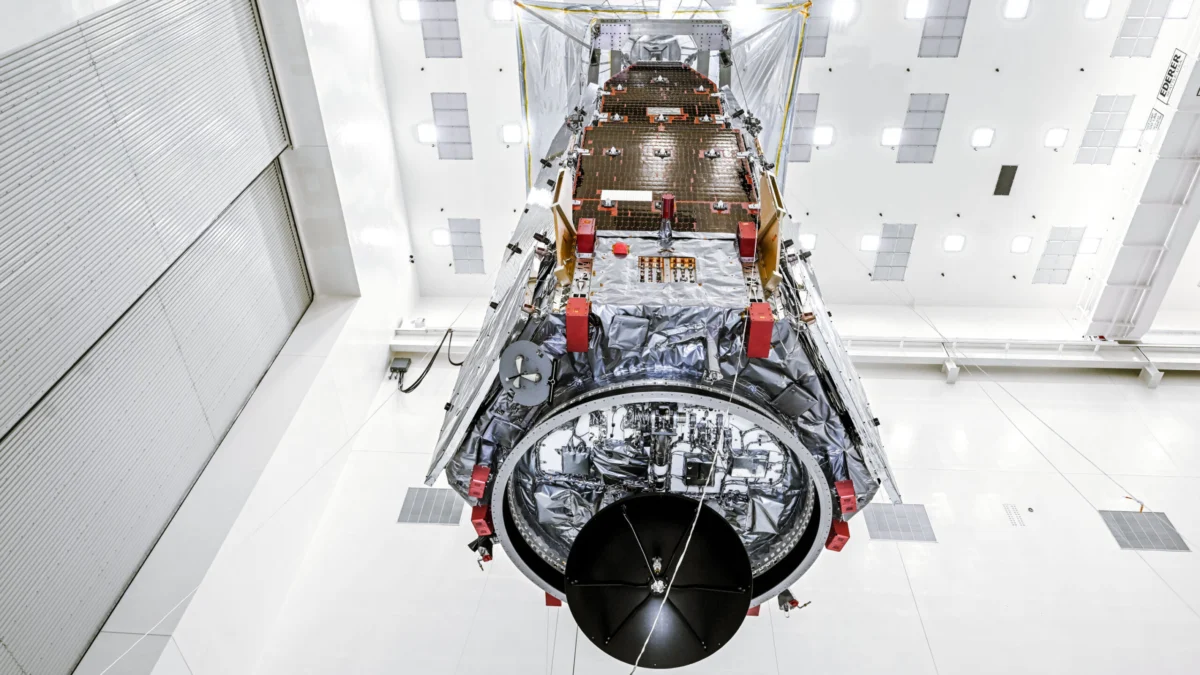
Launching at the end of August from Kennedy Space Center in Florida, NASA’s Nancy Grace Roman Space Telescope, initially designed to unravel the mysteries of dark matter and dark energy, is poised to become a vital tool in Earth’s planetary defense arsenal, capable of detecting and characterizing potentially hazardous asteroids. A multi-institutional team of planetary scientists and astronomers will unveil in September how Roman’s unique capabilities—its expansive field of view and infrared vision—make it exceptionally suited for scanning asteroids, providing crucial data on their trajectories, sizes, and compositions. This dual-purpose potential emerged partly as a response to past threats of significant funding cuts to the mission, prompting researchers to highlight its broader scientific and protective applications to lawmakers and the public.
Named in honor of NASA’s first chief astronomer, the Roman Space Telescope boasts an unprecedented 300-megapixel infrared camera with a super-wide-angle lens, enabling it to capture vast swathes of the cosmos—approximately 100 times larger than the Hubble Space Telescope’s view. This capability is expected to lead to the discovery of thousands of new exoplanets, tens of thousands of supernovae, and detailed surveys of over a billion galaxies. However, its potential for planetary defense was significantly amplified when researchers, including Bryan Holler of the Space Telescope Science Institute, proposed leveraging its wide-field infrared survey capabilities to identify near-Earth objects.
The impetus for exploring Roman’s asteroid-detection potential gained traction after past funding concerns, including significant proposed cuts by the Trump administration. Rick Cosentino, a planetary scientist at NASA, suggested to Bryan Holler in July 2025 that demonstrating Roman’s role in planetary defense could bolster its visibility and support among policymakers and taxpayers. This led to a proposal, soon to be presented at the Europlanet Science Congress in The Netherlands, which details how Roman’s extensive field of view and infrared sensitivity can detect small asteroids as tiny as 60 feet in diameter. This size is comparable to the Chelyabinsk meteor that exploded over Russia in 2013, causing widespread damage and injuries.
While Roman was not originally engineered for asteroid hunting, its software can be adapted for this purpose. The telescope’s design prioritizes clear views of the universe, leading its current software to automatically discard "streaks" that could be caused by cosmic rays, instrument glitches, or, crucially, passing asteroids. However, as planetary scientist Andy Rivkin of Johns Hopkins Applied Physics Laboratory explains, astronomers can manually review these discarded streaks to identify and analyze potential asteroids.
Roman is not intended to be a standalone asteroid-finding instrument but rather a complementary asset to other observatories, particularly the James Webb Space Telescope (JWST). While JWST can focus intensely on individual asteroids, as it did last year in tracking the potentially hazardous asteroid 2024 YR4, Roman’s vastly larger field of view allows it to survey many more asteroids concurrently. This means Roman can provide infrared observations of a significantly larger number of asteroids than JWST could manage within a practical timeframe, according to Holler.
The data gathered by Roman on these asteroids will be critical. If an asteroid is deemed non-threatening, it can be dismissed. However, if an asteroid shows potential for an Earth collision, Roman’s initial observations can guide follow-up studies by other telescopes, including JWST. These subsequent observations can provide the detailed information needed to assess the potential impact damage or to plan and execute missions to deflect the asteroid.
Alise Fisher, NASA Headquarters’ astrophysics communications lead, emphasizes Roman’s broad scientific potential, stating that its ability to sample a vast volume of the cosmos will undoubtedly lead to numerous additional scientific discoveries beyond its primary dark energy and dark matter objectives.
NASA’s Planetary Defense Coordination Office, in collaboration with international partners, primarily focuses on asteroids 460 feet in diameter and larger, with an estimated 25,000 such objects in near-Earth orbits, over half of which remain undiscovered. An impact from such an asteroid could devastate an entire city. Additionally, there are approximately 230,000 asteroids around 165 feet in size orbiting Earth, with less than 10 percent identified. The impact of one of these would be comparable to a large atomic bomb, though without the radioactive fallout.
Current methods for deflecting or vaporizing such asteroids, such as ramming a spacecraft into them (as demonstrated by the DART mission) or using nuclear devices, require precise knowledge of the asteroid’s location and trajectory. Ground-based telescopes are the current primary tools for this surveillance, but their effectiveness is limited by the portion of the night sky they can observe and atmospheric interference.
To address these limitations, NASA is set to launch the Near-Earth Object (NEO) Surveyor space telescope in 2027. Positioned between Earth and the Sun, NEO Surveyor will be specifically designed to detect elusive asteroids missed by ground-based observatories. Its infrared capabilities will allow it to spot asteroids more clearly and provide more accurate size estimations. Within years, NEO Surveyor is projected to locate 90 percent of city-killer-sized asteroids in near-Earth orbits.
The concept of "telescope teamwork" is central to enhancing planetary defense. While NEO Surveyor is explicitly a planetary defense observatory, it will work in concert with other observatories, including Roman, JWST, and the Vera C. Rubin Observatory. The Rubin Observatory, currently conducting a 10-year survey of the entire night sky from Chile, is expected to discover approximately 89,000 near-Earth asteroids.
The synergistic approach would involve NEO Surveyor identifying a potential threat. If initial observations are uncertain, Roman, with its vast field of view, could be directed to observe the relevant sector of the sky. Within days, Roman’s observations could significantly refine the asteroid’s orbital precision. Furthermore, Roman’s unique vantage point in space, different from NEO Surveyor and Rubin, will provide complementary viewing angles, further aiding in the rapid narrowing of orbital uncertainties.
After initial assessments, some potentially hazardous asteroids might be ruled out. However, one or more might remain with a non-zero impact probability. In such cases, other telescopes like JWST can be tasked with more detailed follow-up studies. This coordinated approach ensures that limited telescope resources are efficiently allocated to the most critical targets.
Roman’s infrared capabilities also offer valuable insights into an asteroid’s composition, distinguishing between rocky, carbon-rich, or metallic types. This information is crucial for estimating the potential impact damage and, more practically, for calculating the effort required to alter its trajectory.
While Roman may not be the primary protagonist in Earth’s planetary defense narrative, its role as a powerful auxiliary instrument is undeniable. As it diligently surveys the cosmos for distant supernovas and exoplanets, it will simultaneously contribute to safeguarding humanity from the existential threat of a cosmic catastrophe.