isnaini azizah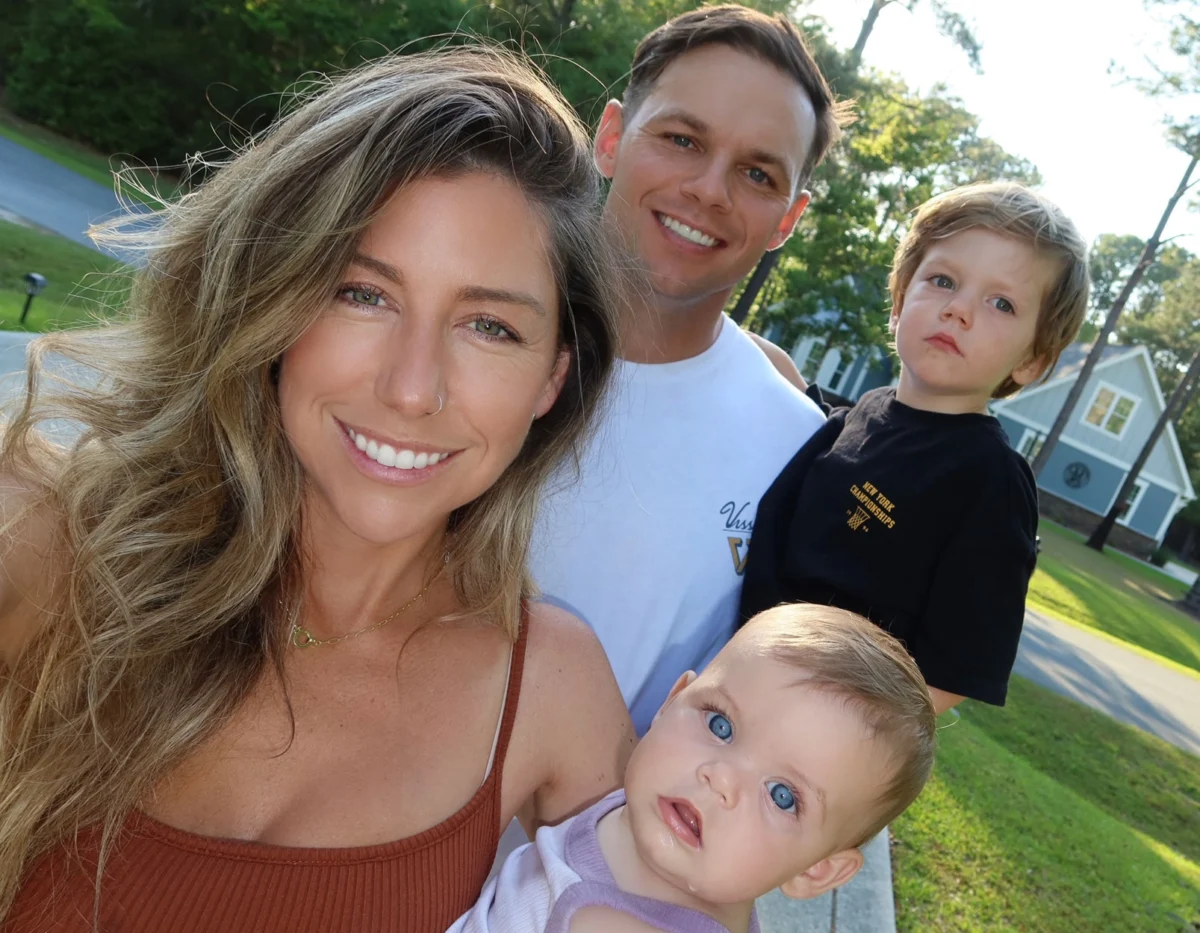
Kris DeVault’s toddler has a rare genetic disease, and he’s desperate to try an experimental drug, even though it has not been through rigorous clinical trials. This desperate plea underscores the profound challenges faced by families navigating the complex landscape of experimental treatments for debilitating conditions, a situation increasingly addressed by state-level "right to try" legislation like Montana’s evolving framework.
Kris DeVault’s voice carries the weight of a father’s profound anxiety and unwavering determination. His son, Brody, born in March 2023, began exhibiting developmental delays not long after birth. As the months passed, Brody missed crucial milestones in speech, motor skills, and coordination, a progression that deeply concerned his parents. The diagnosis, when it finally arrived around Brody’s two-and-a-half-year mark, was creatine transporter deficiency (CTD). This rare genetic condition severely impacts the brain and muscles, depriving them of the essential energy they need for proper development.
The stark reality for Brody is that there is no known cure for CTD. Yet, DeVault’s research has led him to a potential lifeline: a company actively developing a drug that shows promise in addressing the core deficit of this disease. The catch, however, is that this experimental therapy is still in its nascent stages. It has undergone testing only in animal models and a limited cohort of healthy adult volunteers, meaning it cannot yet be prescribed by physicians. DeVault acknowledges the inherent risks; the drug may not be effective, or it could even prove harmful. Nevertheless, his drive to secure access for Brody is unyielding. Montana’s recently enacted legislation, designed to expand the "right to try" for certain unapproved treatments, offers a theoretical pathway forward, potentially easing the desperate search for life-altering therapies.
Brody, now three years old, is described by his father as a bright, loving, and inquisitive child with an insatiable desire to learn. However, his ability to communicate his needs and experiences is severely limited. “He’s got no words, really,” DeVault explains, his voice tinged with the frustration of witnessing his son’s unmet desire to connect. “He wants to communicate more than he’s able to… which then turns into frustration.” This communication barrier creates a constant state of uncertainty for the DeVaults, making it difficult to ascertain Brody’s comfort, hunger, thirst, or even if he is experiencing pain. A recent, harrowing incident vividly illustrates this challenge: DeVault discovered Brody standing on an anthill, being bitten by fire ants, with Brody passively observing the painful assault.
Beyond his communication struggles, Brody experiences significant muscle weakness. “He can’t move very fast, he doesn’t have a ton of strength… and it takes a lot of energy for him to walk balanced,” DeVault notes, a stark comparison drawn to his nine-month-old daughter’s stronger limbs. While the physical limitations are concerning, DeVault’s primary worry centers on Brody’s neurological development. The early years of a child’s life are widely recognized as a critical period for brain plasticity – a time when the brain is exceptionally adaptable and capable of forming new connections. Delaying access to potentially beneficial treatments during this window could have irreversible consequences.
The biotechnology company in France, Ceres Brain Therapeutics, is at the forefront of developing the experimental drug aimed at addressing CTD. Creatine, a vital molecule that fuels brain cells, cannot effectively enter the brains of individuals with CTD due to a malfunctioning transporter system. Ceres’ innovative approach seeks to circumvent this obstacle by delivering creatine directly to the brain. Thomas Joudinaud, CEO of Ceres, reports promising preclinical results in mice. The company has also completed a Phase I clinical trial involving 48 healthy adult volunteers, testing various dosages of the drug, which is administered as a nasal spray. However, this trial data has not yet been published, and crucially, the drug has not been tested in individuals with CTD or in children. For DeVault, this experimental treatment represents “my one shot for Brody.”
Joudinaud’s future plans include a Phase II trial in individuals with CTD and those suffering from amyotrophic lateral sclerosis (ALS). However, this trial is slated to take place in France, making Brody’s participation highly unlikely, according to DeVault. Furthermore, Ceres cannot offer the drug to Brody under an expanded access program administered by the U.S. Food and Drug Administration (FDA). This is due to the drug’s lack of FDA registration and its current manufacturing process, which does not meet FDA regulatory standards. Even if the Phase II trial proves successful and the drug eventually gains FDA approval, it is unlikely to reach the U.S. market for several years. DeVault fears this timeline will be too late for Brody, who he believes will be “past his plasticity window” by then.

It is within this context of limited options and urgent need that Montana’s evolving legislative landscape emerges as a potential, albeit complex, avenue. Montana has had a “right to try” law in place since 2015, allowing terminally ill patients to petition for access to unapproved drugs. In 2023, a significant expansion occurred with new legislation extending this right to individuals who are not terminally ill, provided the drugs have completed Phase I clinical trials. Subsequent legislation aimed to clarify the operational framework for clinics dispensing these treatments. Most recently, the state’s Department of Health and Human Services finalized a comprehensive set of rules governing these clinics, paving the way for their operation.
Central to this framework is the establishment of an Experimental Treatment Review Board (ETRB), tasked with evaluating applications for access to experimental, unproven, and unapproved drugs. The ETRB is expected to review its first two applications in the coming weeks. Theoretically, Ceres could petition Montana’s ETRB to make its experimental treatment available to Brody through a clinic within the state. However, Joudinaud expresses a degree of hesitation. While he finds Montana’s regulatory structure “very interesting and very pragmatic” and “suitable for our drug,” he harbors concerns about potential repercussions from the FDA.
DeVault has been actively lobbying FDA officials, seeking a written assurance that biotechnology companies participating in Montana’s program will not face penalties once they pursue official FDA approval for their drugs. To date, these efforts have yielded no concrete progress.
With the Montana option appearing fraught with regulatory uncertainty, DeVault is exploring alternatives further afield. He is considering seeking treatment in Próspera, a private city and “special economic zone” in Roatán, Honduras. This unique enclave offers a range of unproven stem-cell and gene therapies, among other experimental treatments.
However, the pursuit of such “offshore” clinics is met with significant skepticism from the scientific community. Even with Montana’s framework, scientists, bioethicists, and health law experts express serious reservations. They emphasize that Phase I clinical trials, while a necessary first step, do not definitively establish a drug’s safety, let alone its efficacy.
Aaron Kesselheim, a professor of medicine at Harvard Medical School with extensive expertise in health policy and drug regulation, articulated these concerns regarding the Montana law. “Patients who want these kinds of treatments deserve them to be rigorously assessed so that [they] can better understand what they’re getting themselves into, and what they’re paying their hard-earned money for,” he stated.
DeVault counters these arguments with a passionate defense of parental autonomy and the right to make decisions for their children when conventional avenues are exhausted. “I’m a full-grown human being,” he asserts. “I’m capable of going to Vegas right now… blowing it all on the poker table, [or] I can go to the gun shop and buy a silenced [semi-automatic rifle]… how come I can’t make a decision to purchase a potential treatment that might change the entire trajectory of my son’s life?” His plea highlights the profound ethical quandaries at the intersection of patient desperation, nascent scientific innovation, and the often-slow-moving machinery of regulatory approval. Montana’s new law, while a step forward, underscores the ongoing debate about how best to balance patient access to potentially life-saving treatments with the imperative of ensuring their safety and efficacy. The journey for families like the DeVaults remains a precarious one, marked by hope, uncertainty, and a relentless pursuit of every possible option.