isnaini azizah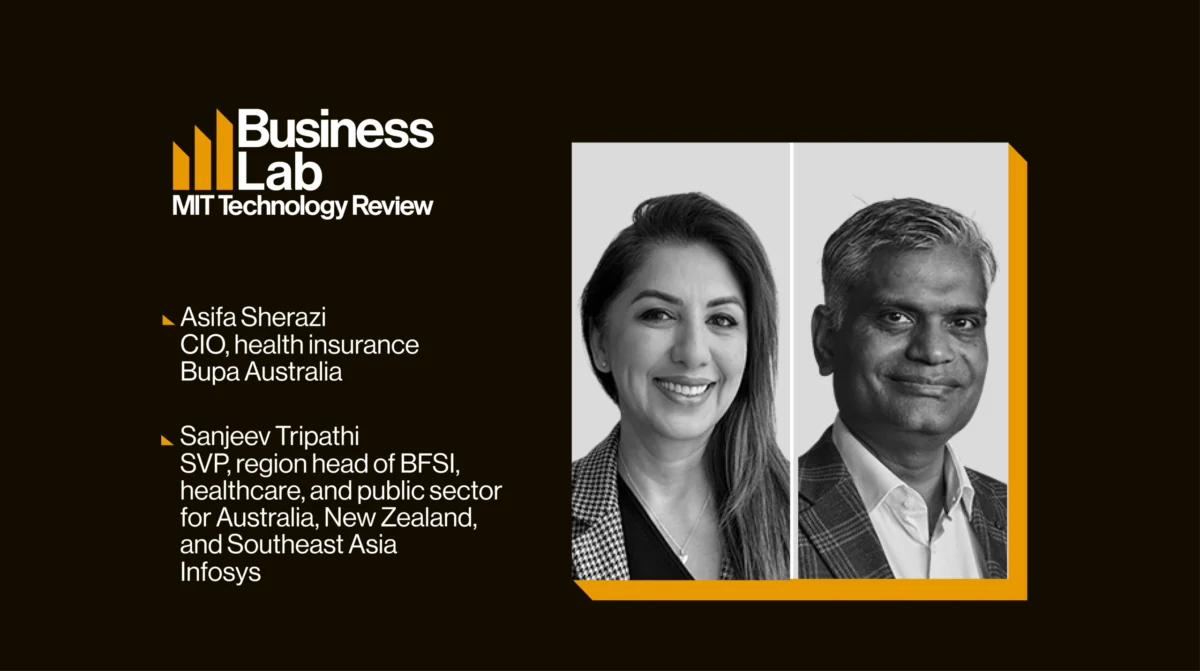
Asifa Sherazi, Bupa’s CIO of health insurance, aptly describes the insidious nature of technological obsolescence, stating, "The end-of-life technology is a risk that compounds quietly, and then arrives all at once." Bupa’s strategic decision to migrate its application from Xamarin to native Swift and Kotlin yielded remarkable results: the app’s rating surged from 3.7 to an impressive 4.7, while the user-perceived crash rate plummeted by nearly 24 percentage points on Android and eight points on iOS. Sherazi emphasizes the tangible impact on users, noting, "What they’ll notice is that when they need us, often at a stressful moment, it just simply works."
Sanjeev Tripathi, Senior Vice President and Region Head for BFSI, Healthcare, and Public Sector at Infosys, underscores AI’s pivotal role in reshaping the modernization paradigm. "The emergence of AI is fundamentally shifting the economics of modernization," he asserts, highlighting its capacity to significantly reduce the effort, risk, and time traditionally associated with such programs. Bupa’s transformation journey, powered by a combination of AI-assisted reverse engineering and forward engineering, was completed in approximately 60% less time than would have been feasible in the pre-AI era.
Beyond the technological advancements, both Sherazi and Tripathi emphasize the critical human dimension of modernization. This includes the vital task of preserving institutional knowledge, empowering teams with the capacity to adapt to new technologies, and fostering an environment where employees feel comfortable surfacing potential problems early in the development cycle.
Looking ahead, both experts foresee modernized platforms as the bedrock for increasingly personalized, predictive, and AI-driven customer experiences. The ultimate payoff of modernization, they argue, lies less in the replacement of aging technology and more in building the essential flexibility required to navigate future innovations. Tripathi elaborates, "Modern platforms will become the base for far more intelligent AI-driven ecosystems, where AI is not just an add-on, but it is built into everything from design to operations. That’s how the modern platforms will evolve, and the customer experiences will become far more personalized and predictive." For Sherazi, this strategic shift has already redefined the types of questions organizations can ask, moving from "Can our platform support that?" to the more customer-centric "Is that the right thing to do for our customers?"
This discussion, featured on Business Lab, was produced in partnership with Infosys.
Full Transcript Highlights:
Megan Tatum, host of Business Lab from MIT Technology Review, introduced the episode’s focus on legacy modernization. She highlighted the persistent challenges companies face in updating legacy technology stacks, leading to risks like losing vendor support, degraded customer experiences, and stifled innovation. The core message for leaders was the establishment of a "future-ready foundation."
Guests Asifa Sherazi, CIO of Health Insurance at Bupa, and Sanjeev Tripathi, Senior Vice President at Infosys, joined the discussion.
Asifa Sherazi provided context on Bupa, a global healthcare organization serving seven million customers across the Asia-Pacific region through health insurance and health services. She explained that Bupa’s purpose, "helping people live longer, healthier, happier lives," guides all its strategic decisions. The "My Bupa" mobile application, Bupa’s primary digital touchpoint for customers, was built on Xamarin, a platform with limited future vendor support. Bupa proactively decided to modernize from a position of strength to ensure long-term customer safety and experience, rather than waiting for the technology to become an emergency.
Sherazi detailed the risks of sticking with end-of-life technologies:
- Security and Compliance: Out-of-support technologies cease receiving crucial security updates, posing a significant risk, especially in healthcare where sensitive data is handled. Extended support offers a temporary bridge, not a sustainable future.
- Loss of Roadmap Control: Operating systems and app store requirements constantly evolve. Legacy platforms struggle to keep pace, widening the gap between customer expectations and delivered functionality. Customers benchmark against the best app experiences, not just competitors.
- Shrinking Talent Pool: Expertise for legacy technologies like Xamarin is becoming increasingly scarce, creating a workforce risk for critical customer-facing platforms.
The modernization to native Swift and Kotlin resulted in a dramatic improvement in app ratings (3.7 to 4.7), a significant reduction in user-perceived crash rates, and a doubling of the Android login success rate. Sherazi emphasized that customers simply noticed the app "just simply works" when they needed it most.
Sanjeev Tripathi explained why modernizing legacy technologies is critical now, noting that while the desire has always existed, past efforts were hampered by cost, complexity, and risk. He reiterated the rising customer expectations for seamless, intuitive interactions and the growing challenges in security, resilience, and talent availability.
Tripathi highlighted AI as the game-changer, fundamentally shifting the economics of modernization by reducing effort, risk, and time. He stated that legacy modernization is a key strategic value pool within Infosys’s AI-first framework. Infosys approached Bupa’s transformation as a business evolution, not just a technical rewrite, employing two key phases:
- Reverse Engineering: Extracting and understanding the rules, processes, and logic from the legacy environment to preserve critical business functionality and mitigate migration risks.
- Forward Engineering: Re-architecting the solution to enable an enhanced customer experience, creating a scalable, maintainable platform capable of future innovation.
Crucially, AI accelerated the transformation, delivering the project in approximately 60% less time than pre-AI methodologies.
Addressing the human component, Asifa Sherazi discussed the importance of preparing employees. She identified three key human challenges:
- Scarcity of Expertise: Dealing with limited documentation and operational knowledge concentrated in a few individuals. AI-assisted reverse engineering, as employed by Infosys, helped "harvest" the legacy code, extract business logic, and generate native-ready user stories, democratizing knowledge and freeing up team capacity.
- Capacity, Not Willingness: Business analysts were fully committed to feature delivery. AI-driven discovery and documentation significantly reduced manual effort, preventing BAs from being overloaded.
- Space and Momentum: The ambitious timeline compression from an estimated 18 months to seven was exhilarating but demanding. Sherazi stressed the leadership role in removing friction, absorbing ambiguity, and fostering a safe environment for early problem reporting. Visualizing the transformation journey provided the team with momentum and a sense of accomplishment.
Sherazi proudly noted that the team never lost sight of the end customer, making every decision with the user in mind.
Sanjeev Tripathi discussed ROI, differentiating between technical and business benefits.
- Technical ROI: Faster time to market, platform stability, lower operating costs, access to a broader talent pool, enhanced security management, and increased innovation capacity.
- Business ROI: Improved customer outcomes, reflected in metrics like Net Promoter Score and app ratings, signaling higher customer satisfaction and digital experience quality.
Tripathi advised leaders to treat modernization as an opportunity to reimagine the business platform, focusing on improving customer experience, simplifying processes, and re-architecting for capabilities like real-time personalization and data-driven decision-making. He emphasized that technology transformation must be directly linked to business outcomes and that AI enables, rather than replaces, good engineering practices.
Looking ahead, Asifa Sherazi expressed excitement about innovations that were previously impossible. The fundamental shift in questioning—from "Can our platform support that?" to "Is that the right thing to do for our customers?"—is paramount. She highlighted three key advancements:
- Speed as a Permanent Capability: Post-launch, Bupa has achieved multiple rapid releases, including a new payment gateway migration, faster bill completion, and reduced code and application footprints. This agility makes subsequent changes cheaper and offers greater optionality.
- Quality at Speed: AI-driven triage and predictive defect analysis focused testing on high-risk journeys, enabling zero security defects and zero high-severity defects at launch. The old trade-off between speed and safety is being renegotiated.
- AI-Driven Accessibility Testing: This crucial capability, treated as a critical rather than optional opportunity, ensures that interfaces are not barriers for those who most need Bupa’s services.
Sherazi also pointed to agentic AI as the next frontier, moving from AI that supports tasks to AI that completes outcomes end-to-end, with human oversight. She emphasized that the true constraint is not the AI models but the platforms, data, and processes that enable AI to act safely. Responsible AI is seen as a source of advantage, essential for earning customer trust.
Sanjeev Tripathi added that the benefits of modernization are most significant when companies reimagine, re-architect, and refactor systems, rather than simply lift and shift. He noted Bupa’s clear step-change in customer experience and team delivery speed, with engineering teams now releasing features approximately four times faster.
In the next few years, Tripathi predicts that modern platforms will form the foundation for intelligent AI-driven ecosystems where AI is integral to design and operations, leading to more personalized and predictive customer experiences. The software development process itself will also transform with AI playing a larger role.
The episode concluded with both guests and host emphasizing the transformative power of AI in legacy modernization, not just for technological advancement but for fundamentally reimagining business capabilities and customer engagement.