isnaini azizah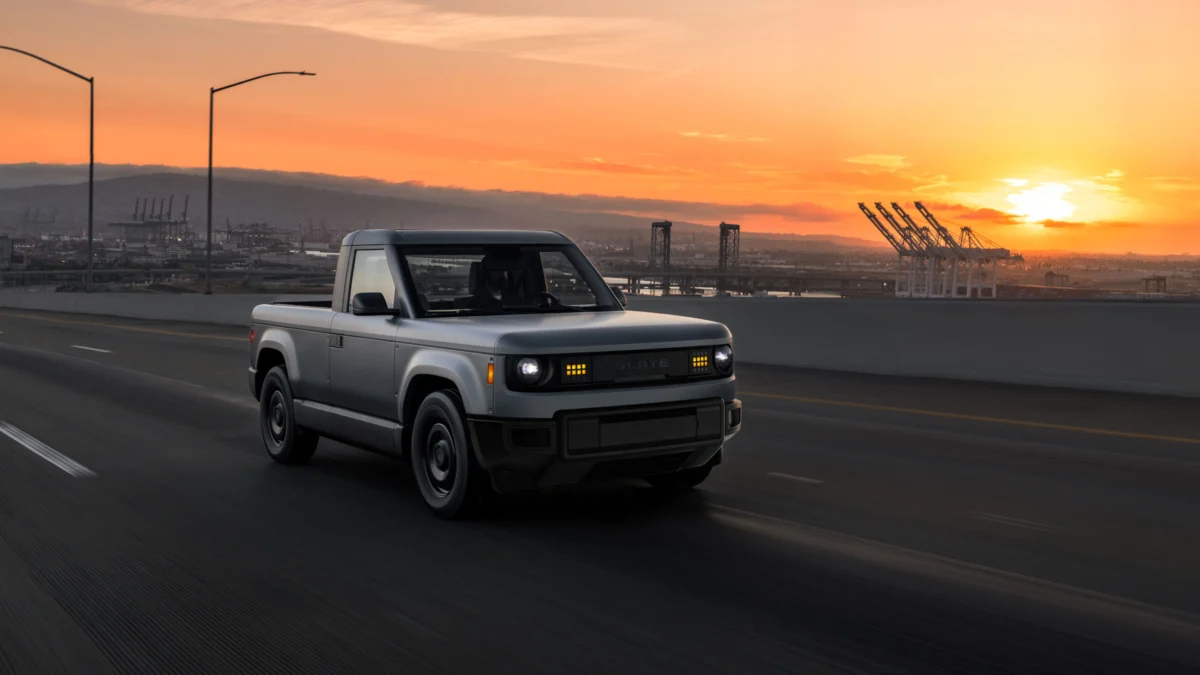
Slate Auto has embraced a philosophy of radical simplicity, bordering on austerity. The Slate is a remarkably compact, two-door pickup, even shorter than a Honda Civic. Much of the initial media attention has fixated on the base model’s manual window cranks, a feature that harks back to a bygone era of automotive design. This deliberate choice, along with a departure from the EV industry’s prevalent obsession with maximizing range, sets Slate apart. The truck is equipped with a modest 65-kilowatt-hour lithium iron phosphate battery, offering a projected maximum range of just 205 miles. To put this in perspective, even the most basic Tesla Model 3 boasts a range exceeding 320 miles on a single charge.
By deliberately accepting a shorter range and foregoing the numerous amenities that American consumers have come to expect in their vehicles, Slate Auto is able to offer the base model of its truck for an attractive price of under $25,000. While optional add-ons like a Bluetooth stereo system, vinyl wraps, and even power windows are available, the final price is still projected to remain significantly below the current average cost of a new vehicle in the US, which hovers around $50,000. This minimalist approach might seem counterintuitive in a market that increasingly favors larger and more feature-rich vehicles. However, the current strategy for EV makers has not yielded the widespread adoption that many had hoped for.
A few years ago, the Ford F-150 Lightning was heralded as a potential savior for US automotive electrification. Introduced in 2021 as an electric iteration of the nation’s perennial best-selling vehicle, the Lightning’s promising debut was ultimately cut short. Ford discontinued the truck in December 2025, a mere four years after its launch. While the F-150 Lightning faced challenges, including economic headwinds such as the second Trump administration’s reduction of tax credits and other incentives designed to promote EV adoption, its demise also highlights other contributing factors.
A significant hurdle for the F-150 Lightning was its escalating price. The base model, initially priced around $40,000 at the commencement of shipments in 2022, saw its price climb to over $54,000 by its final production year. A primary driver behind these price increases was the vehicle’s substantial battery, which was necessary to achieve an impressive nearly 300-mile range. This battery capacity was roughly double that of the Slate truck’s.
This relentless pursuit of extended range, however, appears to be largely misaligned with the actual driving habits of most Americans. While a historical emphasis has been placed on long-distance travel, the average daily mileage driven by an American driver is under 35 miles. Furthermore, a striking statistic reveals that nearly 90% of trips undertaken in personal vehicles cover 20 miles or less. This data is further corroborated by surveys of existing EV owners. A recent study by Recurrent found that daily usage typically consumes less than 20% of an EV’s total range.
The notion that drivers require significantly less range than commonly perceived is gaining traction, particularly in the current economic climate. With approximately half of the country grappling with the financial strain of affording essential goods like groceries and gasoline, and a resounding 95% of Americans acknowledging an affordability crisis according to a recent Harris poll, a more economical vehicle that eliminates the need for gasoline purchases presents a compelling proposition.
Affordable EVs have already demonstrated their appeal in international markets, even with reduced range capabilities. China, for instance, boasts over 40 million EVs and plug-in hybrids on its roads, with electric vehicles constituting roughly half of all new vehicle sales. The average range of new EVs sold in China in 2025 was a modest 247 miles, a stark contrast to the US average of 329 miles for the same period. Europe falls in between, with an average range of 281 miles.
Slate Auto is slated to commence deliveries of preordered vehicles in late 2026. The company’s manufacturing facility is designed for an initial annual capacity of 100,000 vehicles, with plans to expand to 150,000 units shortly thereafter. According to Slate Auto, thousands of customers have already placed preorders, indicating a significant initial demand.
The company’s potential has also attracted substantial investment. Notably, Jeff Bezos is among the investors who have contributed nearly $1.4 billion to Slate Auto across three major funding rounds. Furthermore, Ford is re-entering this segment with its own forthcoming small electric truck, anticipated to debut in 2027 with a retail price point around $30,000.
Ultimately, the success or failure of Slate Auto’s innovative approach hinges on a critical question: will American drivers embrace a smaller, shorter-range vehicle in exchange for a significantly more accessible price tag? Given the current economic pressures and the demonstrable reality of average driving distances, the author posits that the answer is likely to be a resounding yes. The appeal of an affordable, fuel-efficient, and fundamentally practical electric truck may resonate deeply with a segment of the American consumer base that has been overlooked by the current EV offerings. Slate Auto’s strategy is not just about building an electric truck; it’s about reimagining what an electric vehicle can be for the everyday American, prioritizing affordability and practicality over the often-unnecessary pursuit of maximum range and luxury. This could very well be the EV that the US market has been waiting for, a vehicle that aligns with the financial realities and practical needs of a broader population, thereby accelerating the transition to electric mobility. The company’s commitment to a stripped-down, no-frills approach, coupled with a competitive price point, directly addresses the affordability barrier that has hindered widespread EV adoption in the United States. The focus on essential functionality over superfluous features is a strategic move that could differentiate Slate Auto from its competitors and capture a significant market share. The success of this strategy will be a testament to the fact that for many consumers, the "EV Americans need" is not necessarily the most technologically advanced or longest-ranging, but rather the one that is most accessible and practical for their daily lives. The coming years will reveal whether Slate Auto’s bold vision translates into tangible market success and a significant shift in the US electric vehicle landscape.