Imroatul Nasiyah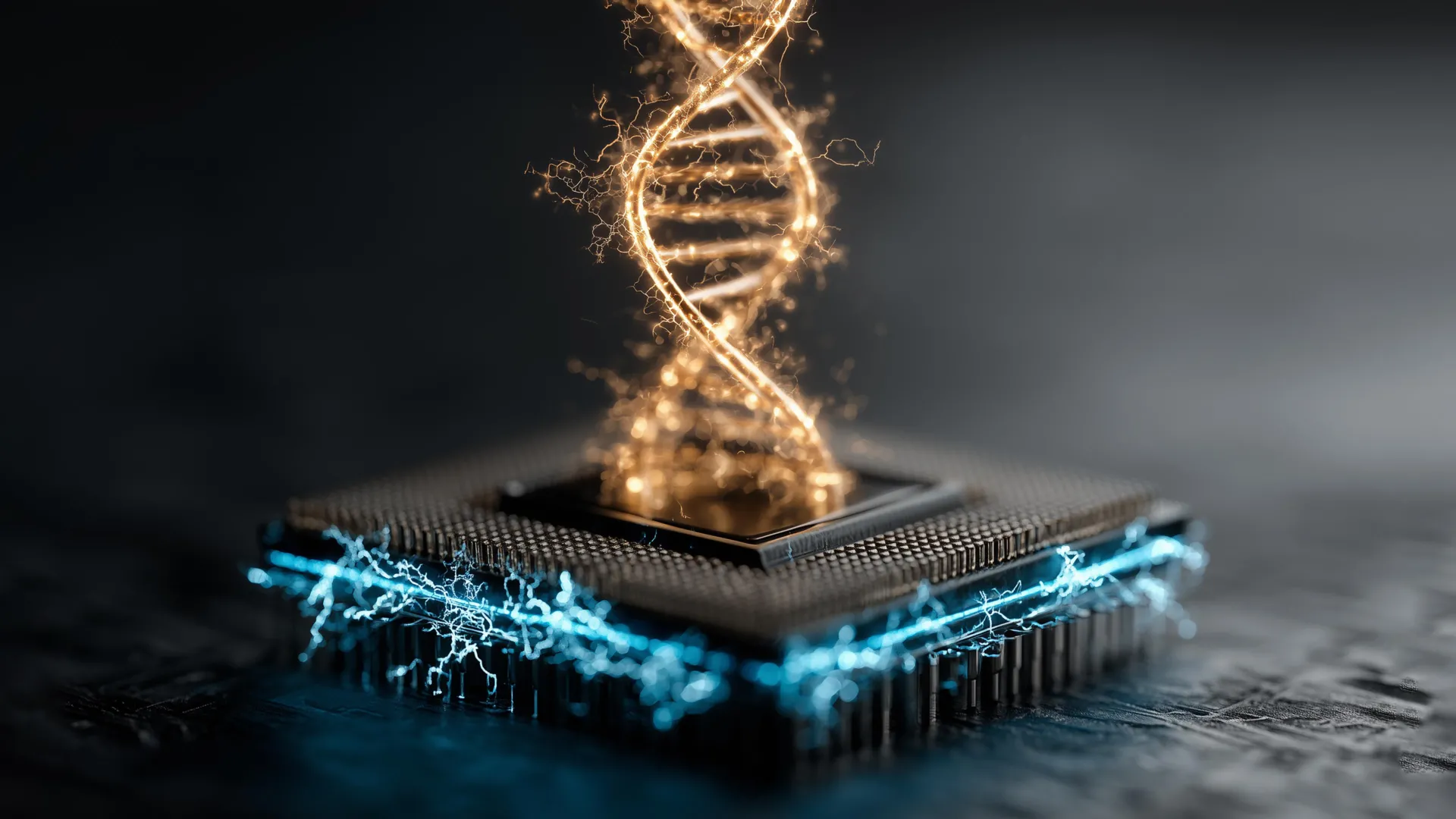
Silicon chips, long the bedrock of modern computing and information processing, are now poised to redefine the landscape of biotechnology, evolving from mere data crunchers to sophisticated molecular architects. In a groundbreaking advancement, a Harvard-led research team has unveiled a revolutionary silicon chip capable of not only processing information but also meticulously constructing DNA, marking a significant leap forward in synthetic biology and its myriad applications. This innovative device, detailed in a recent publication in the prestigious journal Nature Electronics, offers a cleaner, more efficient, and potentially scalable method for synthesizing DNA, moving away from the environmentally taxing chemical processes currently in vogue. The implications of this development are far-reaching, promising to accelerate progress in fields ranging from advanced diagnostics and genome engineering to groundbreaking cancer research and even the ambitious realm of DNA-based data storage.
At the heart of this paradigm shift lies a novel approach to DNA synthesis. Traditional methods, primarily phosphoramidite chemistry, have been the workhorse for producing custom DNA for decades, enabling the creation of millions of sequences in parallel. However, this established technique is heavily reliant on hazardous organic solvents and necessitates specialized, centralized manufacturing facilities. In contrast, the Harvard team’s innovation harnesses the power of water-based enzymatic reactions, mimicking the natural processes by which living cells construct DNA. This "gentler" alternative promises to pave the way for the development of smaller, safer, and more accessible DNA synthesis systems. While enzymatic methods have historically lagged behind conventional manufacturing in terms of parallel synthesis capabilities, this new chip shatters previous limitations, successfully synthesizing 64 distinct DNA sequences concurrently, each up to 39 nucleotides in length. This achievement represents a new benchmark in the field, demonstrating the immense potential of this water-based enzymatic approach.
The ingenious design of the silicon chip orchestrates DNA synthesis with remarkable precision. DNA is built sequentially, with nucleotides added one at a time. After each addition, a temporary blocking group is employed to halt further growth until the next nucleotide is ready to be incorporated. This crucial step requires a process known as deprotection, which involves the removal of the blocking group. In enzymatic DNA synthesis, this deprotection is typically triggered by acidic conditions, or a low pH, within an aqueous environment. The challenge in synthesizing multiple DNA sequences simultaneously lies in precisely controlling these acidic conditions, lowering the pH only at specific, designated locations across the chip during each synthesis cycle. The Harvard chip ingeniously overcomes this hurdle by employing carefully controlled electrical currents.
The chip’s surface is studded with 64 distinct synthesis sites. Each site is meticulously engineered with a pair of concentric ring electrodes surrounding the DNA molecules that are anchored at the center. When a particular synthesis site is activated, the inner ring electrode generates protons, effectively lowering the local pH and enabling the DNA strand to extend. Simultaneously, the outer ring electrode works to remove protons that might diffuse outwards, thus confining the acidic region strictly to the intended synthesis site. By orchestrating a series of these controlled cycles, the chip independently constructs 64 unique DNA sequences across its surface, a testament to its sophisticated design and the underlying precision of the electrical control mechanisms.
Intriguingly, the genesis of this remarkable DNA writing machine was not initially rooted in molecular biology. The silicon electronics at the core of the chip were originally conceived by Jeffrey Abbott, a former PhD student in Professor Donhee Ham’s laboratory, for an entirely different purpose: recording the electrical activity within large populations of neurons. It was through a process of inspired redesign and adaptation that the researchers discovered the chip’s latent potential for DNA synthesis. By reconfiguring the surface electrodes, they found that the same underlying technology, originally intended for intricate neural interface, could be repurposed to exert precise control over the chemical environment essential for DNA construction.
Professor Donhee Ham, the John A. and Elizabeth S. Armstrong Professor of Engineering and Applied Sciences at the John A. Paulson School of Engineering and Applied Sciences (SEAS) and the lead researcher on the project, elaborated on this serendipitous discovery. "A defining feature of the chip was precision current injection, which we used to permeabilize neuronal membranes for intracellular access," Ham explained. "At a certain point, we wondered whether that same current control could be redirected from cells to molecules, replacing the neuron-facing electrodes with ring-electrode pairs that could localize pH for DNA synthesis. It worked." This remarkable pivot from neuroscience to molecular synthesis underscores the versatility and adaptability of advanced semiconductor technology.
Beyond its immediate applications in synthetic biology and medical diagnostics, the research team has also demonstrated a compelling future possibility: DNA-based data storage. To illustrate this potential, they successfully encoded a 169-byte text using the 64 synthesized DNA sequences. While DNA data storage remains a long-term aspiration, requiring the synthesis of DNA at an unprecedented scale, this demonstration highlights the foundational role that efficient and scalable DNA synthesis will play. The water-based enzymatic approach, as championed by this new chip, becomes increasingly attractive as production volumes grow, offering a significantly reduced environmental footprint compared to solvent-intensive methods.
Woo-Bin Jung, a co-first author of the study and now an assistant professor of chemical engineering at the Pohang University of Science and Technology (POSTECH), who conducted this work as a postdoctoral researcher in Ham’s lab, emphasized the importance of this aspect. "DNA data storage asks DNA synthesis to operate at a scale far beyond today’s needs," Jung stated. "That is why enzymatic synthesis in water can matter. If far more than 64 sequences can be synthesized in parallel, it could offer an environmentally friendly route toward writing DNA at very large scale." This forward-looking perspective underscores the long-term vision driving the research.
The researchers also delved into the scalability of their chip technology, fabricating prototypes with synthesis sites positioned more closely together to explore the possibility of increasing the number of simultaneously produced DNA sequences. While this particular experiment did not yield the expected increase in output, it provided a critical insight into the limitations of the current system. The chip itself proved adept at confining the low pH to the intended locations, indicating that the primary bottleneck resided not in the silicon architecture but in the chemistry of the deprotection process. Currently, low pH generates intermediate molecules that then facilitate the removal of blocking groups. These intermediate molecules can inadvertently diffuse into neighboring synthesis sites, compromising the separation between individual reactions, even when the pH is precisely controlled.
Han Sae Jung, another co-first author of the study and a former graduate student and current postdoctoral researcher at Harvard, clarified this crucial point. "The chip did what we asked it to do: it localized low pH at selected sites," Han Sae Jung commented. "The limitation came from the deprotection chemistry, not from the silicon. That leaves a clear next step for the field — develop a more direct acid-driven deprotection chemistry that can keep pace with the chip." This identification of a specific chemical challenge opens a clear path for future research and development within the broader scientific community.
The groundbreaking research was a collaborative effort involving institutions such as Harvard, the Broad Institute, DNA Script, and POSTECH. The intellectual property associated with this innovative platform has been filed by Harvard’s Office of Technology Development. The study itself is formally titled "Parallel enzymatic DNA synthesis using a semiconductor chip." The project received vital support from various funding bodies, including the Office of the Director of National Intelligence (ODNI) through the Intelligence Advanced Research Projects Activity (IARPA), Horizon Europe under the Hyperion project, and the Samsung Research Funding & Incubation Center for Future Technology of Samsung Electronics. This confluence of interdisciplinary expertise and robust financial backing has propelled this transformative technology from concept to tangible reality, promising to reshape the future of molecular engineering and its impact on human health and scientific discovery.