Joko Widodo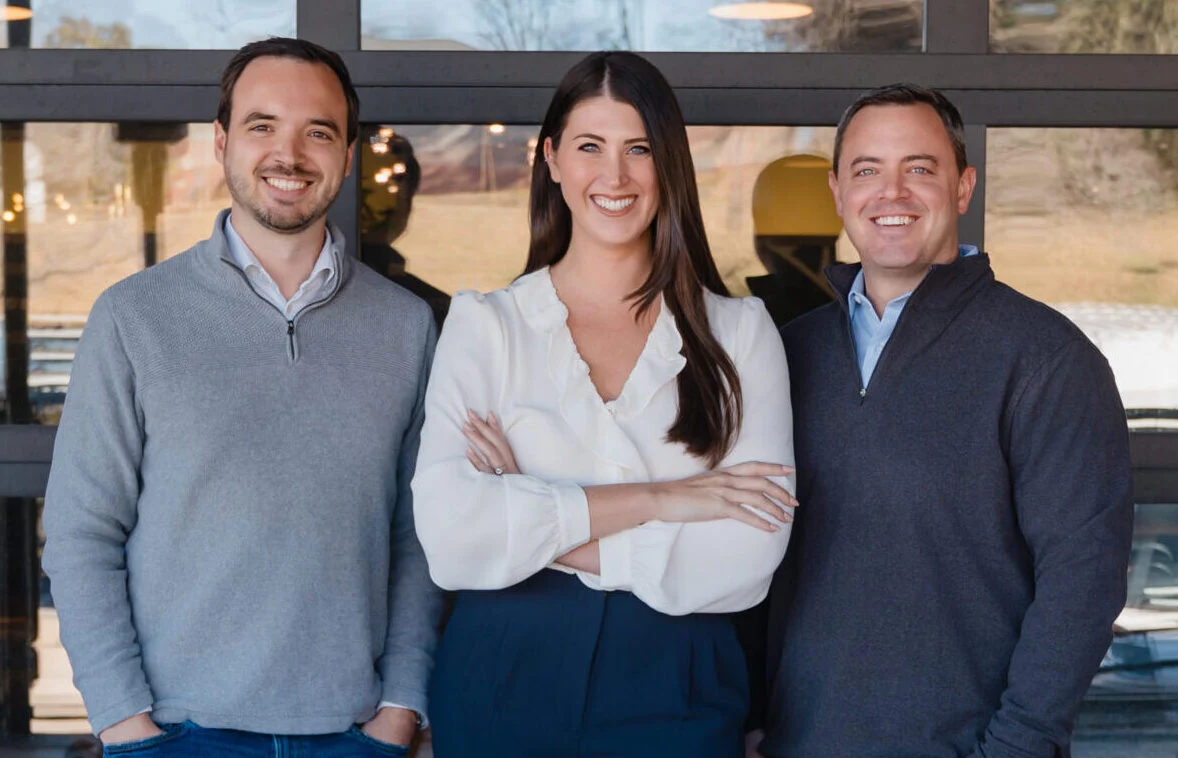
This pivotal seed funding round was spearheaded by Congruent Ventures, a firm known for its strategic investments in companies driving sustainability and industrial transformation. The round also saw robust participation from several other prominent investors, including First In, Overline, Bull City Venture Partners, and notably, St. Elmo Venture Capital, which serves as the investment arm of Cloneable’s customer, Texas Area Telecom. This successful raise brings the total capital secured by the Raleigh, North Carolina-based startup to an impressive $5.35 million since its inception in 2023, underscoring strong investor confidence in its groundbreaking approach to tackling a pervasive industry challenge.
The genesis of Cloneable’s visionary solution traces back to a critical bottleneck its founders, Lia Reich, Tyler Collins, and Patrick Lohman, encountered years prior while working on the front lines of critical infrastructure management. Their collective experience, particularly during a harrowing period, forged the foundational insight for what would become Cloneable. In 2019, as devastating wildfires swept across California, the trio—then founding employees at PrecisionHawk, a drone technology company—were deployed to assist in the urgent inspection of vital infrastructure. Their team mobilized 150 drone pilots, tasking them with surveying thousands of miles of transmission lines, an immense logistical undertaking to gather crucial data.
However, the sheer volume of data collected quickly revealed a bottleneck far less scalable than the data collection itself. Weeks later, when Cloneable CEO Lia Reich visited a PG&E utility command center, the full scope of the problem became starkly apparent. She witnessed hundreds of workers manually sifting through countless hours of video footage, an arduous and time-consuming process. The critical observation was that only a handful of highly experienced experts possessed the tacit knowledge and keen eye required to accurately identify the specific anomalies, potential hazards, and maintenance needs within that vast data stream. This stark disparity between data collection capacity and expert analysis capacity triggered an "aha!" moment for Reich. "It was an ‘aha’ moment," she recalled, reflecting on the scene. "We realized this cannot be the way. If we know what the expert is looking for, why can’t we just clone that expertise?" This pivotal realization laid the groundwork for Cloneable’s mission: to democratize and scale expert knowledge through AI.
The founders’ deep immersion in heavy industries—spanning energy, oil and gas, and agriculture—revealed a pervasive and escalating "knowledge crisis." This crisis is characterized by an alarming rate at which experienced, seasoned workers are retiring, significantly outpacing the influx of new talent capable of replacing their specialized skills and institutional memory. Reich elaborates on the urgency of this demographic shift: "For every young worker entering the energy workforce, 2.4 experienced ones are walking out the door toward retirement. And it’s happening right as energy demand is set to double by 2050." This widening skills gap, coupled with an aging infrastructure and burgeoning demand, creates an urgent need for innovative solutions to preserve and leverage critical institutional knowledge before it is irrevocably lost. Cloneable aims to directly address this critical challenge by capturing and preserving this invaluable intellectual capital.
In response to this pressing need, Cloneable has developed a two-pronged approach. In February 2025, the company launched Cloneable Field, a solution designed for automated infrastructure inspection specifically targeting the energy sector. This initial offering laid the groundwork for efficient data collection and preliminary analysis. Building on this foundation, and coinciding with its recent fundraise, Cloneable is now rolling out an advanced agentic product. This new offering moves beyond mere data collection, focusing on codifying expert knowledge and deploying it as scalable AI agents capable of performing complex tasks that traditionally required extensive human expertise and judgment.
The newly secured funding is earmarked not only to scale the development and deployment of these advanced agentic AI solutions but also to support Cloneable’s strategic expansion into an array of other infrastructure-heavy industries. These target markets include public utilities, vegetation management, construction, rail, mining, agriculture, and manufacturing. Reich emphasizes the strategic rationale behind this expansion: "These are markets chronically underserved by point solutions. No one has combined in-field data collection with agentic automation at the scale these industries require." She highlights that Cloneable’s unique value proposition lies in its ability to capture and integrate workers’ nuanced judgment and invaluable institutional knowledge—elements often not explicitly documented or easily incorporated into generic AI models. "Cloneable automates workflows that have traditionally been considered too complex for automation," she asserts, pointing to the transformative potential of their technology.

The impact of Cloneable’s agentic AI is already demonstrating remarkable efficiency gains. The company cites a compelling example: a process that typically consumes eight hours of a human engineer’s time, such as conducting structural calculations for a project involving the replacement, upgrade, or installation of 25 utility poles, can be completed by a Cloneable agent in under two minutes. This dramatic reduction in processing time translates directly into significant productivity enhancements. Reich further illustrates the scale of this transformation: "A single engineer can process roughly 4,500 to 5,500 poles a year before they hit a capacity ceiling. Our agent runs at 2 million to 3 million poles a year." For a mid-sized engineering firm employing five to ten people who dedicate half their time to such tasks, this automation could yield annual labor savings ranging from $115,000 to $312,000. More importantly, it frees up human engineers to redirect their expertise to higher-value, more complex problem-solving and strategic initiatives. Beyond cost savings and efficiency, Reich underscores the broader societal impact: "This could be the difference in entire towns being connected to fiber or not over the next 12 months," highlighting how accelerated infrastructure projects can profoundly affect communities and economic development.
Cloneable’s rapid market traction is evident in its impressive growth metrics. The startup claims to have grown its Annual Recurring Revenue (ARR) by a staggering 100x between February and the end of 2025, signaling strong early adoption and market validation. The company already boasts dozens of customers, including major players in the energy sector such as American Electric Power and Southern California Edison, as well as engineering and consulting giants like Burns & McDonnell and TRC. Beyond energy, Cloneable’s reach extends to data analytics firm Sigma and even the agricultural sector, with Perdue exploring the "expert cloning" model for applications in livestock and food supply chain management. This diverse customer base underscores the broad applicability and versatility of Cloneable’s technology across various industrial domains.
A core differentiator for Cloneable lies in its unique "shadowing" methodology, which contrasts sharply with generic AI approaches that often demand extensive coding or perfectly clean, pre-structured data. Cloneable’s platform is designed to observe and learn from human experts in real-time. The AI "watches" an expert execute a specific workflow, such as a complex utility-pole design. During this observation, it concurrently captures audio explanations, verbalized reasoning, and relevant documentation from the expert. This rich, contextual experience is then distilled and translated into an intelligent AI agent, capable of autonomously executing the same intricate task with the expert’s nuanced understanding.
Reich elaborates on this proprietary advantage: "Our differentiation is a decade of lived experience in how these industries actually operate, and the proprietary data and workflows we’ve captured from being inside these companies." She emphasizes that their approach is highly specific, adapting to the unique tools, configurations, and operational nuances of each customer. While large foundation model companies typically concentrate on developing general-purpose models, Cloneable adopts a more specialized strategy. "We’re focusing on a framework that leverages different model types, including small, specific ones," Reich explains. "We clone our customers’ knowledge and experience into a small model, which makes it extremely cost-effective to do their work. We’ve built it so all the agent needs to know is: my company, my rules, my industry, my tools." This tailored, vertical AI approach ensures maximum relevance, accuracy, and efficiency for its target industrial applications.
Cloneable employs a multi-faceted business model to monetize its offerings. For its Cloneable Field product, which facilitates in-field data collection and automated inspection, the company charges seat-based licenses per field collection device. This model caters to the operational needs of on-site teams. For its new agentic product, which deploys codified expert knowledge, charges are usage-based, typically per-token, aligning costs with the actual computational work performed by the AI agents. This flexible pricing structure is designed to scale with customer needs and usage patterns.
Eliza Cushman, a partner at Congruent Ventures, articulated her firm’s rationale behind leading Cloneable’s seed round, highlighting the culmination of extensive discussions with founders about the challenges of AI adoption in traditional industries. "We’ve seen companies focus either on data capture with complex, expensive, purpose-built hardware — or on agentic AI for the back office where they struggle to get the high-fidelity data needed to power those agents," Cushman observed. "Cloneable has solved both." This integrated approach, seamlessly bridging the gap between robust data acquisition and intelligent agent deployment, was a key factor in Congruent’s investment decision. Cushman expressed strong confidence in Cloneable’s leadership team and their ability to successfully introduce sophisticated AI solutions to industries where horizontal, general-purpose solutions often prove "aren’t deep enough" to address the specific complexities and unique requirements of industrial operations.
Looking ahead, Cloneable is poised to become a pivotal player in the digital transformation of heavy industries. The $4.6 million in seed funding will not only accelerate the development and refinement of its agentic AI platform but also fuel its expansion into new geographical markets and industrial verticals. By effectively "cloning" expert knowledge, Cloneable is not merely automating tasks; it is building a bridge over the looming knowledge gap, ensuring that critical institutional memory is preserved, scaled, and leveraged to enhance efficiency, safety, and resilience across the global infrastructure landscape. As industries grapple with an aging workforce and increasing demands, Cloneable’s innovative approach offers a powerful solution to maintain operational continuity, foster innovation, and empower a new generation of workers by augmenting their capabilities with the codified wisdom of their predecessors. The company’s trajectory underscores a broader trend: the increasing necessity of specialized, vertically integrated AI solutions to unlock the full potential of artificial intelligence in sectors that are foundational to modern society.