Faris Adani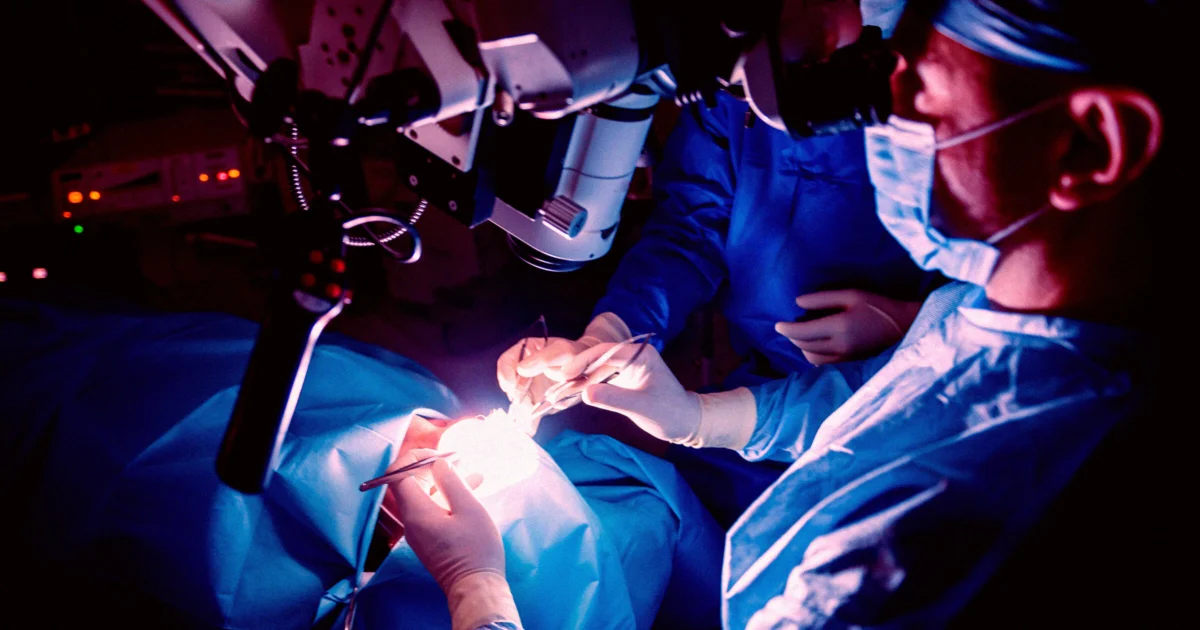
In a groundbreaking medical first, a team of pioneering neurosurgeons in London has successfully utilized artificial intelligence to significantly assist in a delicate brain operation, ushering in a new era of enhanced precision and patient safety in complex surgical procedures. The innovative AI tool provided real-time guidance during the removal of a sizable tumor from a patient’s pituitary gland, meticulously identifying critical anatomical structures such as nerves and blood vessels, thereby mitigating risks that have historically made such surgeries exceptionally challenging. This monumental achievement, performed at the renowned National Hospital for Neurology and Neurosurgery, underscores the transformative potential of AI in augmenting human expertise, safeguarding vital bodily functions, and ultimately improving patient outcomes.
The intricate surgery, which took place in May but whose details were only recently made public, centered on 48-year-old Rhys Hibbert, whose vision had been severely compromised by the benign growth. Before the operation, Hibbert struggled significantly, unable to navigate independently without the aid of glasses and walking sticks. His recovery has been nothing short of miraculous. "When I came round… I could see everything in the room clearly," Hibbert recounted to The Guardian, expressing profound gratitude for the procedure that restored his sight and, by extension, his independence and quality of life. This immediate and dramatic improvement highlights the profound impact of this AI-assisted intervention.
Operating on the pituitary gland presents a unique set of formidable challenges for neurosurgeons. This small, pea-sized gland, often referred to as the "master gland" due to its role in regulating numerous bodily functions, is nestled deep within the brain at its base. Its precarious location places it in close proximity to major arteries supplying blood to the brain and, critically, the optic nerves that control vision. Health officials frequently emphasize the extreme precision required, stating that "going a millimeter wrong can make a critical difference," with potential catastrophic consequences including blindness, debilitating stroke, or even death. Furthermore, unearthing a tumor in this hidden, confined space, often accessed through a minimally invasive transsphenoidal approach via the nose, necessitates an exquisitely precise surgical path to reach the growth without inflicting collateral damage on surrounding delicate brain tissue.
This is precisely where the sophisticated AI tool demonstrated its invaluable utility. Developed by researchers, including Sophia Bano, an associate professor in robotics and AI at University College London and the technical lead for the tool, the system was trained on an extensive dataset comprising hundreds of surgical videos specifically documenting pituitary tumor removals. This rigorous training exposed the AI to "a breadth of surgical examples that would take a surgeon many years to encounter," as Bano explained. During its intensive learning phase, human researchers meticulously annotated each video, manually outlining vessels and nerves, allowing the AI to develop an incredibly accurate understanding and recognition of these critical structures within the dynamic environment of a live surgery.
During the actual procedure, the AI system worked in seamless collaboration with the human surgical team. A camera, strategically positioned at the base of the skull via the nasal passage, fed live footage to the AI. In real-time, the system analyzed this visual data, tracking the surgeons’ instruments, identifying where hidden vessels and nerves were most likely situated, and dynamically highlighting "safe" zones for tumor extraction. The BBC aptly compared this functionality to advanced facial recognition technology, but instead applied to the intricate and often elusive anatomy within the human brain. While the human doctors maintained ultimate control and decision-making authority throughout the entire procedure, the AI served as an intelligent, ever-vigilant co-pilot, providing an unprecedented layer of navigational assistance and enhancing the surgeons’ inherent skills.
Rhys Hibbert, the patient, articulated the tangible benefit from his unique perspective. "From a patient safety perspective, I can see absolutely the benefit. There are no road signs inside our head," he remarked to the BBC. His statement perfectly encapsulates the challenge of neurosurgery and the profound reassurance offered by an AI system that can effectively "map" those internal "roads" in real-time. This achievement is a testament to the power of human-AI synergy, pushing the boundaries of what is medically possible.
However, as with any revolutionary technological advancement in medicine, this breakthrough also necessitates a thoughtful consideration of its broader implications and potential pitfalls. The increasing integration of AI in medical fields, from aiding in clinical note-taking and symptom diagnosis to assisting in complex surgeries, raises crucial questions that demand careful attention. What happens if the AI technology malfunctions, misidentifies a critical structure, or presents erroneous information? The stakes in brain surgery are immeasurably high, and even minor errors could have devastating consequences.
Historically, neurosurgeons meticulously study detailed brain scans – MRI, CT, and other advanced imaging – to gain an intimate, almost photographic, knowledge of each patient’s unique anatomical landscape before an incision is ever made. The BBC noted this established practice. Experts express valid concerns that an over-reliance on AI tools could potentially erode this foundational aspect of surgical preparation or, more broadly, impact the development of critical intuitive skills in future generations of medical professionals. As a "new generation of med students are being raised on using" AI, there is a risk that they might become overly dependent on these digital aids, potentially diminishing their intrinsic ability to recognize and navigate complex anatomy without technological assistance. Striking the right balance between leveraging AI’s power and preserving essential human expertise will be paramount. Discussions around algorithmic bias, accountability in the event of an error, and the continuous validation of AI models will be crucial as these technologies become more pervasive.
Looking ahead, the successful deployment of AI in this pituitary tumor removal portends a future where such intelligent assistance becomes standard practice in a wide array of surgical disciplines. Beyond pituitary operations, similar AI tools could be adapted for other intricate procedures involving the spine, heart, or other organs where precision is paramount and anatomical variations are common. The potential for personalized surgical planning, where AI analyzes a patient’s unique imaging data to create a tailored surgical roadmap, is immense. Furthermore, AI could play a transformative role in surgical education, offering immersive training environments and real-time feedback for aspiring surgeons. It could also facilitate advanced robotic-assisted surgeries, allowing for even greater dexterity and control than human hands alone can provide. However, realizing this future will require robust regulatory frameworks, rigorous validation processes, and continued collaborative research to ensure safety, efficacy, and ethical deployment.
Despite these necessary considerations, the pioneering surgery in London undeniably represents a monumental stride forward. It demonstrates that AI, when meticulously trained and judiciously integrated, can serve as a powerful force for good in medicine, elevating human capabilities and offering renewed hope to patients facing life-altering conditions. Rhys Hibbert’s powerful testimony – "It’s given me my life back" – stands as a poignant reminder of the profound, life-changing impact that such technological advancements, guided by human compassion and expertise, can have. This is not merely an incremental improvement; it is a fundamental shift in how we approach the most challenging frontiers of human health.