Faris Adani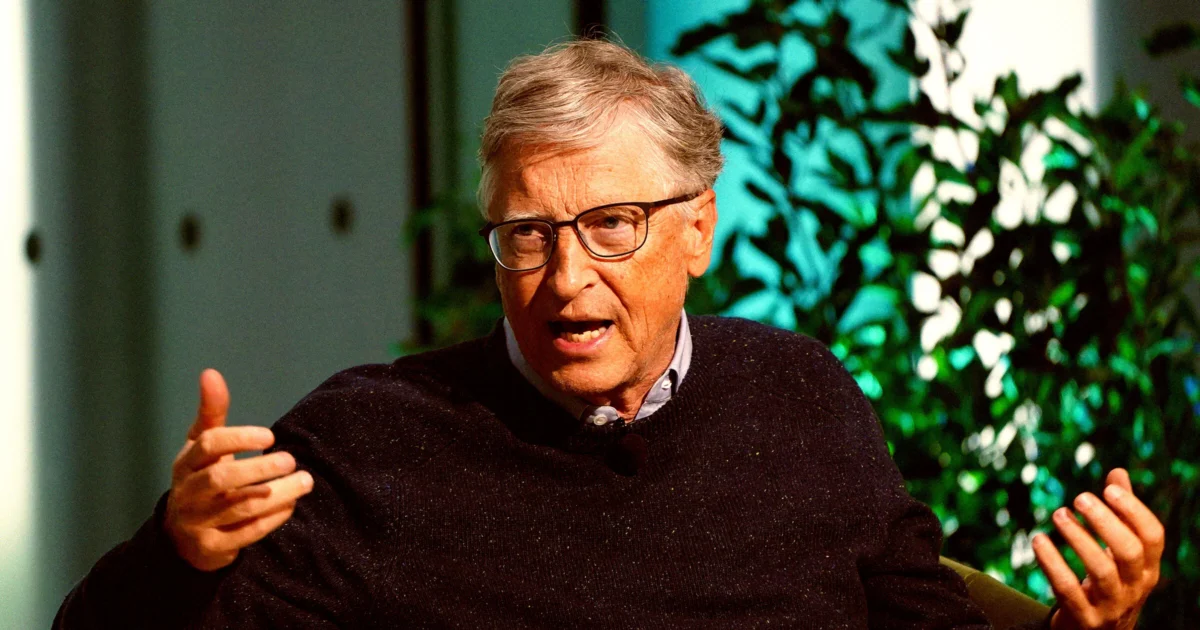
In a striking pivot from years of unwavering optimism, Microsoft co-founder Bill Gates has expressed profound alarm over the trajectory of artificial intelligence, declaring himself “in a state of shock” that he appears to be the sole voice raising urgent concerns about its transformative, potentially devastating, impacts on society. This sudden shift, articulated in a comprehensive blog post and an accompanying flurry of media interviews on August 26, 2026, positions the billionaire as a reluctant prophet warning of unprecedented turbulence and systemic risks that, he contends, are being dangerously overlooked by the wider public and, more controversially, by his peers in the tech industry.
Gates’s latest intervention marks a stark departure from his earlier public stance, which often emphasized AI’s potential for good, particularly in areas like global health and education. Now, however, he paints a far more complex and perilous picture, warning that the unchecked proliferation of AI could “annihilate jobs and desolate the economy.” His nearly 6,000-word essay on his “GatesNotes” blog, titled “A Turbulent AI Era and Critical Choices to Make,” serves as a stark manifesto outlining a future teetering between unprecedented progress and profound societal upheaval. “AI will either be the greatest equalizer ever invented, or the worst source of injustice,” Gates wrote, underscoring the binary nature of the challenge. He further elaborated, “Even under the best circumstances, the transition to this new AI era will be one of the most turbulent times in human history.”
The former Microsoft CEO’s pronouncement of shock and solitude in his worries has, however, been met with a mix of skepticism and exasperation by many who have been ringing similar alarms for years. In an interview with *Semafor*, Gates asserted, “I am in a state of shock that I’m sort of the first one saying, ‘This is crazy. This is insane.’ I’m just deafened by the silence.” This claim struck many as tone-deaf, given the extensive and ongoing discourse surrounding AI’s risks. Economists, futurists, ethicists, and even AI developers themselves have been sounding warnings about generative AI’s potential to disrupt the workforce and reshape societal structures since the moment large language models like ChatGPT burst into global consciousness. From concerns about widespread job displacement across various sectors to the exacerbation of misinformation and the potential for fueling mental health crises, the discussions have been anything but silent. Indeed, many AI companies have incorporated cautionary statements into their public communications, acknowledging the ethical and societal challenges inherent in their technology.
Gates’s belated embrace of these concerns, however, is not entirely dismissed. Better late than never, as the saying goes, especially when such a prominent figure lends his voice to the cause. He now articulates worries that AI will not merely displace jobs, but unlike previous technological revolutions that historically created more new jobs than they destroyed, AI will do the opposite. Its impact, he argues, will be universal and profound, touching virtually every profession. “There isn’t a job that isn’t affected,” he told *Semafor*, emphasizing that “It’s different not because the speed is different, but the breadth is what makes it utterly, utterly a unique moment in evolutionary history.” This breadth, he suggests, necessitates a fundamentally different approach to societal adaptation and governance than what was required during the Industrial Revolution or the advent of the internet.
Beyond economic disruption, Gates also highlighted a chilling, perhaps more immediate, existential threat: bioterrorism. He revealed that he has completed writing an entire book focused on preventing a pandemic caused by an AI-engineered virus. His chilling assessment is that “The bioterrorism risk is 50 times the natural pandemic risk now,” a claim that, if true, presents an unprecedented global security challenge. The implications of AI’s ability to accelerate biological research, potentially enabling malicious actors to design novel pathogens or weaponize existing ones with enhanced lethality or transmissibility, underscores a terrifying new frontier of risk that demands urgent international cooperation and robust safeguards.
Despite his newfound alarm, Gates firmly states that he is not “anti-AI.” His concerns are rooted in a pragmatic fear that if society fails to properly “rein in” the technology and mitigate its negative consequences, particularly job losses, the backlash could be so severe as to turn the newly jobless masses against AI itself. This public resentment, he fears, could then prevent humanity from realizing AI’s immense potential for good. “What is the backlash going to be as these jobs go away?” he asked *Semafor*, adding starkly, “It’ll make the data center thing look like nothing.” This perspective suggests a strategic concern: managing the social fallout to ensure continued acceptance and investment in AI development. He envisions a future where AI, if properly managed, could still unlock incredible advancements in various fields, from scientific discovery to personalized education and healthcare. The goal, for Gates, is to navigate this turbulent transition successfully, not to halt progress.
Perhaps one of Gates’s most provocative claims is his assertion that many tech leaders are privately aware of AI’s severe risks but are deliberately downplaying them for financial gain. “In private, people who understand how good this stuff is, and how much better it’s getting, they’re very worried,” he confided to the *New York Times*. However, rather than publicly acknowledging these dangers, he suggests, “they’re now saying to each other: ‘Hey, man, don’t say that. It’s bad for us — the next trillion dollars we’re trying to raise.’” This accusation points to a potential “conspiracy of silence” driven by market incentives, where the immense capital flowing into AI development overshadows ethical considerations and long-term societal well-being. If true, it paints a concerning picture of the industry prioritizing profit over responsible innovation, a narrative that has historically accompanied transformative technologies.
Gates’s sudden shift in perspective and his dramatic claims have prompted speculation about his motivations. His public image has faced scrutiny in recent years, particularly following revelations about his interactions with the late convicted sex trafficker Jeffrey Epstein, which cast a shadow over his heavily publicized divorce and past infidelity. Some observers wonder if his current alarm about AI serves as a strategic pivot, an attempt to rehabilitate his public persona by aligning himself with a critical, globally relevant issue. Is he genuinely experiencing a moment of profound realization, or is he, as some cynically suggest, simply “sticking his finger to the wind” to gauge and respond to growing public anxieties?
Regardless of the underlying motivations, the fact that a figure of Bill Gates’s stature is now articulating such dire warnings carries significant weight. His voice, combined with his immense influence and philanthropic reach, could serve as a powerful catalyst for change. If his pronouncements indeed reflect a broader, albeit privately held, sentiment among tech elites regarding the potential public backlash to AI, it could signal a crucial shift in how the technology is developed, regulated, and integrated into society. This newfound urgency from a former AI optimist may very well accelerate calls for robust regulatory frameworks, ethical guidelines, and proactive policy measures aimed at mitigating the risks while harnessing AI’s potential for inclusive growth. The future of AI, and indeed human society, may hinge on whether these warnings are finally heeded, not just by the public, but by the very innovators and investors shaping this powerful technology.