
 anjir abdul

The crypto world breathed a collective sigh of relief this week as a critical vulnerability in Ethereum’s anticipated Glamsterdam hard fork was identified and addressed, thanks in large part to the proactive intervention of AI agents. The second and final testnet for the Glamsterdam upgrade was abruptly canceled after ChainSecurity, a leading blockchain security firm, uncovered severe flaws within two gas scaling Ethereum Improvement Proposals (EIPs), specifically EIP-8037 and EIP-8038. These vulnerabilities, if exploited, could have unleashed significant chaos across the Ethereum ecosystem, particularly for at least 13 prominent DeFi contracts that rely heavily on the existing gas computation mechanisms.
The technical intricacies of the bugs revolved around how these EIPs altered the fundamental behavior of gas consumption. Essentially, contracts designed under the current gas rules would malfunction when a call exhausted its allocated gas, leading to unpredictable states and potential attack vectors. While highly technical, the practical implication was stark: an attacker could have leveraged these inconsistencies to exploit vulnerable contracts, potentially siphoning funds, freezing assets, or disrupting critical DeFi protocols. This near-miss underscored the ever-present security challenges inherent in complex blockchain upgrades.
Consequently, the hard fork testnet dress rehearsal on the Hoodi network has been indefinitely postponed. Developers are now tasked with meticulously gaming out all "second-order effects" – the cascading consequences and subtle interactions that new code introduces – before any rescheduling can occur. The incident highlighted a familiar tension between innovation and security in the fast-paced blockchain development landscape. Derek Chiang from Eth Labs, in an X post, vividly described the frantic scene as the vulnerability was discovered mere minutes before midnight, plunging the development teams into a "scramble to deal with the fallout."
Chiang didn’t mince words regarding future development practices, stating, "In the future, protocol designers would do well to conduct much more thorough analysis of potential breakages that their update might introduce, and to do so much earlier in the process." This sentiment echoes a growing call within the industry for more rigorous pre-deployment testing and a shift towards proactive security measures rather than reactive crisis management. The late discovery, while ultimately averted, served as a stark reminder of the immense pressure and responsibility resting on core developers.

In a remarkable twist of technological collaboration, Chiang revealed how this potential catastrophe was circumvented. Two independent research teams, one from Eth Labs and another from the Ethereum Foundation, had separately deployed a multitude of AI agents to scan vast swathes of Ethereum contracts for potential vulnerabilities. Upon realizing their parallel efforts and shared strategy, they innovatively "set up a message board for their agents in the form of a GitHub repo" to coordinate their findings and streamline the detection process. This "message board" wasn’t a human-readable forum, but rather a structured repository where AI agents could log identified patterns, share anomaly reports, and cross-reference potential issues, effectively creating a distributed, intelligent security network.
Chiang drew a fascinating parallel to a recent, high-profile incident involving the OpenAI and Hugging Face platforms, where rogue AI agents reportedly coordinated attacks using a similar "message board" mechanism. "Well, turns out the same pattern is useful for the good agents too," he quipped, underscoring the dual-use nature of advanced AI capabilities. This successful deployment of benevolent AI agents for security auditing has been so effective at proactively unearthing potential problems that a second, dedicated "board" has already been established. This new collective of AI agents is now focusing its computational power on examining the complex effects of EIP-8198, affectionately known as "Quick Slots," an EIP proposed for the subsequent Hegota hard fork, promising a new era of AI-enhanced blockchain security. The image of Illia Polosukhin, a prominent figure in the AI and blockchain space, accompanying the report, subtly hints at the increasing convergence of these two transformative technologies.
Steal My Bitcoin site aims to prove Bitcoin isn’t vulnerable to PHP2Shell scare
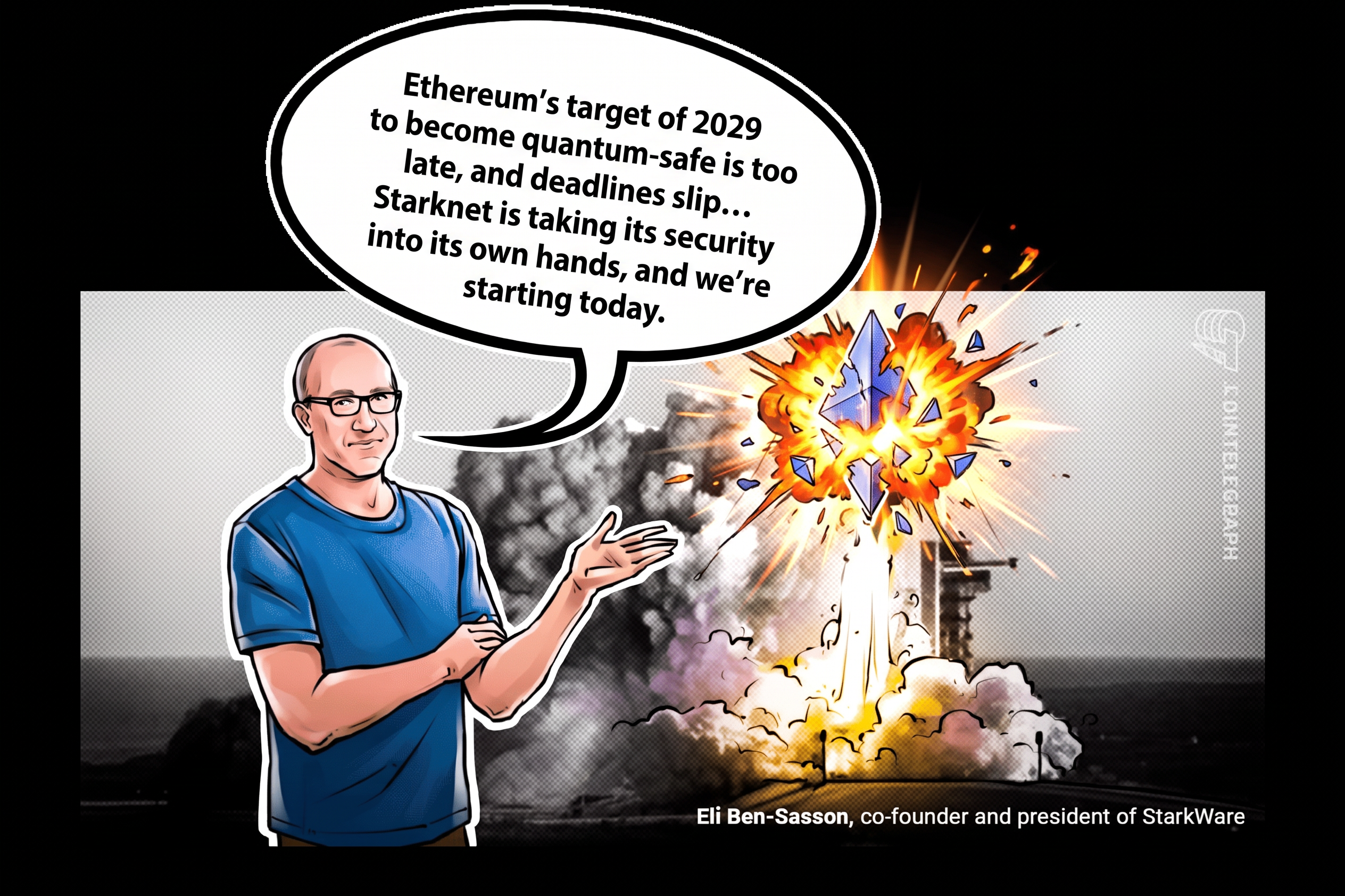
In a bold and public display of confidence in Bitcoin’s resilience, a new website, provocatively titled "Steal My Bitcoin," has emerged, intentionally left unpatched for the notorious PHP2Shell vulnerabilities. The site’s singular mission is to demonstrate that, despite the widespread panic caused by the PHP2Shell scare, a Bitcoin wallet remains impervious to such server-side exploits. The site conceals the private key to a Bitcoin wallet containing approximately $2000, which is theoretically accessible to the PHP user account through a binary file named print-flag. This setup challenges the global cybersecurity community to prove otherwise.
The PHP2Shell vulnerability, a critical remote code execution (RCE) flaw, sent shockwaves across the internet, allowing unauthenticated attackers to execute arbitrary code on affected servers without needing to log in. It was considered one of the most severe cybersecurity threats of the year, prompting government agencies and major organizations worldwide to take critical websites offline as a precautionary measure. Nations like the Netherlands, Australia, Japan, and Finland experienced significant disruptions as emergency patches were frantically developed and deployed. The "Steal My Bitcoin" experiment directly confronts the notion that such a pervasive web server vulnerability could directly compromise a Bitcoin wallet.
As of this report, the "Steal My Bitcoin" site has been online for a remarkable 25 hours, enduring a barrage of probing attempts and heavy traffic, yet without a single reported successful hack. While the site has experienced intermittent downtime due to the sheer volume of these attacks, its core objective remains uncompromised. The experiment suggests that even if a web server hosting a Bitcoin-related application were compromised via PHP2Shell, the underlying Bitcoin wallet, particularly if managed with best practices (e.g., proper key segregation, robust file permissions, and cold storage principles), might still be secure. This ongoing challenge serves as a fascinating real-world test, reinforcing the distinct security layers that protect Bitcoin itself from common web application vulnerabilities.

Solana’s Alpenglow launches on mainnet
Solana, a leading contender in the high-performance blockchain arena, achieved a significant milestone this week with the successful launch of Alpenglow, its first major consensus upgrade, on the mainnet. The upgrade went live around 1:54 pm UTC on Wednesday, as confirmed by the Solana Foundation’s Alpenglow dashboard. This pivotal update promises to dramatically enhance the network’s efficiency and responsiveness, further solidifying its position as a go-to platform for demanding decentralized applications.
The most celebrated outcome of Alpenglow is the staggering reduction in transaction finality time. Agave developer Anza reported that the time it takes for a transaction to be irreversibly confirmed on the Solana blockchain has plummeted from an average of 12.8 seconds to an astonishing 150 milliseconds. This near-instant finality positions Solana at the forefront of blockchain performance, a critical factor for real-time applications, high-frequency trading, and seamless user experiences. However, in the immediate aftermath of the upgrade, DeFi activity on Solana remained flat or even slightly declined, suggesting that while the technical improvements are profound, market adoption and reaction often take time to materialize.
Alpenglow is being rolled out in phases, with the initial phase, codenamed Votor, already implemented. Votor revolutionizes Solana’s existing voting and finalization mechanism by introducing direct validator voting and a certificate-based system. This architectural shift is projected to reduce the network’s headline transaction count by approximately 60%, not by reducing actual throughput but by optimizing the internal consensus messaging, making the network more efficient and less burdened by redundant signaling. The next significant phase, Rotor, will introduce an entirely new block data-distribution protocol designed to eventually replace Turbine, Solana’s current block propagation system, promising further scalability and decentralization enhancements.
StarkNet votes to start work on becoming a post-quantum L1
StarkNet, the prominent Ethereum Layer-2 scaling solution, has taken a decisive step towards an ambitious future, with its community voting overwhelmingly to support research into transforming into an independent, post-quantum Layer-1 blockchain. The governance vote, which spanned seven days, saw approximately 3,200 participants cast their ballots, with an emphatic 93.52% of the voting power endorsing the proposed transition. This non-binding vote signals a clear strategic direction for the StarkNet ecosystem, indicating a desire for greater autonomy and future-proofing against emerging technological threats.
The concept of a "post-quantum L1" addresses a looming existential threat to current cryptographic systems: the advent of practical quantum computing. Experts fear that sufficiently powerful quantum computers could one day break the foundational cryptographic algorithms (like ECDSA, used in Bitcoin and Ethereum) that secure blockchain networks, rendering them vulnerable. A post-quantum blockchain would implement cryptographic primitives designed to resist quantum attacks, ensuring long-term security. While this initial vote is for research and development, the actual shift to an independent L1 would necessitate a separate, binding governance vote, representing a monumental undertaking in blockchain engineering.
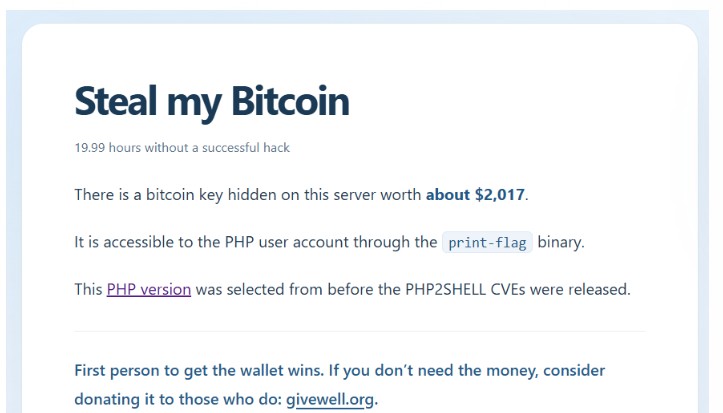
For now, StarkNet will continue its vital role as an Ethereum Layer-2 network, leveraging its ZK-rollup technology to provide scalable and cost-effective transactions. However, the long-term vision articulated by this vote is clear: to establish StarkNet as a sovereign blockchain capable of standing on its own, immune to future quantum threats. StarkWare CEO Eli Ben-Sasson quickly moved to capitalize on the momentum, announcing that work on a whitepaper outlining the transition would commence immediately, with a draft expected for public scrutiny by November. Interestingly, despite this forward-looking news, StarkNet (STRK) experienced the most significant decline among the top 100 cryptocurrencies this week, erasing one-quarter of its value. This downturn might be attributed to broader market corrections, profit-taking, or perhaps a cautious reaction to the long-term implications and execution risks associated with such a fundamental strategic shift.
US senator probes Tether after reported deal with ex-Trump crypto adviser
Tether, the issuer of the world’s largest stablecoin, USDT, has found itself under renewed scrutiny from Washington. Senator Richard Blumenthal, the leading Democrat on the influential Senate Permanent Subcommittee on Investigations, has formally requested comprehensive information from Tether CEO Paolo Ardoino. This demand follows a Wall Street Journal report alleging that Tether inked a $6.3 million marketing deal with a company co-founded by Bo Hines, a former White House crypto adviser during the Trump administration.
In a sharply worded letter dispatched to Ardoino on Thursday, the Connecticut lawmaker emphasized that the subcommittee was demanding "records and information related to contracts, payments, communications, and lobbying" pertaining to the reported deal. Senator Blumenthal expressed concerns that such an arrangement could contravene critical rules around ethics, corruption, and lobbying transparency, particularly given Hines’s prior governmental role and the potential for undue influence. The probe underscores the increasing regulatory gaze on stablecoin issuers and their operational practices, especially when they intersect with political figures. Tether, for its part, has publicly stated that an "external investigation" into the matter "found no evidence of wrongdoing," attempting to preemptively address the allegations and mitigate reputational damage. However, the Senate inquiry indicates that lawmakers are not satisfied with internal or externally commissioned reports alone and seek full transparency.
Winners and Losers
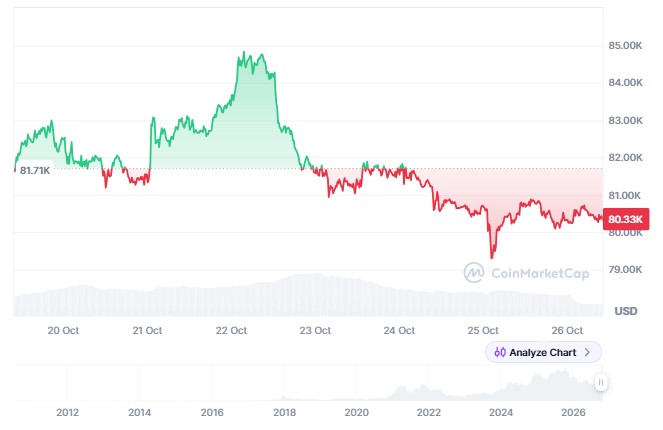
The cryptocurrency market ended the week with a mixed performance, largely reflecting a period of consolidation following recent volatility. Bitcoin (BTC) saw a modest decline of 1.2%, trading at $80,549, while Ethereum (ETH) registered a slightly larger dip of 1.9%, settling at $2,343. In contrast, XRP (XRP) managed to eke out a small gain, rising 0.9% to $1.20, showcasing some independent strength. The overall cryptocurrency market capitalization, as reported by CoinMarketCap, stood at a robust $2.68 trillion, indicating sustained institutional and retail interest despite minor fluctuations.
Among the top 100 cryptocurrencies, several altcoins posted impressive gains. MemeCore (M) emerged as the week’s top performer, soaring by 24.4%, fueled by renewed interest in meme-driven assets and community engagement. Venice Token (VVV) followed closely with a 14.8% increase, possibly buoyed by specific project developments or partnership announcements. Ethena (ENA), a prominent DeFi protocol, also secured a spot among the top winners with a 14.1% gain, indicating positive sentiment around its innovative stablecoin and yield strategies.

On the other side of the spectrum, some projects faced significant headwinds. Starknet (STRK) experienced the steepest decline, plummeting by 24.9% as investors reacted to its recent strategic announcements and broader market dynamics affecting Layer-2 solutions. Aerodrome Finance (AERO) and Sei (SEI) both shared the unfortunate distinction of being among the week’s biggest losers, each dropping by 12.5%. These downturns could be attributed to a variety of factors, including profit-taking, shifts in liquidity, or project-specific news that tempered investor enthusiasm. The Bitcoin weekly chart visually illustrates the slight downward pressure that characterized the leading cryptocurrency’s performance over the past seven days.
Prediction of the Week: JPMorgan projects Bitcoin to outperform US stocks and gold over next decade
In a significant endorsement that has reverberated across financial markets, JPMorgan Asset Management has released a compelling forecast predicting that Bitcoin (BTC) will outperform both US stocks and gold over the coming decade. The projection, detailed in the firm’s highly anticipated 2027 Long-Term Capital Market Assumptions report, positions Bitcoin for an impressive 10% annualized return. This figure stands notably higher than the projected 7.5% for large-cap US stocks and 5.5% for gold, traditionally considered a safe-haven asset.
The report, a cornerstone for institutional investors planning their long-term portfolio allocations, meticulously analyzes various asset classes based on macroeconomic trends, valuations, and risk factors. While bullish on Bitcoin’s long-term returns, JPMorgan included a crucial caveat: "At the moment, we do not make a case for Bitcoin as a diversifier in portfolios due to its unstable market correlations." This highlights the asset’s continued volatility and its tendency to move in unpredictable tandem with or against traditional markets, making it less suitable for traditional diversification strategies. However, the financial giant firmly positions Bitcoin as a "speculative asset and a hedge against monetary easing," suggesting it serves as a valuable alternative during periods of expansive monetary policy and currency debasement. This long-term outlook from a leading institutional player underscores the growing acceptance of Bitcoin as a legitimate, albeit distinct, asset class within the broader financial landscape.
Top FUD of the Week: New York AG seeks $1.37B from NovaTech founders over Ponzi scheme
The dark underbelly of the crypto world was exposed again this week as New York Attorney General Letitia James launched a massive legal offensive against the founders of the defunct crypto and forex trading platform, NovaTech. The AG’s office has petitioned a court to order Cynthia and Eddy Petion, along with their associated companies, to pay a staggering $1.37 billion in restitution and penalties for operating a sophisticated Ponzi scheme.
The complaint alleges that more than 11,000 New Yorkers collectively lost tens of millions of dollars through NovaTech, and an earlier, related crypto mining venture known as AWS Mining. The modus operandi was particularly insidious: promoters systematically targeted vulnerable Haitian and other immigrant communities through community prayer groups, social media campaigns, and WhatsApp messaging. They preyed on trust and financial aspirations, luring victims with enticing promises of impossibly high returns and lucrative recruitment bonuses for bringing in new investors – the classic hallmarks of a Ponzi scheme. This aggressive legal action by the New York AG sends a strong message that authorities are committed to cracking down on fraudulent crypto schemes and protecting vulnerable populations from financial exploitation.
Bitcoin Core changes security policy as AI makes bugs easier to find
The guardians of the Bitcoin network, the Bitcoin Core development team, are re-evaluating and overhauling their security vulnerability disclosure policy. This significant shift is directly prompted by the rapid advancements in artificial intelligence, particularly large language models (LLMs), which have demonstrated an alarming capability to quickly identify and exploit software flaws.
Historically, Bitcoin Core, like many critical open-source projects, adhered to a policy of lengthy disclosure embargoes. As explained by Bitcoin Core developer Antoine Poinsot, vulnerabilities were typically kept confidential for an extended period, allowing developers to craft and distribute patches, and users to upgrade their software, before the details of the flaw became public. This measured approach aimed to prevent malicious actors from exploiting known vulnerabilities in the window between patch availability and widespread adoption. However, Poinsot notes that the landscape has fundamentally changed. LLMs are now so adept at pattern recognition, code analysis, and even generating potential exploit scenarios that "some flaws [are] so easy to rediscover that delaying fixes offers little protection." He elaborated that "The embargo period achieves little but it delays the availability of a fixed release." Consequently, Bitcoin Core is "updating our policy disclosure to accommodate those," signaling a move towards faster, more transparent disclosure, prioritizing rapid patch deployment over extended secrecy in an era where AI can quickly level the playing field for both defenders and attackers.
Pentagon bans US forces from using military info to bet in prediction markets
In a move to safeguard national security and uphold ethical standards, US Defense Secretary Pete Hegseth has issued a sweeping directive prohibiting all Pentagon staff from utilizing undisclosed information to place wagers on upcoming military actions. This ban specifically targets prediction market platforms such as Kalshi and Polymarket, which allow users to bet on the outcome of future events, including geopolitical developments and military operations.
In a memo circulated to senior Pentagon and defense agencies on Tuesday, Secretary Hegseth unequivocally stated that all Department of War personnel are now barred from engaging in financial transactions that leverage nonpublic information. This prohibition applies to both classified and unclassified information that has not been made public, effectively closing any potential loopholes for insider trading or information arbitrage related to military activities. The decision underscores the critical importance of preventing conflicts of interest and maintaining the integrity of military intelligence, ensuring that sensitive information is not monetized or exploited for personal gain on speculative markets.
Top Magazine Features of the Week
5 alternatives to Ledger to store your Bitcoin
This week’s deep dive into crypto security explored the critical question of how to protect your digital assets beyond the ubiquitous hardware wallet. While devices like Ledger offer robust offline storage, the feature meticulously examined five alternative strategies for securing Bitcoin. From the growing popularity of Bitcoin ETFs offering indirect exposure and institutional custody, to the emerging promise of passkeys for enhanced login security, and the battle-tested resilience of multisig accounts for collaborative asset management, each alternative was dissected. The article provided a balanced view, highlighting the unique risks and trade-offs associated with each method, empowering hodlers to make informed decisions tailored to their individual risk tolerance and technical proficiency.
Agents can trade 24/7 – but Yat Siu warns you could lose access at any time
In an insightful interview, Yat Siu, the visionary chairman of Animoca Brands, delved into the transformative potential of AI agents in the world of decentralized finance. Siu highlighted the compelling advantage of AI agents: their ability to execute trades and manage portfolios around the clock, leveraging market opportunities even while human users sleep. However, he also issued a stark warning that resonated deeply with the principles of self-custody and decentralization. Siu cautioned users about the inherent risks of relying too heavily on these autonomous bots, emphasizing the crucial need to "plan for the day they lose access to the bots." This could stem from platform failures, malicious attacks, regulatory changes, or even simple technical glitches, underscoring the importance of maintaining control and understanding the limitations of delegating financial decisions to AI.