Imroatul Nasiyah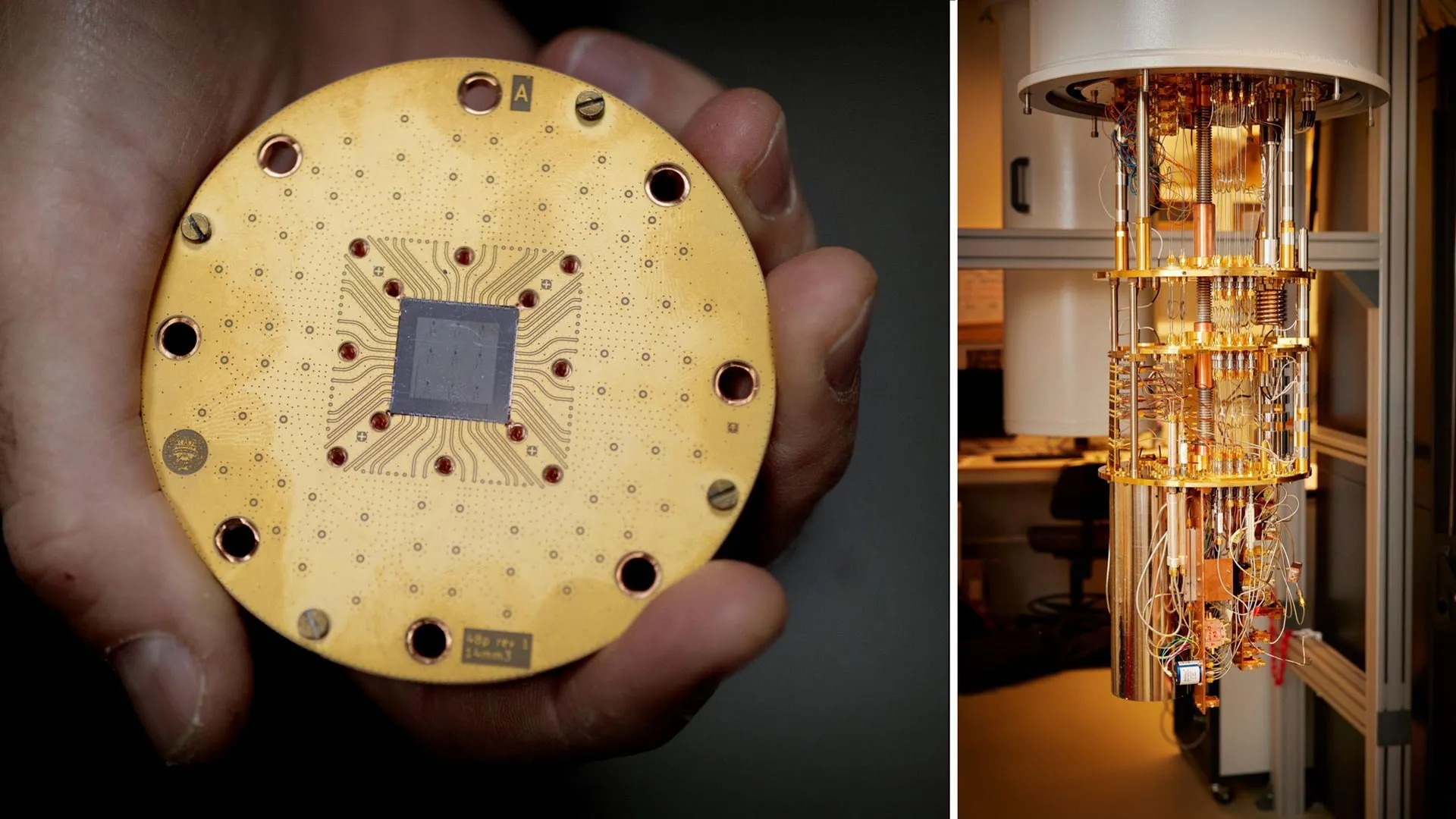
In a groundbreaking development that could significantly accelerate the advent of fault-tolerant quantum computing, researchers at Chalmers University of Technology in Sweden have unveiled a revolutionary method capable of performing a wide array of sophisticated quantum operations more than a thousand times faster than previously possible. This significant leap addresses a critical bottleneck in the field, tackling the inherent fragility of quantum computers and their susceptibility to environmental disturbances. The advance promises to enhance the reliability of quantum computations, bringing us closer to unlocking the transformative potential of this nascent technology in fields as diverse as drug discovery, materials science, cryptography, and artificial intelligence.
Quantum computers, with their unparalleled ability to tackle complex problems intractable for even the most powerful supercomputers, hold the promise of revolutionizing numerous scientific and technological domains. However, a fundamental challenge hindering their widespread adoption is their extreme sensitivity to errors. Unlike conventional computers, where errors can be efficiently detected and corrected through decades of refinement, quantum systems are exceptionally delicate. The very essence of quantum information, encoded in qubits, is so fragile that even the slightest external perturbation – be it electrical noise, thermal fluctuations, or cosmic radiation – can cause the quantum state to deviate from its intended path, leading to a loss of crucial information. The longer a quantum operation takes to complete, the greater the accumulated error rate, potentially rendering the entire computation invalid.
"The fundamental building blocks of quantum computers, known as qubits, are so sensitive that even the smallest disturbance can cause the quantum state to deviate from the target, resulting in the loss of information," explains Lei Du, a lead author of the study and researcher in Applied Quantum Physics at Chalmers. "If too many errors accumulate before they can be corrected, the computation can fail." This inherent vulnerability underscores the urgent need for strategies that can not only protect quantum information but also expedite the operations that manipulate it.
The Chalmers team has focused on a promising approach that leverages bosonic quantum codes. This strategy departs from the traditional method of encoding information in individual qubits. Instead, it stores quantum information within the collective states of microwave fields residing inside superconducting circuits. This approach offers a more robust defense against certain types of errors. Tangyou Huang, a researcher in Quantum Technology at Chalmers and co-author of the study, elaborates, "Rather than storing quantum information in individual qubits, bosonic codes encode information in the microwave fields found within superconducting circuits. This approach has been shown to provide stronger protection against certain types of errors."
While bosonic quantum codes offer enhanced error protection, their implementation has traditionally been a time-consuming process. Creating and controlling the necessary quantum states typically involves guiding the quantum system through thousands of repeated driving cycles. Each of these cycles presents an opportunity for external disturbances to corrupt the delicate quantum information. Consequently, in the realm of quantum computing, speed and reliability are inextricably linked.
The breakthrough from Chalmers lies in their innovative method that bypasses this lengthy, multi-cycle process. By proposing a different strategy, Du and Huang have demonstrated that a broad spectrum of advanced quantum operations on bosonic states can be executed with remarkable efficiency. "Our method shows that a diverse range of quantum operations on bosonic states can be completed within a single driving cycle, rather than the several thousand cycles that have been required previously," states Lei Du. "This makes the operations both faster and more efficient, while reducing the risk that disturbances will corrupt the information before the process is finished. It represents an important step towards fault-tolerant quantum computers."
This accelerated operation is made possible through the strategic application of Quantum lattice gates, a recently developed universal set of quantum gates conceived by the same research team. These gates function as sophisticated shortcuts, enabling the intended quantum operation to be accomplished in a single driving cycle, a significant departure from the sequential, step-by-step control required by older methods. This streamlined approach not only enhances speed but also simplifies the control mechanisms and drastically reduces the susceptibility to errors.
"You can think of it like building a large Lego castle," illustrates Tangyou Huang, using a relatable analogy. "Instead of assembling it brick by brick and risking mistakes along the way, quantum lattice gates act like pre-built Lego modules that can be connected quickly and efficiently." This modular, single-cycle approach drastically minimizes the window of vulnerability for the quantum information.
The newly developed technique is particularly well-suited for superconducting quantum computers, a leading technology in the global pursuit of large-scale quantum computing. Chalmers University of Technology itself is actively developing a 100-qubit quantum computer utilizing superconducting technology, making this research directly relevant to their ongoing efforts. "A key advantage of our approach is that it can be implemented using existing superconducting quantum circuit platforms," Huang notes. "We are already discussing possible experimental realizations with colleagues at Chalmers, and we hope to see a demonstration of the method in the near future."
The implications of this research extend beyond mere speed enhancement; it addresses a fundamental challenge in quantum error correction. The ability to quickly and reliably produce and control the error-correcting quantum states is paramount for building robust quantum computers. "Our results address one of the major bottlenecks in the field: how to quickly and reliably create and control the error-correcting quantum states that could play an important role in future quantum computers," Du emphasizes.
To further contextualize the breakthrough, it is important to understand the underlying concepts. Bosonic quantum codes, as mentioned, store quantum information in the states of resonators (like microwave or optical resonators) rather than in individual qubits. This inherent property provides a degree of built-in protection against certain types of errors. Quantum operations are then necessary to manipulate this stored information. Quantum lattice gates, developed by the Chalmers team, provide the fundamental building blocks for controlling these bosonic quantum states. By intelligently combining and designing these gates, researchers can perform complex quantum operations. The specific method employed for implementing these operations is a form of Floquet control, which utilizes periodic control signals. While previous Floquet-based techniques relied on slow, multi-cycle processes, the Chalmers method achieves direct implementation of quantum lattice gates within a single driving cycle, leading to the dramatic speedup observed.
The scientific paper detailing this significant advancement, titled "Single-Period Floquet Control of Bosonic Codes with Quantum Lattice Gates," has been published in the prestigious journal Physical Review Letters. The research was a collaborative effort involving Tangyou Huang and Lei Du from Chalmers University of Technology in Sweden, along with Lingzhen Guo from Tianjin University in China. The project received crucial funding from the National Natural Science Foundation of China (NSFC), the Wallenberg Centre for Quantum Technology (WACQT), and the Knut and Alice Wallenberg Foundation, underscoring the international recognition and support for this vital area of research. This discovery represents a pivotal moment, propelling the field of quantum computing closer to its ultimate goal of becoming a powerful, error-resilient, and transformative technology.