Pradipta eManuel
In a significant victory for privacy advocates, the consumer data broker Radaris.com, notorious for its persistent disregard for personal information removal requests, has had over a dozen of its domains, including its flagship site, transferred to plaintiffs in a New Jersey lawsuit. This dramatic turn of events stems from allegations that Radaris violated Daniel’s Law, a New Jersey statute designed to protect state law enforcement officials, judges, and their families by mandating the removal of their personal information from commercial data brokers. The company’s repeated evasiveness and stonewalling tactics in court ultimately led to a judge ordering the forfeiture of its valuable online real estate.
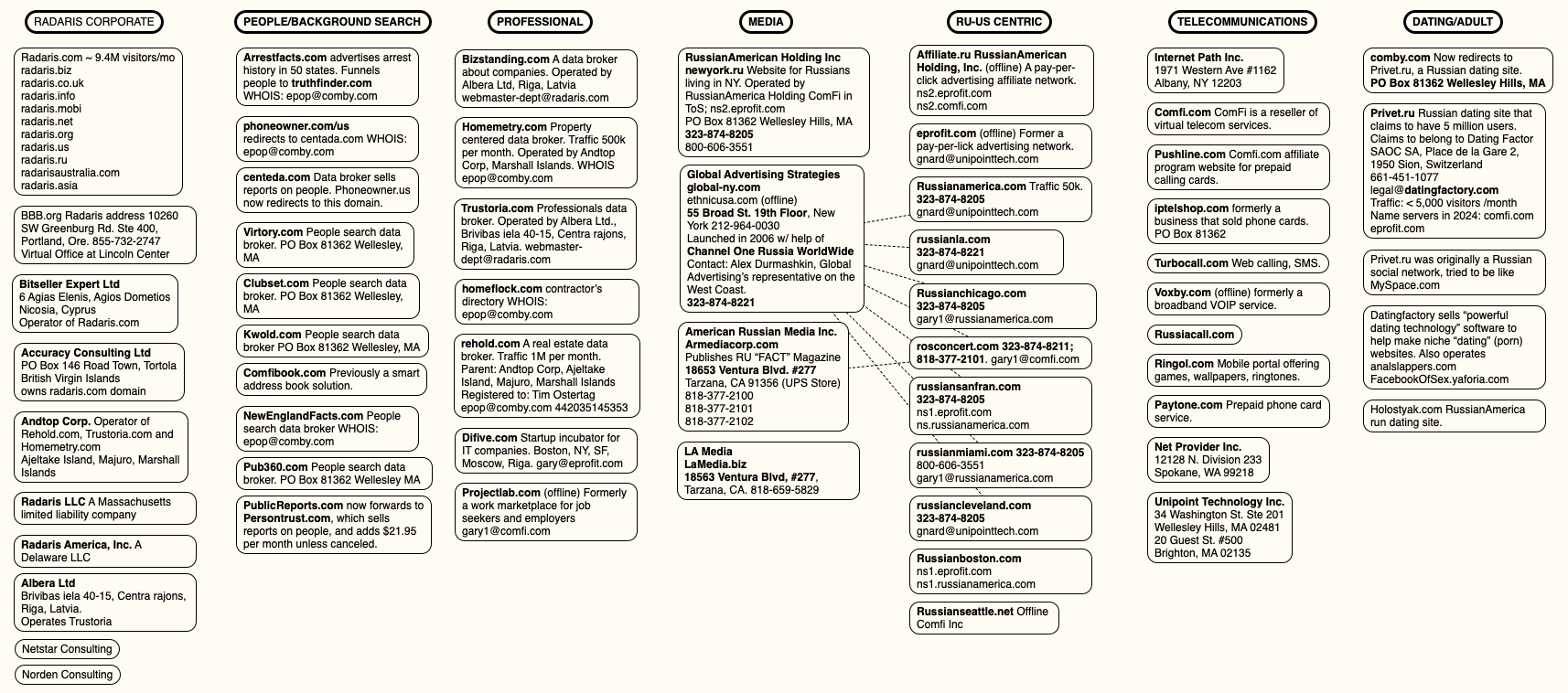
The legal battle commenced in February 2024 when Atlas Data Privacy Corp. filed a lawsuit against Radaris. Atlas, a company actively pursuing data brokers accused of violating Daniel’s Law, targets firms that fail to comply with removal requests, facing penalties of $1,000 per violation. This action followed KrebsOnSecurity’s in-depth exposé on Radaris’s co-founders, Russian-born brothers Igor and Dmitry Lubarsky, who operate a sprawling network of people-search companies alongside Russian language dating services. The Lubarsky brothers’ attorneys initially threatened defamation lawsuits and vehemently denied the reporting, claiming the true owners were Ukrainians. However, KrebsOnSecurity stood firm, detailing how the brothers allegedly operated Radaris and other entities using a fictitious CEO, "Gary Norden," a pseudonym admitted to by Radaris’s attorney, Val Gurvits of the Boston Law Group. These fabricated press releases, quoting the non-existent CEO, were reportedly used to solicit investment funds.
Radaris’s legal team employed a strategy of delay and obfuscation, appearing in court at the eleventh hour to contest what was a near-certain default judgment. They argued that Atlas had failed to serve the "real" owners and operators of Radaris and its sister companies. Undeterred, Atlas refiled the lawsuit in June 2025, significantly broadening the scope to include more Radaris-affiliated data brokers implicated in Daniel’s Law violations. Matt Adkisson, president and CEO of Atlas, described Radaris’s approach as a "tried-and-true playbook" involving protracted legal delays and a deliberate obfuscation of the company’s true origin and ownership.
Adkisson characterized this period as Radaris’s "island-hopping phase," where privacy policies were in constant flux, and new entities, purportedly based in offshore jurisdictions like the Marshall Islands, the British Virgin Islands, and Seychelles, would emerge. "Behind the scenes, it felt like a shell game," Adkisson told KrebsOnSecurity. "Defense lawyers told the court that certain entities merely operated the domains and were the proper parties to sue. But by the time a judgment neared, those entities would be discarded and new entities would appear. Meanwhile, the lawyers claimed the other entities that actually owned the domains should not be held responsible." Atlas’s investigation into a newly formed entity in the Marshall Islands, claimed by Radaris to be managing the company, revealed that this entity did not even exist yet.
This pattern of legal maneuvering echoed a previous class action lawsuit in 2017 where Radaris temporarily lost a $7.5 million default judgment. In that instance, the court ordered Verisign to transfer the radaris.com domain to the plaintiffs. However, Mr. Gurvits successfully appealed, arguing that the lawsuit had not named the actual owner, a Cyprus-based company called Bitseller Expert Limited, thereby violating their due process rights. The judge halted the domain transfer, allowing the plaintiffs to refile. Shortly thereafter, Radaris’s operator shifted from Bitseller to Andtop Company, an entity incorporated in the Marshall Islands in October 2020. The plaintiffs never refiled their suit.
Raj Parikh, a partner at PEM Law in New Jersey representing Atlas, noted this historical pattern: "That seemed to be their modus operandi. In the past, they won by attrition. Plaintiffs’ attorneys tired of the procedural games and just gave up. That strategy worked for a decade, and it probably would have worked in this case too, since any financial recovery from foreign actors will be difficult. But we were acutely aware of the threat this website posed to law enforcement officers and other public officials in New Jersey, and decided early on to commit whatever time and resources were necessary to remove that threat."
On August 26, the New Jersey judge ruled that the defendants had ample opportunities to defend themselves but failed to do so. Mr. Gurvits declined to comment, stating the case was reassigned to Mr. Victor Worms. Mr. Worms asserted that the transfer of Radaris.com was part of a default judgment against a non-existent entity, and that they intended to file a motion to vacate the judgment, arguing it was void and that the domain transfer constituted an unconstitutional forfeiture.
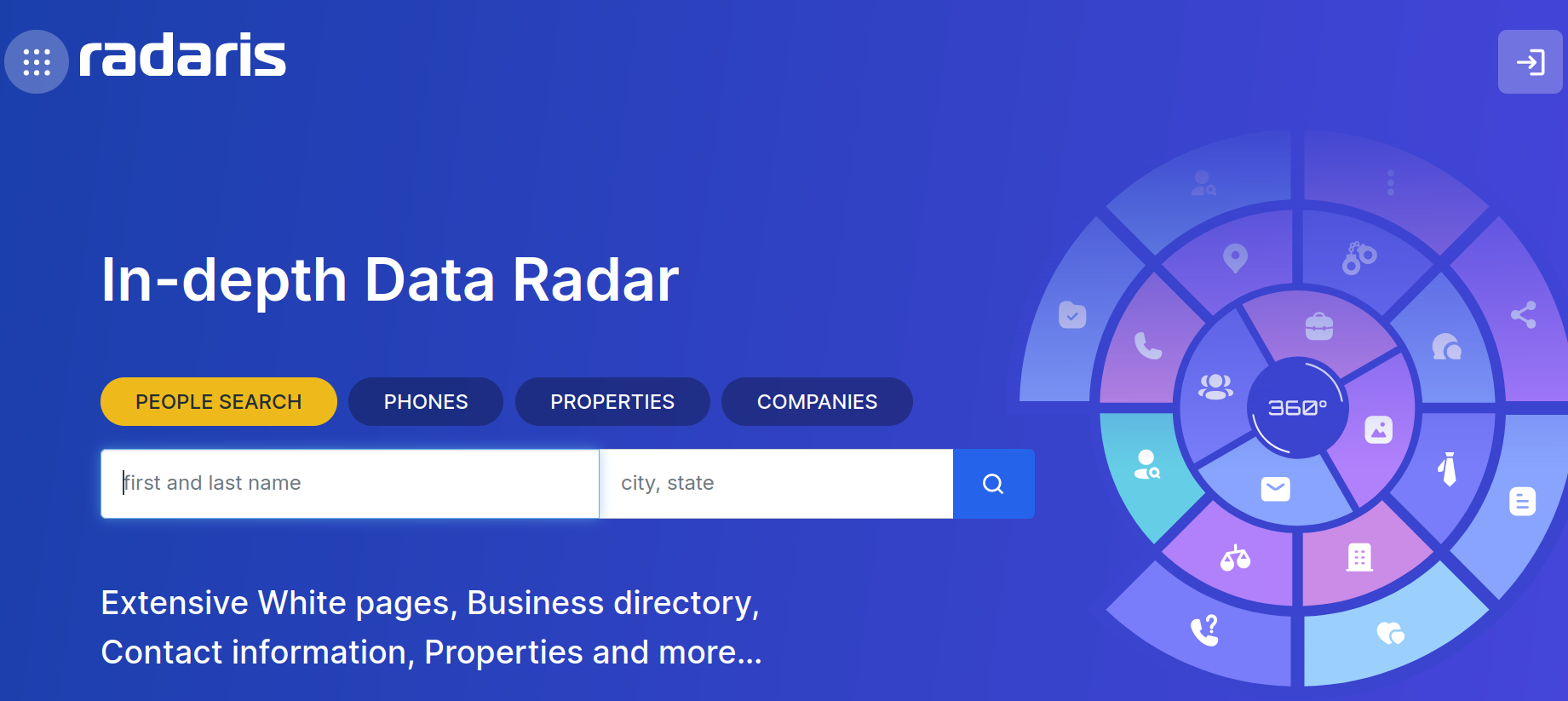
While Radaris.com still appears in online searches for U.S. residents, it no longer offers detailed personal dossiers. Its homepage now features a notice from Atlas detailing the court-ordered domain transfer and links to previous reporting on Radaris.
Email Confirmations Bolster Claims

Atlas revealed it had acquired over 10,000 emails and documents during the litigation, which they claim unequivocally confirm KrebsOnSecurity’s previous reporting on the individuals behind Radaris and its associated companies. These documents allegedly demonstrate that nominal legal entities such as Radaris America, Inc., Bitseller Expert Limited, Digital Orbit Corp, Core Solutions Group Inc, Lucky Solutions Inc, Virtura Corp, Veripages Inc., Nuform Solutions Inc., Growth Data Advisors Inc., and Property Experts, Inc. are all managed by the same small group of individuals operating from shared mailboxes, utilizing a single set of payment methods, and functioning from a single virtual office address.
According to Atlas, the evidence indicates that Radaris.com generates approximately $42,000 per month, while Veripages.com earns around $45,000 monthly through its partnership with the Lifetime Value Company, a marketing firm behind brands like PeopleLooker and PeopleSmart. Furthermore, the Radaris network of websites reportedly earns up to $25,000 monthly from its collaboration with Onerep, a company that purports to help individuals remove their data from people-search sites. This partnership is particularly noteworthy given KrebsOnSecurity’s prior revelation that Onerep’s Belarusian founder had himself established and operated dozens of people-search sites.
In total, the New Jersey court has transferred 14 domain names from the Radaris corporate family to Atlas. Radaris.com now serves as a redirect to a notice regarding the court-ordered domain transfer.
The Road Ahead: Legal Challenges and the Broader Privacy Landscape
The Radaris group of companies potentially faces significant fines under Daniel’s Law, with penalties of $1,000 per alleged violation. However, Daniel’s Law itself is currently under constitutional challenge from numerous data broker firms being sued by Atlas. Approximately 70 of these lawsuits have been moved to federal court, where the data broker industry argues the New Jersey statute is overly broad and infringes upon First Amendment rights. The U.S. Court of Appeals for the Third Circuit’s decision on this constitutional challenge is pending, and either outcome is expected to lead to an appeal to the U.S. Supreme Court.
Mirroring New Jersey’s initiative, at least 14 other states have enacted laws similar to Daniel’s Law, with more considering such legislation. However, a federal district court in August 2025 ruled West Virginia’s version of Daniel’s Law facially unconstitutional under the First Amendment.
Privacy expert Justin Sherman, author of the forthcoming book "The Middlemen," highlights the intense lobbying efforts by the technology industry against comprehensive federal data privacy laws. "These days at the federal level, add in the intense amount of lobbying against these laws from social media companies, big tech, cryptocurrency firms, and now AI proponents in the mix who claim that limiting their data scraping is somehow going to collapse the whole U.S. economy under Chinese rule," Sherman stated.
Sherman emphasizes that people-search companies will continue to thrive until Congress enacts meaningful federal consumer privacy and data protection laws relevant to the 21st century. He points out that most state privacy laws exempt "public" or "government" documents, such as voting records, property filings, and criminal records, which form the bedrock of data broker operations. This lack of comprehensive federal regulation, Sherman argues, has contributed to breaches like the recent IDScan.net incident, where the driver’s license information of over 153 million Americans was exposed.
"The average person can look at Daniel’s Law and have a perfectly normal reaction, which is that everyone should be covered, not just police and judges," Sherman concluded. "But we don’t need more wake-up calls. We’ve had eight million wake-up calls already on the need for better privacy laws. The lack of comprehensive federal privacy law is not for a lack of knowledge, and anyone claiming otherwise is either not reading the news or kidding themselves."