Joko Widodo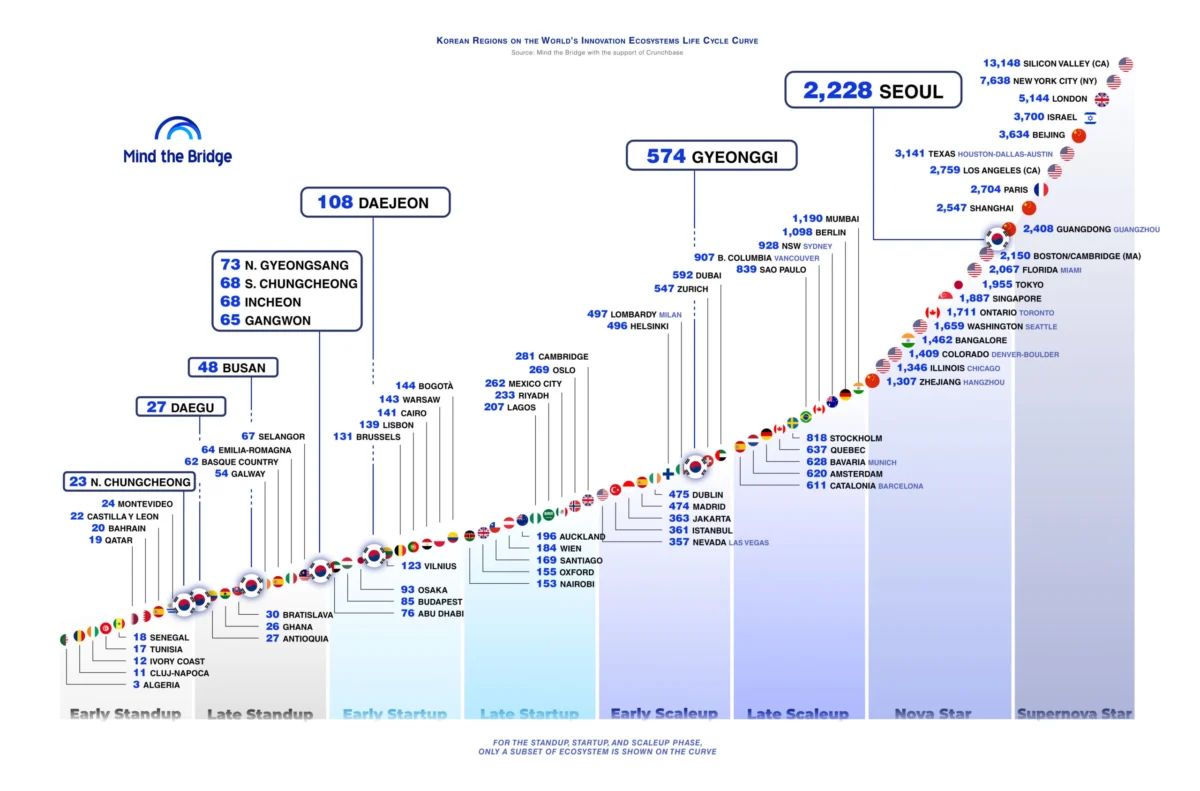
At Mind the Bridge, we confront the persistent challenge of quantifying the health and dynamism of innovation ecosystems, an inherently complex task given their fluid and multifaceted nature; yet, governments, corporations, and investors universally seek robust benchmarks to assess their competitive standing on the global stage, making a reliable methodology indispensable. Authored by Alberto Onetti, Chairman of Mind the Bridge and a professor at the University of Insubria, this analysis delves into the intricate framework required to accurately map innovation, utilizing South Korea’s remarkable journey as a compelling case study. The core difficulty lies in devising a model that is both standardized enough for cross-country comparison—allowing an apples-to-apples evaluation of diverse hubs like Boston, São Paulo, Tel Aviv, and Turin—while remaining flexible enough to capture the unique characteristics that define each ecosystem. This tension has been central to Mind the Bridge’s research for years, leading to a continuously refined model, the latest application of which was recently unveiled in Seoul, offering a comprehensive look at the Innovation Economy of South Korea and providing an opportune moment to articulate our precise approach.
Our methodology begins with the concept of the "Innovation Pyramid," a foundational model illustrating the hierarchical structure of any vibrant innovation ecosystem. At the broad base of this pyramid reside startups: nascent, venture-backed technology companies actively engaged in developing and validating their business models, representing the raw potential and entrepreneurial spirit of a region. As we ascend the pyramid, the base narrows into the crucial layer of scaleups. These are companies that have demonstrated substantial traction and market validation, typically evidenced by having raised over $1 million in venture capital. Scaleups are often considered the most tangible and visible output of an ecosystem’s maturity, serving as an excellent proxy for its overall health. By meticulously tracking their number, growth rate, and sectoral distribution, we can plot their trajectory against the Innovation Ecosystems Life Cycle Curve, thereby gaining an honest and insightful reading of an ecosystem’s current stage of development and future potential.

At the very pinnacle of this pyramid are the outliers that exert a disproportionately significant influence: scalers and super-scalers. These are the elite companies that have successfully transcended their domestic markets, achieving substantial international scale and impact. A mere handful of these high-growth entities can elevate a country’s global innovation profile more effectively than thousands of early-stage startups combined. Consequently, it is imperative to count them separately, rather than lumping them into a generic "startup" aggregate, as their distinct contribution is critical to any serious and accurate assessment methodology.
Parallel to this venture capital-backed pyramid exists a second, frequently underestimated population: innovative Small and Medium-sized Enterprises (SMEs). These are established, revenue-generating companies that primarily compete on the strength of their technology and innovation, rather than relying on external venture funding. To overlook them would be to miss a substantial segment of the real economy’s innovation capacity, especially in ecosystems like South Korea, where corporate-led and government-backed innovation have historically played as significant a role as the traditional VC route. Many of these innovative SMEs emerge as bootstrapped entities, choosing to fund their growth organically. Some maintain their independence, while others may eventually attract external investment and transition upward into the startup and scaleup layers. Collectively, all these technology-driven companies draw their foundational knowledge from local universities and research centers, which together form the critical technology supply side of an ecosystem.
However, a robust supply side alone is insufficient to generate economic impact. Technology supply only translates into tangible economic value when it meets demand. This demand is largely, though not exclusively, represented by corporations, encompassing both local conglomerates and international entities. Corporations derive significant benefits from the innovative solutions developed by startups, scaleups, and other innovative tech companies. Moreover, they often play a pivotal role in supporting the industrialization and growth of these younger firms through a variety of mechanisms, including acceleration programs, venture client models, corporate venture capital (CVC) investments, and strategic mergers and acquisitions. This dynamic interaction between technology supply and corporate demand is the engine that converts raw innovation into economic impact and sustainable company growth, underscoring why its measurement, not just the supply side, is absolutely essential. The supply side also engages with local, regional, and global B2C markets, where consumer demand forms the other vital half of the demand equation, particularly for companies whose primary growth trajectory is driven by direct market penetration rather than corporate partnerships.

The evolution of any innovation ecosystem is a continuous, dynamic process, fueled by a diverse array of capital sources and public support. Private capital flows from angel investors, venture capitalists (VCs), and corporate venture capital (CVC) arms, providing companies with the necessary resources to develop, commercialize, and scale their innovations. Public support manifests through subsidies, grants, and various government programs, delivered either directly to companies or indirectly via innovation agencies, ecosystem builders, and other innovation brokers. The strength and efficiency of the connections between these disparate capital sources and the companies within the innovation pyramid directly correlate with the speed at which companies can progress from one stage to the next. In less mature ecosystems, a greater injection of public capital is often required to bridge funding gaps and stimulate growth.
An ecosystem achieves critical mass when it reaches a certain threshold in the volume, density, and quality of its innovative companies, typically signaling entry into the "Star" stage of the Innovation Ecosystems Life Cycle Curve. At this juncture, it begins to attract increasing interest from external players. International investors, multinational corporations, and foreign government agencies are incentivized to establish a local presence, recognizing that geographical proximity provides enhanced access to vital resources such as talent, cutting-edge technology, promising deal flow, strategic partnerships, and lucrative market opportunities. A concrete metric for gauging this external attractiveness is to count the number of corporate innovation outposts established by multinational corporations, alongside government innovation outposts set up by foreign countries, regions, or cities. While this indicator tends to lag the ecosystem’s actual progress by a couple of years—making it a valuable confirmation metric rather than an early signal—it nonetheless provides a robust and valuable validation of an ecosystem’s growing global relevance.
Applying this rigorous framework to South Korea reveals a powerful narrative of strategic growth and rapid ascent. Our latest count places 3,359 scaleups at the apex of the South Korean innovation pyramid, a figure that solidifies South Korea’s position as the eighth-largest national innovation ecosystem globally. Within this dynamic landscape, Seoul stands out as the 11th most developed ecosystem worldwide. Beneath this robust scaleup layer lies a significantly larger foundation of approximately 10,000 startups, embodying the nation’s entrepreneurial drive. Further expanding the base is an even broader segment of approximately 25,000 technology companies, comprising innovative SMEs that operate without venture capital backing but contribute significantly to the overall innovation capacity. The enabling ecosystem that powers this growth includes an estimated 700 investors and over 550 innovation brokers, both public and private, collectively supporting more than 800 unique programs designed to foster entrepreneurship and innovation. While the number of scaleups is derived through analytical rigor, all other figures represent Mind the Bridge’s best-effort assessment, continuously refined by consolidating government data and available sources, with the aim of fostering collaboration through the open-sourcing of this data via the MTB Innovation Ecosystem Platform.
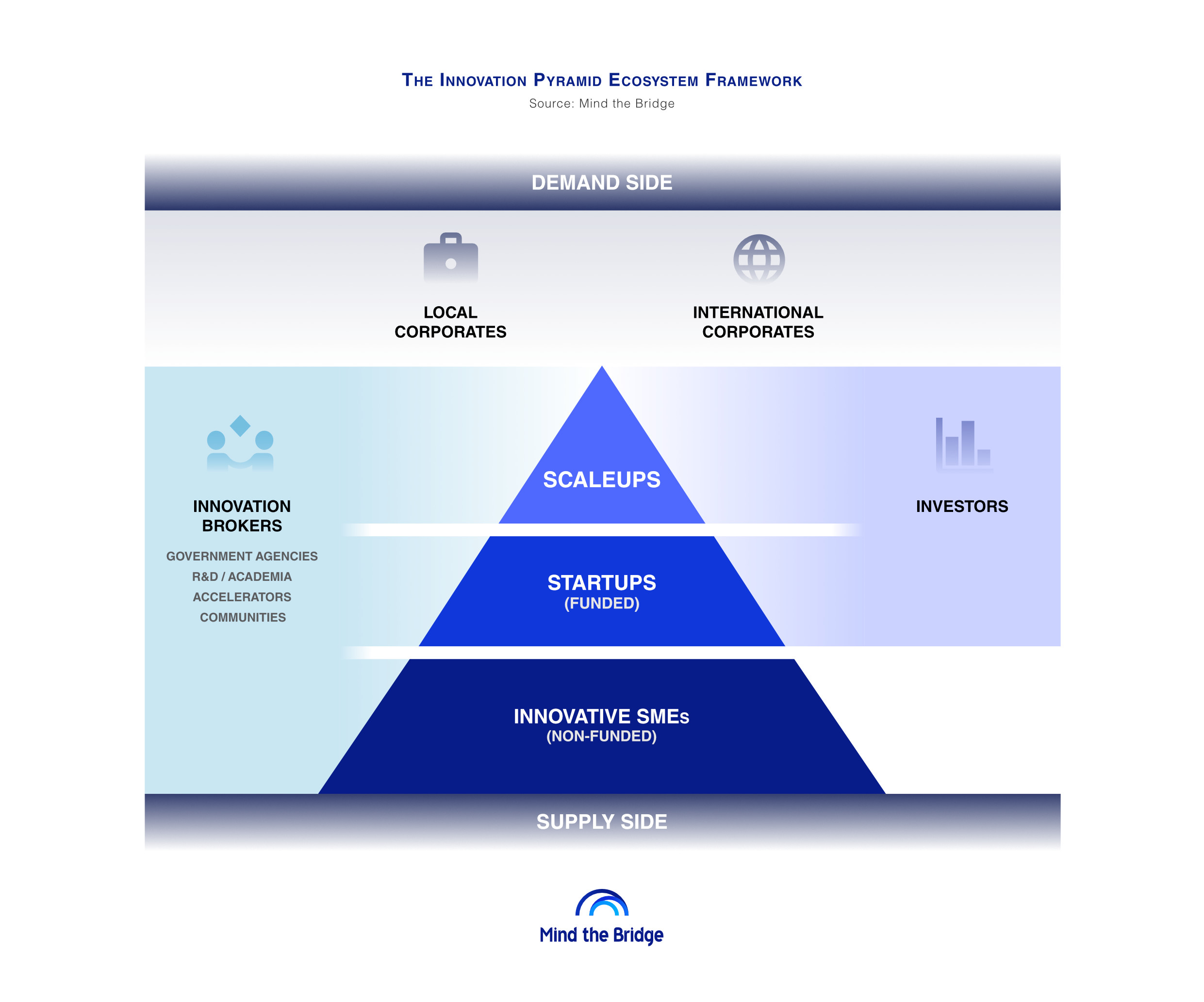
The demand side, equally critical, further completes this comprehensive picture of South Korea’s innovation landscape. Here, we observe:
- A robust corporate engagement environment: Korean conglomerates (chaebols) and a growing number of international firms actively seek partnerships, strategic investments, and M&A opportunities with local startups and scaleups, driving market adoption and providing pathways to global markets.
- Dynamic B2C market adoption: The highly connected and tech-savvy Korean consumer base provides a fertile testing ground and significant demand for innovative digital services and products, fostering rapid growth for consumer-facing tech companies.
- Government as a lead customer: Public procurement initiatives and smart city projects often act as early adopters and significant clients for emerging technologies, validating solutions and creating market opportunities.
These demand-side figures, like all aspects of the ecosystem, are subject to continuous monitoring and refinement as the Korean innovation landscape rapidly evolves, with new players and activities consistently emerging.
The ultimate purpose of this meticulous measurement extends far beyond mere academic curiosity or simple scorekeeping. The output of such a comprehensive methodology, as demonstrated in our analysis of Korea, is designed to be profoundly actionable. It serves as a diagnostic tool, providing governments with clear insights into where their ecosystem sits on the Innovation Ecosystems Life Cycle Curve, identifying critical bottlenecks, and offering a comparative analysis against peer economies that are similarly striving to transition from a "startup nation" to a "scaleup nation." When the methodology is correctly applied and interpreted, the numbers cease to be a static scoreboard and transform into a dynamic, strategic diagnosis, guiding informed policy decisions and resource allocation.
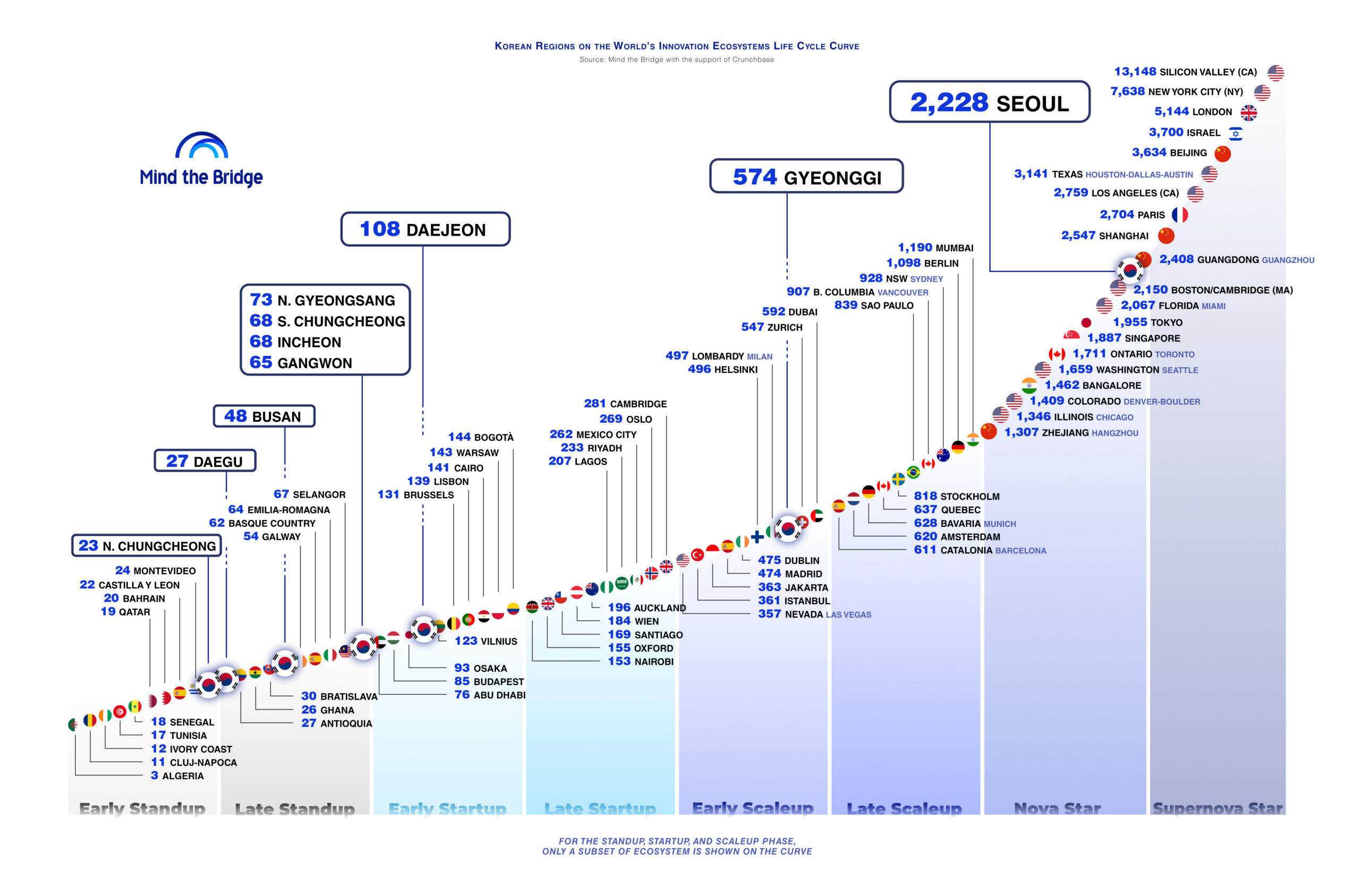
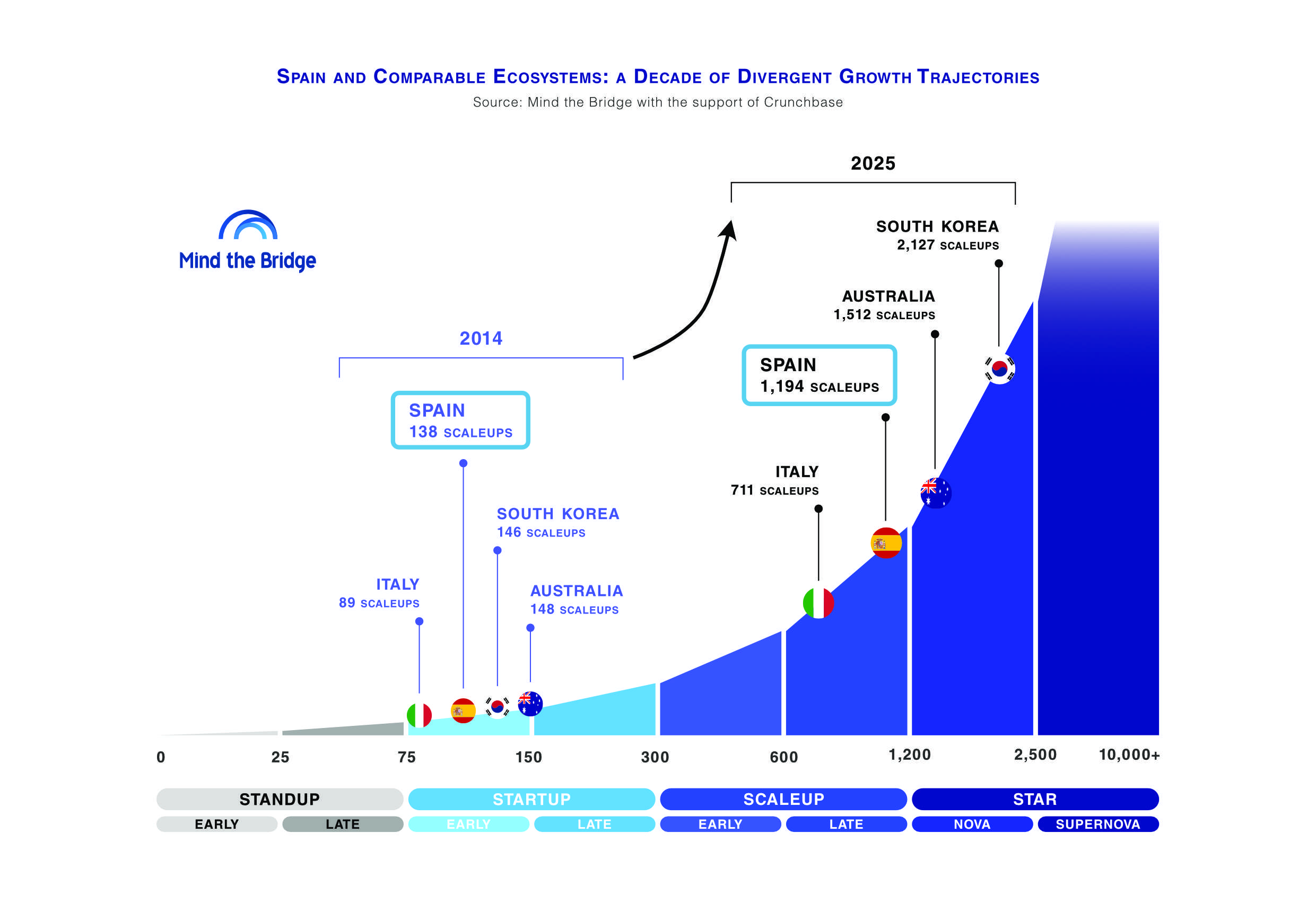
South Korea’s trajectory over the past decade exemplifies the power of this approach. Just ten years ago, Korea’s innovation economy was approximately 40% smaller than those of Japan and Germany, roughly comparable in size to Australia and Spain, and held a slight lead over Singapore and Italy. Fast-forward to the present, and Korea has unequivocally emerged as the clear leader among this group. With an estimated 3,233 scaleups in 2025, Korea:
- Significantly outpaces Japan: Its innovation economy is now more than double the size of Japan’s.
- Surpasses Germany: It has surpassed Germany, a traditional industrial powerhouse.
- Dwarfs its former peers: It is now three times larger than Australia and Spain, and four times larger than Singapore and Italy.
This extraordinarily rapid and impressive growth of the Korean innovation economy is by no means a fortuitous accident. Instead, it is the direct consequence of more than two decades of visionary, forward-looking strategic government direction and sustained investment. Beginning with the establishment of a foundational framework for a radical increase in R&D spending—elevating it from 2%-3% of GDP to a minimum of 5% by 2008—Korea, in 2013, cemented the centrality of tech entrepreneurship as a strategic pillar of its economy. This was underscored by the launch of TIPS (Tech Incubator Program for Startup), an innovative initiative designed to boost the early-stage segment by leveraging private accelerators and venture capitalists to identify and nurture promising startups.
Subsequent policies further expanded on this strategic framework, specifically focusing on supporting the scaling process of local tech companies. Notably, between 2014 and 2015, 17 regional Centers for Creative Economy and Innovation (CCEI) were established. These centers played a crucial role in fostering collaboration by bringing together local large conglomerates (chaebols) with nascent startup incubation activities, bridging the gap between established industry and emerging innovation. New regulatory frameworks were introduced to grant greater freedom for experimentation by tech companies, opening doors to novel forms of financing and providing targeted incentives for scaleup financing. More recently, starting in 2022, new dedicated strategies and instruments have precipitated a major shift, concentrating investments and resources on deep technology innovation, targeting critical future-oriented sectors such as AI, biotechnology, and quantum computing. The figure below vividly illustrates the profound impact of these flagship innovation-related policies enacted by the Korean government, juxtaposed against the remarkable historical growth of the overall scaleup ecosystem.
(The image showing policy impact on scaleup growth would be inserted here, as in the original article).
The comprehensive insights derived from this analysis, including detailed data on the Korean innovation pyramid, its comparative performance, and the policy drivers, are available in Mind the Bridge’s full report, which can be downloaded for free here.
Alberto Onetti, a recognized international expert in open innovation and a serial entrepreneur with three successful startups to his credit, including Funambol—one of Italy’s largest scaleups by capital raised—brings unparalleled expertise to this field. His extensive experience in setting up and managing open innovation projects, including venture clients, venture builders, intrapreneurship programs, and CVCs for large multinational companies, coupled with his advisory and training roles, underpins the robust methodology presented. Onetti’s regular columns in Sifted (Financial Times) and other tech blogs further cement his reputation as a leading voice in the global innovation landscape.
(The image of the South Korean flag would be inserted here, as in the original article).
Stay up to date with recent funding rounds, acquisitions, and more with the Crunchbase Daily.