Faris Adani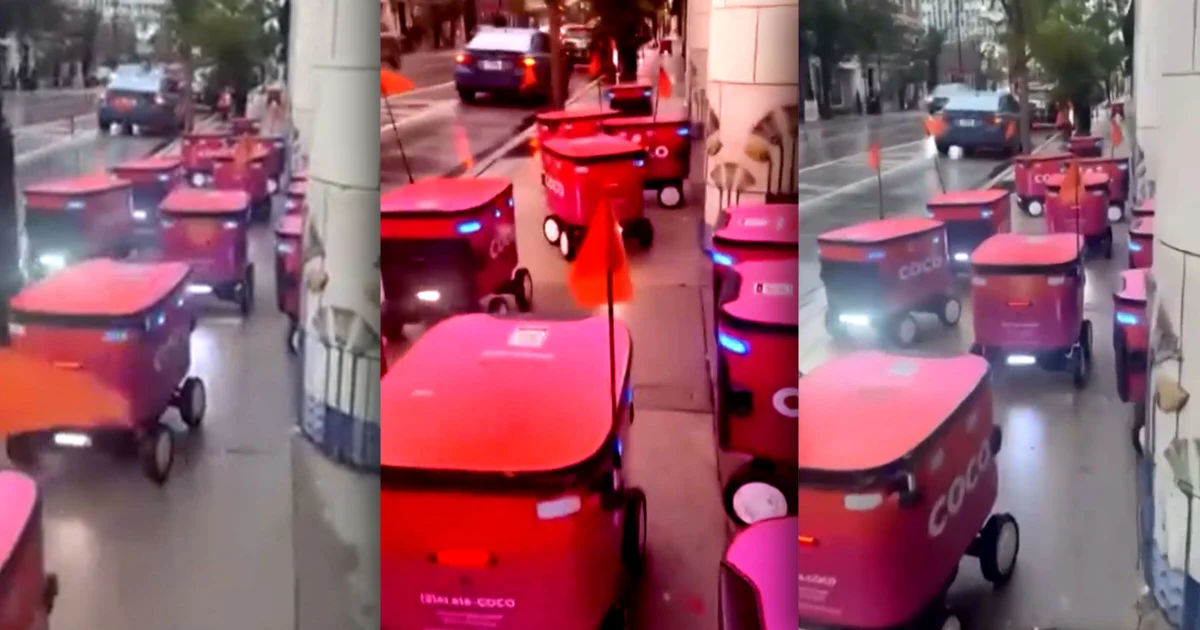
Chicago, a city known for its bustling streets and iconic architecture, recently found itself grappling with a surreal scene as a swarm of food delivery robots from the company Coco brought a busy sidewalk to a standstill. This bizarre incident, captured in a now-viral video, has reignited long-standing concerns about the safety, accessibility, and integration of autonomous delivery systems into complex urban environments, particularly in a metropolis already wary of these mechanical newcomers.
The peculiar event unfolded during a morning run for Chicago resident Becca Ostein near the scenic Lincoln Park. What began as a routine exercise quickly transformed into an unexpected encounter with the future, albeit a glitchy one. Ostein’s video, shared widely across social media platforms, depicted an almost dystopian tableau: a dozen or more Coco robots, typically seen traversing sidewalks with singular purpose, instead congregating in a chaotic cluster. Their on-board lights flashed erratically, and their wheels spun aimlessly as they occupied a significant stretch of the narrow pedestrian path, effectively creating an impassable barrier. Ostein succinctly captioned her footage, "Run route was crowded this morning," an understatement considering the unprecedented robot gridlock. Another robot was visible in the distance, its movements ambiguous – was it joining the perplexing gathering or attempting to escape the digital entanglement?
The spectacle of these normally efficient machines descending into a state of disarray immediately sparked widespread concern and a deluge of reactions. Many commenters echoed a sentiment of frustration and even fear, highlighting the potential dangers and inconveniences posed by such incidents. One user powerfully articulated a critical perspective, stating, "As a disabled person this is an actual nightmare." This comment underscored a vital aspect often overlooked in the rush to adopt new technologies: the impact on vulnerable populations and the fundamental right to accessible public spaces. Ostein herself recounted the experience to CBS News, emphasizing the sheer impossibility of navigating the robot-choked sidewalk: "They were swarming. They didn’t seem to have anywhere to go. Without agile feet, no one could have gotten by." Her observation painted a vivid picture of a public space momentarily hijacked by malfunctioning technology, rendering it unusable for its intended purpose.
This latest incident is far from Chicago’s first contentious brush with delivery robots. The "Windy City" has, in fact, developed a particularly strained relationship with these autonomous couriers in the relatively short time they’ve been introduced. Prior to this swarm, Coco robots and their counterparts from other firms have been implicated in a series of alarming episodes that have significantly eroded public trust. Reports surfaced of robots causing collisions that sent residents to the hospital, underscoring the very real physical risks associated with these machines sharing pedestrian spaces. In other instances, these bots have been observed smashing through public infrastructure, such as bus shelters, raising questions about their navigation capabilities and potential for property damage. These earlier incidents collectively prompted local officials to take decisive action, leading to the establishment of an "exclusion zone" – a designated section of the city where these companies are explicitly prohibited from operating. This regulatory response signaled a clear message from municipal authorities: the integration of these technologies must not come at the expense of public safety and urban order.
Coco, in a statement shared under Ostein’s Instagram post, offered an apology, acknowledging the malfunction. "That’s not how our robots are designed to operate," the company stated, reassuring the public that "Our team caught it quickly, and the robots were cleared and operating normally within minutes. We’ve made sure this won’t happen again." While the swift response to clear the obstruction is commendable, the incident itself raises deeper questions about the robustness of the AI and software guiding these robots, as well as the efficacy of their remote monitoring and intervention systems. What constitutes a "glitch" in an autonomous system designed for urban navigation? Was it a software bug, a GPS anomaly, a sensor overload in a complex environment, or a communication breakdown? And what safeguards are truly in place to prevent a recurrence, especially in a city where such incidents have become a recurring theme? The promise of "made sure this won’t happen again" will undoubtedly be met with skepticism until concrete, visible measures are implemented and proven effective.
The ongoing saga in Chicago encapsulates the broader global challenge of integrating emerging autonomous technologies into existing urban fabrics. The concept of last-mile delivery robots offers numerous theoretical benefits: increased efficiency, reduced delivery times, potential alleviation of traffic congestion, and even a decrease in carbon emissions if electric. For businesses, they represent a pathway to lower operational costs and expanded delivery capabilities. However, the practical deployment has revealed significant hurdles. Beyond the immediate safety concerns, issues such as sidewalk clutter, visual pollution, potential job displacement for human delivery drivers, and the sheer unpredictability of human-robot interactions in dynamic public spaces continue to fuel public debate.
Cities worldwide are grappling with how to regulate these new entrants. Existing traffic laws and pedestrian guidelines were never designed with autonomous robots in mind. This regulatory vacuum has led to a patchwork of approaches, from outright bans in some areas to pilot programs with strict operational guidelines in others. Chicago’s exclusion zone serves as a stark reminder that cities are increasingly willing to impose limitations when the perceived risks outweigh the benefits. The development of comprehensive regulatory frameworks that address liability, operational hours, speed limits, noise pollution, and – critically – accessibility for all pedestrians will be paramount for the successful, and indeed ethical, integration of these technologies.
As companies like Coco continue to push the boundaries of autonomous delivery, the onus is on them to demonstrate not only technological prowess but also an unwavering commitment to public safety and civic responsibility. This includes more rigorous testing in real-world conditions, transparent communication with local communities, and a proactive engagement with policymakers to co-create sensible regulations. Furthermore, robot design must evolve to be inherently safer and more considerate of the human environment, perhaps incorporating advanced obstacle avoidance that prioritizes pedestrian flow even in the face of internal errors.
The bizarre swarm in Lincoln Park stands as a potent symbol of the growing pains inherent in humanity’s journey towards an increasingly automated future. It serves as a vivid reminder that while the allure of innovation is strong, the foundation of urban life rests on shared spaces and the safety and well-being of all its inhabitants. The question for Chicago, and indeed for cities globally, is not whether these robots will become commonplace, but how they can be integrated in a manner that truly enhances, rather than detracts from, the quality of urban life. The future of smart cities depends on finding this delicate balance, ensuring that technological advancement walks hand-in-hand with human-centric design and robust public oversight.