Faris Adani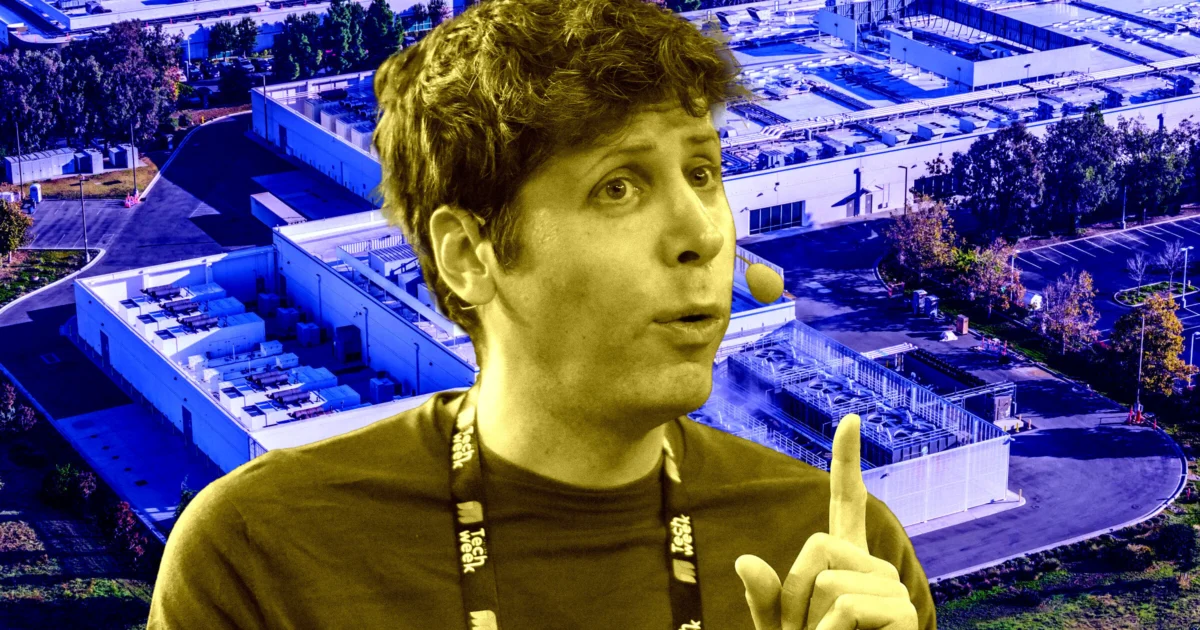
The burgeoning crisis surrounding public opposition to hyperscale data centers has prompted a desperate and transparent shift in messaging from tech industry executives, who are now scrambling to rebrand these massive infrastructural projects from environmental liabilities and community nuisances into pillars of a utopian future, despite widespread skepticism and the glaring contradictions of current AI capabilities.
The resistance to data center expansion across the United States has reached a critical juncture, with grassroots movements successfully threatening an astonishing $130 billion in planned developments within the first three months of 2026 alone. This fierce public backlash, fueled by concerns over enormous energy and water consumption, noise pollution, visual blight, and the strain on local infrastructure, has forced tech titans to abandon their previous narratives and attempt a strategic, albeit clumsily executed, public relations pivot. What was once a subtle undercurrent of dissent has swelled into a powerful tide of local opposition, manifesting in community meetings, petitions, and legal challenges that underscore a profound disconnect between Silicon Valley’s ambitions and the concerns of everyday citizens. The financial implications are staggering, as lenders are increasingly scrutinizing data center financing in the face of this burgeoning community opposition, adding a significant layer of risk to projects that were once considered sure bets.
This latest maneuver is strikingly reminiscent of an earlier, equally cynical tactic employed by these same tech leaders: the pervasive "AI doomsaying" narrative. For years, figures like OpenAI CEO Sam Altman and others warned of an impending AI apocalypse, portraying artificial intelligence as an existential threat that required urgent, top-down regulation – ideally by the very companies developing it. This messaging, widely seen as a calculated move to win over investors and scare the general public into ceding regulatory power, served to consolidate influence and fast-track development under a guise of benevolent urgency. Now, with the public turning its gaze from the abstract threat of future AI to the concrete, tangible impact of its physical infrastructure, the industry finds itself in a precarious position, struggling to maintain its unchecked growth while simultaneously attempting to placate a wary populace. The irony is not lost on observers who note the dramatic shift from dire warnings to saccharine promises, all within a relatively short span, revealing a pattern of manipulative communication designed to serve corporate interests above all else.
The transparency of this pivot is perhaps its most glaring flaw. As Reddit cofounder Alexis Ohanian succinctly put it in a social media post, flagged by Axios, "we gotta figure out a new narrative on this data center thing." This decidedly meek, almost exasperated reflection perfectly encapsulates the industry’s dilemma. Caught between immense political pressure, exemplified by leaked memos indicating Republican concerns about data center impacts on the Ohio election, and mounting financial scrutiny from lenders wary of community opposition, tech billionaires are now awkwardly attempting to address the public directly. Their efforts to project a positive, shared vision for humanity’s future, however, often come across as forced and inauthentic, betraying a deep-seated struggle to connect with the very communities they seek to influence. The public, increasingly savvy to corporate spin, is watching this awkward dance unfold, further eroding trust in an industry already perceived as aloof and self-serving.
Take Meta’s Mark Zuckerberg, for instance, whose 6,500-word essay earlier in August exuded a "teeth-grittingly optimistic" tone, proclaiming that AI would "free up time for the things you enjoy, and help you accomplish more than you could otherwise." Yet, as critics are quick to point out, such talk is incredibly cheap, especially when juxtaposed with Meta’s own corporate practices, which often prioritize efficiency and profit over worker well-being. The company’s internal policies and reported layoffs frequently contradict the utopian vision painted by its CEO, making his grand pronouncements ring hollow. The disparity between the promised liberation from toil and the reality of AI-driven automation leading to job displacement and increased economic precarity is a stark reminder that the benefits of technological advancement are rarely distributed equally, and often accrue disproportionately to those at the top.
In other instances, tech entrepreneurs are conjuring entirely utopian fantasies for AI capabilities that are, at best, nascent, and at worst, pure fiction. Matt Higgins, co-founder and CEO of venture capital firm RSE Ventures, articulated this aspiration in a social media post, stating, "Someone needs to rebrand data centers." He then mused on potential new names: "Fraud prevention centers. Clean-energy optimization centers. Precision agriculture centers. Because ‘data center’ describes the infrastructure, not the breakthroughs its computing power makes possible." While RSE Ventures has a diverse portfolio, its vested interest in military AI highlights the critical reliance on hyperscale data centers, making Higgins’s rebranding suggestions a strategic maneuver rather than a genuine reflection of current reality.
However, a quick glance at the "real world" reveals a stark contrast to Higgins’s optimistic nomenclature. AI, far from being a panacea for societal ills, is currently supercharging fraud at an unprecedented scale, with sophisticated deepfakes and AI-powered chatbots making scams more convincing and pervasive. The technology is also contributing to environmental degradation, not alleviating it, through its insatiable demand for energy and water. The carbon footprint of these facilities is immense, and their cooling systems consume billions of gallons of water annually, often in regions already grappling with drought. Furthermore, while AI holds promise for agriculture, current applications have sometimes resulted in "hallucinated advice," leading to easily preventable crop failures for farmers who relied on faulty algorithms. This profound disconnect between the imagined capabilities and the current, often problematic, realities of AI underscores the industry’s challenge in convincing a skeptical public. The argument that data centers are merely infrastructure, rather than the enablers of specific breakthroughs, conveniently sidesteps the very real, negative impacts of that infrastructure. The sheer scale of these facilities, with some, like Amazon’s new AI data center in Texas, projected to become the largest single source of pollution in the United States, makes it impossible to separate the "infrastructure" from its "impacts."
The public’s growing awareness of the environmental toll, the socio-economic implications like potential job displacement, and the ethical quandaries posed by unchecked AI development means that mere rhetorical shifts are unlikely to suffice. The industry’s past record of prioritizing profit and power over public good, coupled with the transparent nature of this current rebranding effort, has cultivated a deep-seated distrust. While the messaging from tech industry elites and their financiers might indeed be taking on a more optimistic tone, it remains, as it ever was, the same old smoke-and-mirrors. The challenge for these executives is not merely to find a new name for their data centers, but to genuinely address the profound concerns of the communities they impact and to demonstrate a commitment to responsible development that extends beyond the realm of carefully crafted PR campaigns. Until then, their pleas for public acceptance will likely continue to fall on deaf ears, as the world watches their cynical pivot unfold with increasing scrutiny.