Faris Adani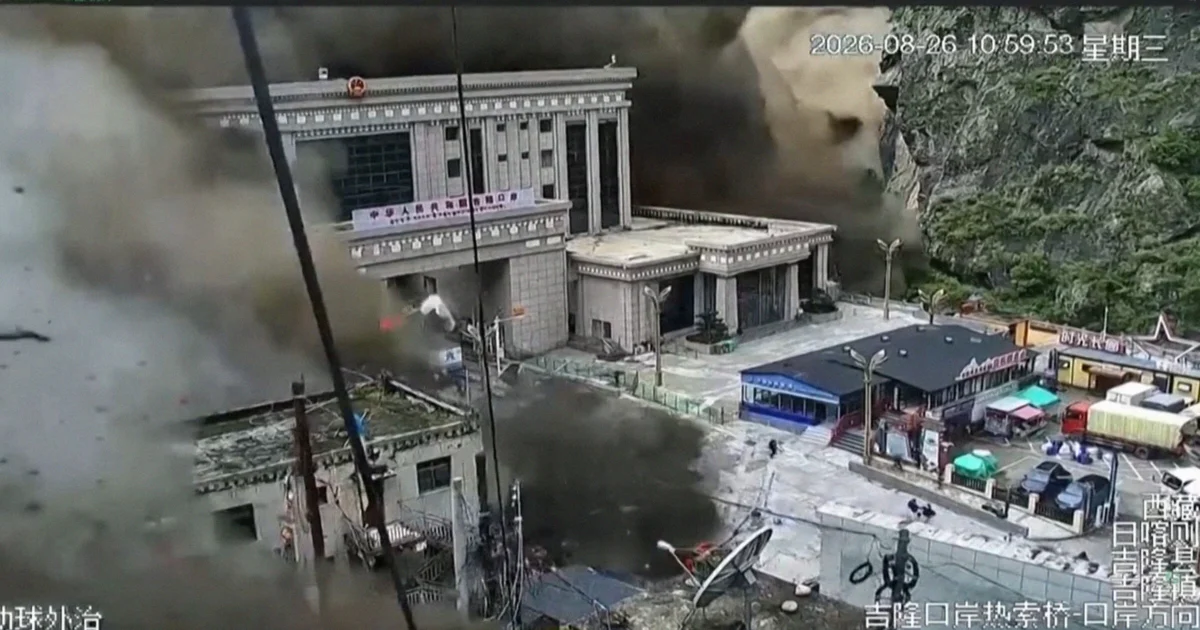
CCTV footage via CNN
Sign up to see the future, today
Can’t-miss innovations from the bleeding edge of science and tech
Freak Landslide Completely Swallows Entire Mountain Village
A catastrophic landslide, triggered by an unprecedented convergence of extreme weather and suspected seismic activity, has utterly obliterated Gyirong Port, a vital Himalayan border crossing between China and Nepal, alongside an entire mountain village, leaving a devastating trail of death and destruction. On Wednesday, the region was gripped by torrential flooding, an ominous prelude to the cataclysm that would soon unfold, forever altering the lives of thousands and reshaping the rugged Himalayan landscape. The scale of the disaster, captured in harrowing security camera footage, reveals a landscape irrevocably scarred, a testament to the raw, untamed power of nature when pushed to its most destructive limits.
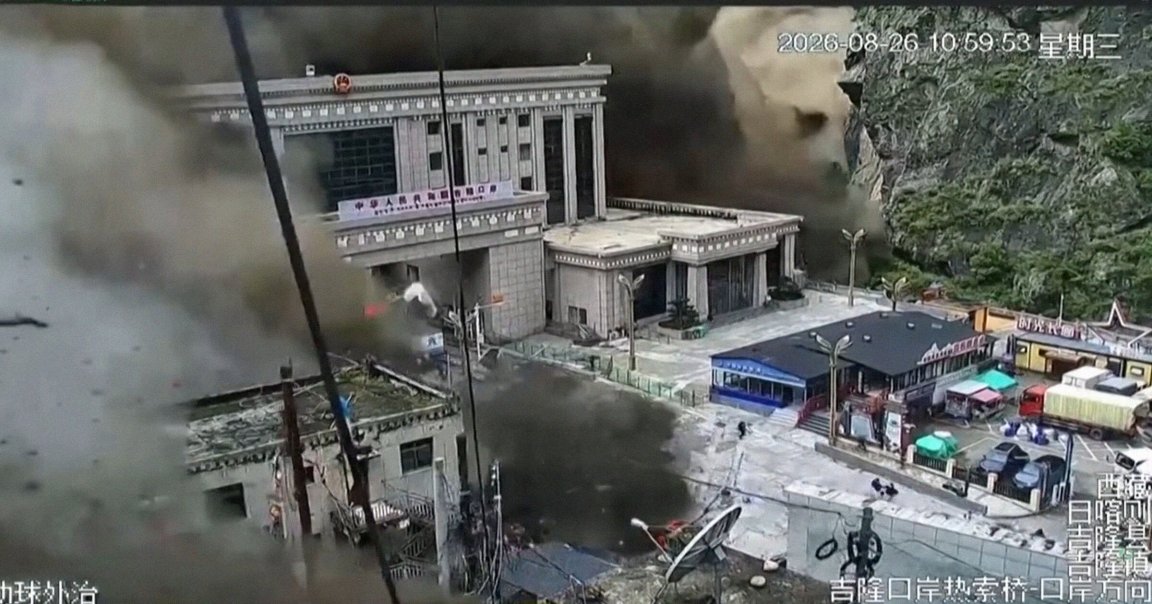
The horrifying moment was starkly documented by security cameras strategically positioned on the surrounding mountainside, offering a chilling, bird’s-eye view of the unfolding tragedy. The footage, circulated widely and referenced by outlets like Al Jazeera and CNN, depicts a wall of mud and debris, moving with terrifying speed and force, descending upon the Gyirong Port facility. Within mere seconds, the robust, six-story building, a symbol of cross-border commerce and connection, was completely consumed by the viscous muck, vanishing without a trace. Dozens of people, caught in the path of the encroaching horror, could be seen scrambling for their lives, their desperate flight a poignant, fleeting struggle against an unstoppable force. The rapidity with which the entire structure was engulfed underscores the sheer magnitude and unexpected ferocity of the mudslide, leaving little to no time for effective evacuation or rescue.
Gyirong Port, known as Rasuwagadhi on the Nepali side, is far more than just a building; it is a critical artery for trade and travel between the two nations, nestled deep within the dramatic, high-altitude terrain of the Himalayas. For centuries, this region has been a conduit for cultural exchange and economic activity, albeit one constantly challenged by its formidable geography. The port served as a gateway, facilitating the movement of goods and people, supporting the livelihoods of countless individuals in the remote mountain communities that dot the border. Its destruction signifies not just a loss of infrastructure, but a severe disruption to regional economies and the daily lives of those dependent on its operations. The national emergency declared by authorities immediately after the event, as reported by CGTN, reflects the gravity of this loss, not only in human terms but also in its profound impact on regional connectivity.
The immediate aftermath plunged the already vulnerable region into apocalyptic conditions. Beyond the complete destruction of the Gyirong Port facility, the raging mudslide indiscriminately wiped out essential infrastructure. Roads, the tenuous lifelines connecting these remote villages to the outside world, were rendered impassable, swallowed by the deluge of earth and water. Communication towers, crucial for emergency coordination and contact with isolated communities, toppled and vanished. Electrical infrastructure, a relatively recent development in many of these areas, was likewise eradicated, plunging the affected zones into darkness and further complicating rescue efforts. This systemic collapse of infrastructure has effectively isolated numerous communities, transforming the immediate crisis into a protracted humanitarian nightmare, where access to aid and information is severely hampered.
The human toll of this disaster is staggering, with initial reports from Reuters confirming at least 95 fatalities. However, this grim figure is expected to rise significantly, as hundreds of individuals remain unaccounted for, swallowed by the earth or swept away by the raging currents. The search and rescue operations, already a monumental challenge in such treacherous and remote terrain, are further complicated by the ongoing instability of the land, the impassable roads, and the sheer volume of debris. Families are torn apart, livelihoods are obliterated, and entire communities face the daunting prospect of rebuilding from nothing, amidst the haunting absence of their loved ones. The emotional and psychological scars on survivors, many of whom witnessed unimaginable horrors, will undoubtedly endure for generations.
Experts are grappling with the precise cocktail of environmental factors that culminated in this “ungodly” event. While torrential monsoon rains, a recurring feature of the Himalayan summer, have deluged the region for weeks, their intensity in the lead-up to Wednesday’s disaster was exceptional. However, sources interviewed by CNN suggest that the sheer scale of the mudslide points to a more complex, multi-layered trigger. A leading hypothesis posits that an earthquake, perhaps a localized tremor not immediately registered by distant seismic stations, may have played a critical role. Such an event could have destabilized a massive chunk of glacier, shearing it off and sending it plummeting into a river valley below. This sudden displacement of an enormous volume of ice and rock would have created a catastrophic surge, a “Biblical volume of water” as described by experts, which then cascaded down the mountain, picking up loose earth, rock, and vegetation, transforming into the devastating mudslide that engulfed Gyirong Port and the adjacent village.
Daniel Shugar, a geologist at the University of California, expressed profound alarm to CNN, stating, “What is hard to reconcile is the gargantuan volumes of water that we see in these, these absolutely horrific videos.” Shugar and his peers emphasize the immense difficulty in establishing the true, singular cause of such a complex disaster. The interplay between heavy rainfall, seismic activity, and the dynamic nature of glacial environments in the Himalayas creates a challenging investigative landscape. The region’s geological instability, coupled with its high susceptibility to extreme weather, makes it a hotspot for such natural hazards. Establishing the exact sequence of events, which could involve a glacial lake outburst flood (GLOF) triggered by seismic activity or simply exacerbated by the extraordinary rainfall, is a painstaking process that could take weeks, or even months, especially given the “apocalyptic conditions” currently prevailing in the affected areas. The destroyed communication lines and inaccessible terrain further impede rapid assessment and understanding.
The disaster serves as a stark and urgent reminder of the increasing vulnerability of the Himalayan region to the impacts of climate change. Glacial retreat, a documented consequence of rising global temperatures, leads to the formation and expansion of unstable glacial lakes, posing a significant threat of GLOFs. Furthermore, climate models predict an increase in the intensity and unpredictability of monsoon rains, leading to more frequent and severe flash floods and landslides. The tragedy at Gyirong Port is not an isolated incident but rather a potent illustration of how global environmental shifts are amplifying localized risks, endangering the lives and livelihoods of millions inhabiting these fragile mountain ecosystems. As the planet warms, the incidence of such “freak” events is likely to become more common, challenging existing infrastructure and demanding more resilient, climate-adaptive strategies for communities living on the edge of environmental catastrophe.
The immediate focus remains on humanitarian relief. International aid organizations and government agencies from both China and Nepal are mobilizing resources, but the logistical challenges are immense. Helicopters are being deployed for aerial surveys and to airlift aid to cut-off communities, but the unpredictable weather and treacherous mountain winds make these operations perilous. The long-term recovery will require extensive international cooperation, investment in resilient infrastructure, and a deeper understanding of the complex geological and climatological forces at play. This tragedy underscores the urgent need for enhanced early warning systems, improved disaster preparedness, and sustainable development practices in one of the world’s most beautiful yet perilous regions. The memory of the village swallowed whole, captured in that terrifying footage, will forever serve as a somber warning of the planet’s changing climate and its devastating consequences for humanity.