Faris Adani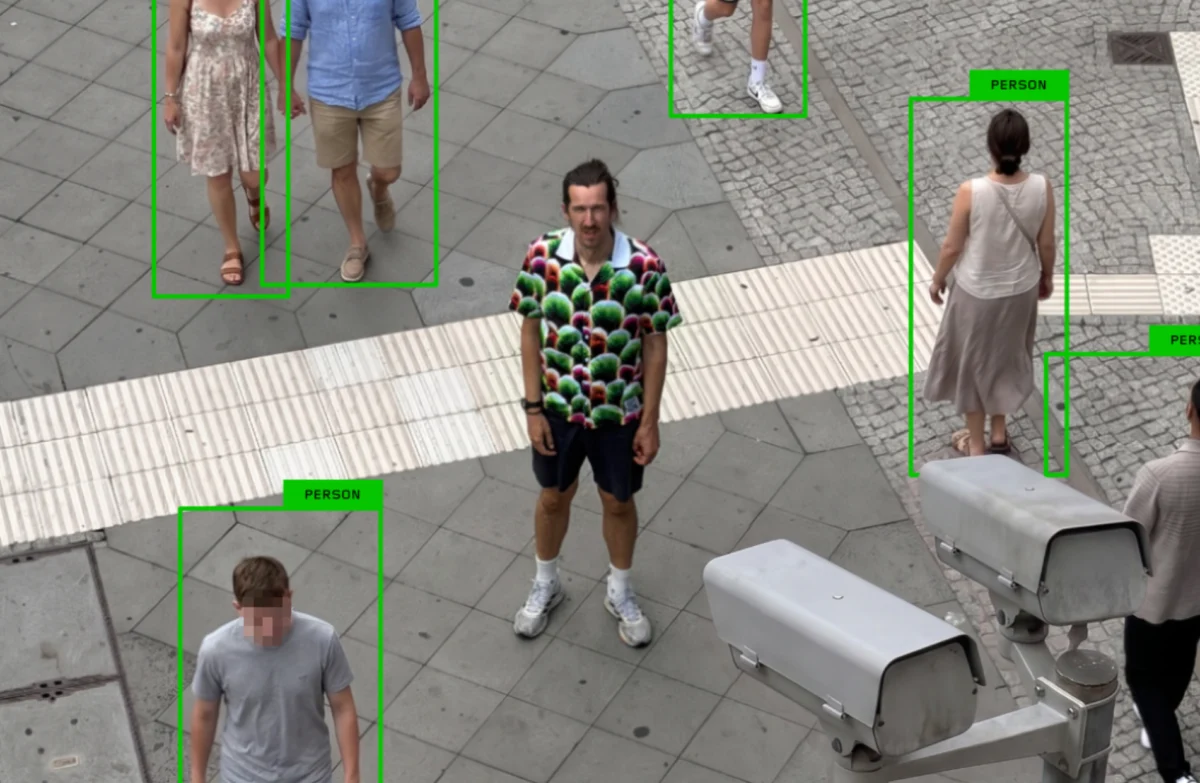
Simon Weckert
Sign up to see the future, today
Can’t-miss innovations from the bleeding edge of science and tech
Designer Creates World’s Most Hideous Hawaiian Shirt to Hide From AI-Surveillance Cameras
In an era increasingly defined by omnipresent digital eyes, where surveillance cameras equipped with artificial intelligence are becoming a ubiquitous fixture in public and private spaces, a bold new form of resistance is emerging from an unexpected quarter: fashion. While some privacy advocates resort to direct action, such as dismantling camera infrastructure, German artist and designer Simon Weckert is challenging the encroaching panopticon with a far more subversive and ironically aesthetically jarring tool: an aloha shirt so outrageously patterned and colored that it renders its wearer invisible to AI-integrated surveillance systems. This isn’t just a fashion statement; it’s a digital camouflage designed to exploit the fundamental weaknesses of machine vision, a sartorial protest against algorithmic oversight that promises to reshape the discourse around privacy in the age of intelligent surveillance.
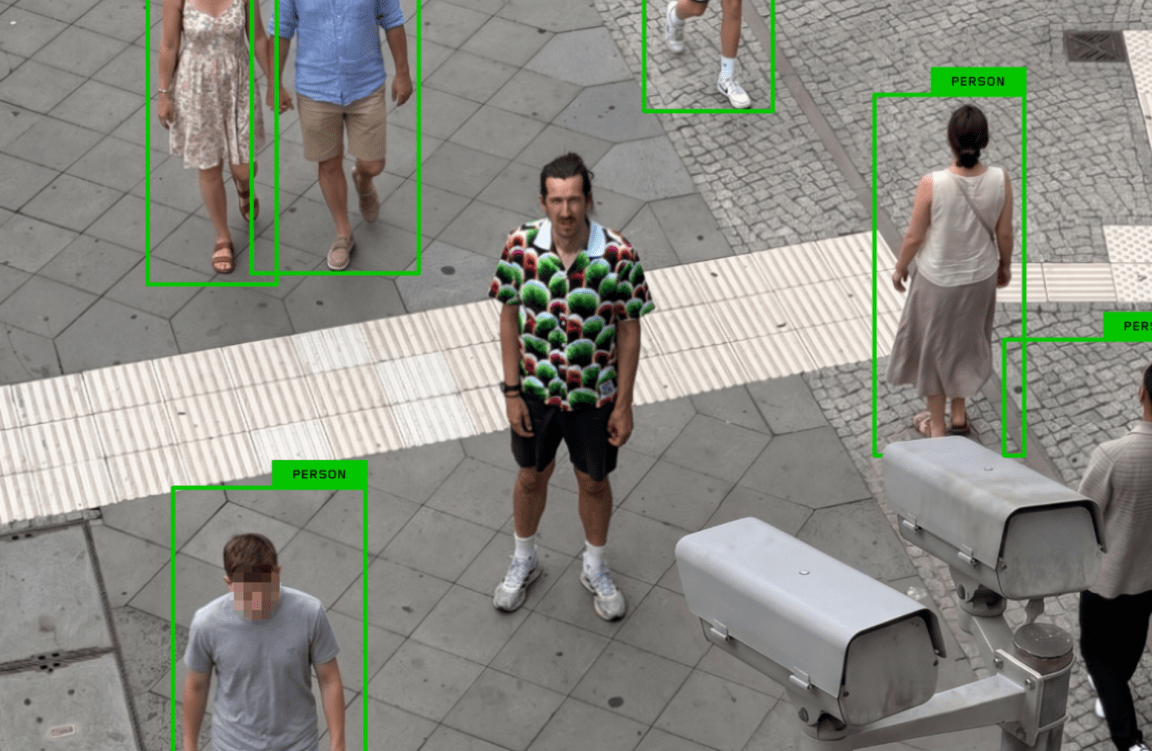
Freshly reported by Dezeen, Weckert’s creation, which he dubs “digital camouflage,” is a dizzying blend of vibrant, clashing colors and abstract shapes that would typically be dismissed as a kitsch fashion faux pas. However, its “hideous” nature is precisely its strength. The garment’s grotesque aesthetic is not an artistic whim but a meticulously engineered design intended to confuse sophisticated surveillance algorithms. Weckert explained that the “interplay” of these ghastly colors and amorphous shapes is the key to evading detection. Unlike human perception, which can discern a person regardless of their attire, AI systems operate on statistical models derived from millions of training images. As Weckert eloquently put it, “AI systems are made of multiple layers and never learned what a human is — they learned what humans statistically look like in millions of training images. A ‘person,’ for the machine, is a bundle of visual statistics — and that is exactly its weakness.”
Specifically, the prominent pink, orange, and green blobs splattered across the shirt are engineered to “break the continuity of the body’s outline,” Weckert elaborated. This strategic disruption prevents the detector from cohesively binding disparate visual parts into a recognizable human figure. To the human eye, the shirt presents an almost hypnotic, if not offensive, textile pattern; to the AI model, it appears as nothing coherent at all – an anomaly, an unclassifiable visual noise that doesn’t fit its learned parameters for a human form. This innovative approach highlights a critical vulnerability in current AI vision systems: their reliance on learned patterns and statistical approximations rather than genuine understanding. By disrupting these patterns, Weckert has created a powerful, albeit visually challenging, tool for reclaiming anonymity in an increasingly monitored world.
The prevalence of AI surveillance systems has become a significant concern for civil liberties advocates worldwide. From facial recognition cameras in public squares to sophisticated object and behavioral tracking in retail environments, these systems are designed to identify, categorize, and follow individuals without their explicit consent. Proponents argue they enhance security and efficiency, but critics warn of a creeping “panopticon” effect, where the constant threat of observation stifles freedom of expression and movement. Weckert’s shirt, therefore, is not merely a technical hack but a potent artistic commentary on the erosion of personal privacy in smart cities and digitally integrated environments. It forces a confrontation with the uncomfortable reality that our public spaces are rapidly transforming into data collection zones, where every movement and interaction is potentially logged and analyzed by unseen algorithms.
Ironically, Weckert harnessed the very technology he aims to subvert to design this pattern. He employed a technique known as an “adversarial loop,” a sophisticated form of trial and error where an AI system is used to generate patterns that specifically confuse another AI system. In essence, Weckert trained an AI to create designs that would act as “adversarial examples” to existing surveillance algorithms. This process involves repeatedly testing patterns against target AI models, iteratively refining the design until it achieves maximum disruption. This method is a fascinating demonstration of how AI can be turned against itself, creating a kind of digital “anti-weapon” in the ongoing arms race between surveillance and privacy. It underscores the concept that for every technological advancement, a counter-measure can often be engineered, sometimes by the very same means.
This concept of disruptive fashion has a fascinating literary precedent. William Gibson, the acclaimed author of cyberpunk fiction, imagined a similar garment in his 2010 novel “Zero History.” Gibson’s fictional “ugliest T-shirt in the world” was described as “beyond punk, beyond art, and fundamentally, somehow, an affront.” While Gibson’s shirt operated more on a psychological and cultural level, creating an aesthetic overload that repelled attention, Weckert’s creation achieves a similar effect but on a purely algorithmic plane. Both garments, however, share the spirit of using clothing as a form of resistance, a means of asserting individuality and defying categorization in an increasingly standardized and observed world. Gibson’s prescience in foreseeing fashion’s potential as a tool for digital camouflage or social disruption finds a compelling real-world echo in Weckert’s work, bridging the gap between speculative fiction and tangible innovation.
Simon Weckert is no stranger to leveraging digital systems for artistic and activist ends. A self-described “modern-day digital wizard,” his past projects have consistently highlighted the vulnerabilities and manipulability of omnipresent technologies. He previously made international headlines in 2020 with a project that brilliantly exposed a flaw in Google Maps’ traffic prediction algorithm. Weckert used a wagon filled to the brim with 99 second-hand smartphones, all running Google Maps, and slowly pulled it through the streets of Berlin. The concentration of so many devices moving at a pedestrian pace tricked Google’s system into interpreting the area as a severe traffic jam, causing virtual congestion on the app and redirecting unsuspecting drivers. This ingenious intervention demonstrated how easily digital representations of reality could be skewed, prompting a broader discussion about our reliance on and trust in algorithmic data. Both the traffic jam project and the anti-surveillance shirt share a common thread: an artistic exploration of how digital systems perceive and interpret the physical world, and how those interpretations can be subtly yet profoundly disrupted.
The implications of Weckert’s “digital camouflage” extend far beyond a single eccentric shirt. It signifies a potential paradigm shift in the ongoing battle for privacy. As AI surveillance becomes more sophisticated, so too will the methods of counter-surveillance. Weckert’s work opens the door to an entire field of “adversarial fashion” or “anti-AI aesthetics,” where clothing and accessories are designed not just for human appeal but for algorithmic invisibility. This could lead to an “AI arms race” where surveillance technology and privacy-enhancing countermeasures continually evolve in response to one another. Furthermore, it sparks crucial ethical debates about the right to anonymity in public spaces, the responsibilities of technology developers, and the role of art in challenging societal norms and technological advancements. Will such garments become mainstream, offering individuals a measure of control over their digital footprint in an increasingly observed society? Only time will tell, but Weckert’s pioneering work certainly suggests a future where our clothes might just be our last line of defense against the digital gaze.
In conclusion, Simon Weckert’s “hideous” aloha shirt is more than just an oddity; it’s a powerful statement and a practical tool in the burgeoning movement to reclaim personal privacy from pervasive AI surveillance. By exploiting the inherent weaknesses in how machine vision systems “see,” Weckert has not only created a striking piece of anti-fashion but also ignited a vital conversation about the future of anonymity, digital resistance, and the subtle yet profound ways technology shapes our lives. His work serves as a reminder that creativity, even in its most unconventional forms, remains a potent force for questioning, challenging, and ultimately shaping the technological landscapes of tomorrow.
More on surveillance: Embattled Flock CEO Begs for “Compromise†As Backlash Spills Over