Imroatul Nasiyah
The tantalizing prospect of a single entity dominating the emerging space economy – acting as the railroad, power utility, and cloud provider of the cosmos – has ignited fervent excitement around SpaceX’s highly anticipated initial public offering. Investors are no longer just betting on rockets; they are placing their faith in an entire orbital ecosystem, a vision that extends far beyond mere launch capabilities. Central to this ambitious future, and bordering on the realm of science fiction, is the concept of orbital data centers, with SpaceX emerging as a prominent contender in this burgeoning race, though not alone in its pursuit.
The allure of placing data centers in orbit is undeniably potent. Imagine a reality where solar energy, virtually limitless in space, powers these critical infrastructures, unburdened by the terrestrial constraints of land availability, water resources, and established power grids. As the insatiable demand for artificial intelligence fuels an exponential surge in computing needs, orbital data centers are being pitched as a revolutionary solution to the mounting environmental and infrastructural pressures plaguing Earth-based facilities. These terrestrial data centers often face public backlash due to their significant land use, energy consumption, water demands, noise pollution, and broader environmental impact, making the idea of an off-world alternative particularly appealing.
However, the leap from launching sophisticated satellites to operating industrial-scale computing infrastructure in the unforgiving vacuum of space is monumental. Space presents a unique and formidable set of challenges: the relentless bombardment of radiation, which can degrade and damage sensitive electronics; the immense challenge of dissipating the colossal amounts of heat generated by these processors; the exorbitant cost and complexity of in-orbit repairs, where even the slightest malfunction can necessitate an incredibly expensive mission; and the persistent, significant cost associated with every kilogram launched into orbit.
As engineering professors specializing in data center design and space systems engineering, we bring a dual perspective to this complex endeavor, understanding the intricate interplay of requirements from both disciplines.
The Anatomy of an Earth-Based Data Center
To grasp the complexities of orbital data centers, we must first dissect what constitutes a functional data center on Earth. These ubiquitous facilities underpin our digital lives, powering everything from cloud computing and video streaming to online banking, scientific research, and, increasingly, the sophisticated demands of artificial intelligence. Yet, a data center is far more than a mere collection of servers; it is a meticulously engineered system requiring several critical components for reliable operation.
The first pillar is electric power. The vast array of servers, networking equipment, and storage devices within a data center consumes prodigious amounts of electricity, a demand that is escalating dramatically with the rapid advancement and deployment of AI technologies.
The second, and equally critical, element is cooling. Nearly all the electrical energy consumed by servers is ultimately converted into heat. If this heat is not efficiently and reliably removed, the performance of the equipment degrades, failure rates increase, and the entire data center can grind to a halt. Earth-based cooling systems are elaborate, often incorporating air handling units, chillers, cooling towers, pumps, and increasingly, advanced liquid-cooling solutions. In many instances, cooling systems represent the largest energy consumer within a data center, second only to the computing hardware itself.
The third component is physical infrastructure. This encompasses the essential land, robust buildings, structural support systems, redundant backup power sources, vital water supply networks, high-speed communication infrastructure, and accessible maintenance facilities. Crucially, data centers must be strategically located in proximity to users and major network backbones to ensure the low latency required for instantaneous digital services. In essence, Earth-based data centers are complex, integrated electrical and thermal infrastructure systems built around the core of computing hardware.
The Orbital Data Center: A Celestial Proposition
Now, let us explore what it would entail to establish these data centers in space and the compelling business case that is driving this innovation.
Similar to their terrestrial counterparts, orbital data centers would necessitate immense power generation. In space, this would predominantly come from solar panels. While the Sun shines continuously in orbit, unimpeded by clouds, the Earth’s shadow can temporarily interrupt this energy supply depending on the satellite’s orbit. Furthermore, even the most advanced solar cells currently available can only convert approximately half of the incident sunlight into electricity.
Space also presents a potential advantage in cooling. The frigid background of space, hovering around minus 455 degrees Fahrenheit (minus 270 degrees Celsius), offers a unique opportunity: waste heat from the data center could theoretically radiate outwards into this extreme cold, effectively cooling the electronics. In principle, this could eliminate the need for some of the bulky and water-intensive cooling infrastructure common on Earth. However, these thermal radiators would require a substantial surface area, in addition to the space needed for solar panels.
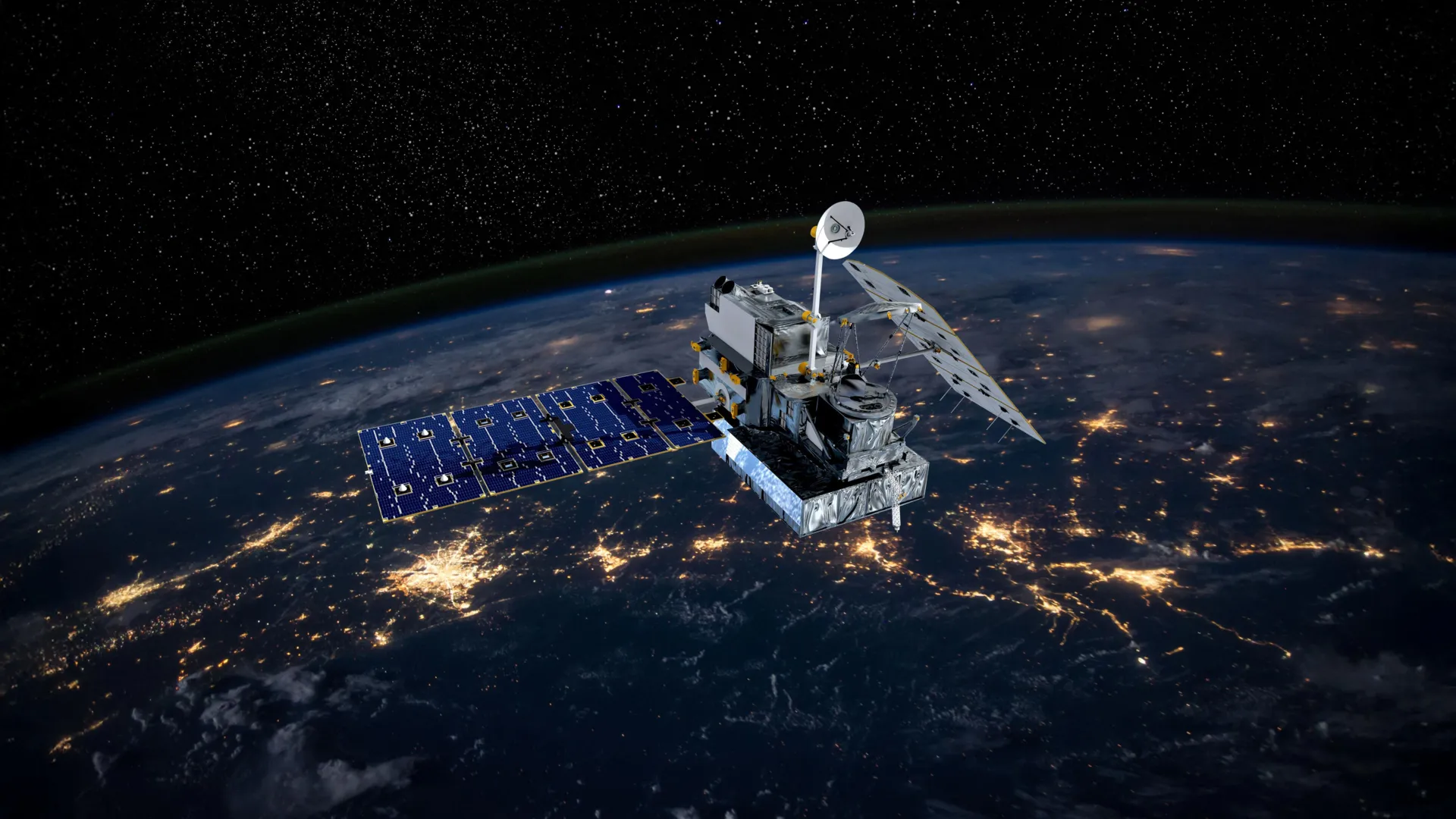
The absence of an atmosphere in space means that heat cannot escape via convection (air blowing over hot components). Instead, heat must be dissipated as infrared radiation, a comparatively slow process. Consequently, removing a significant amount of waste heat, such as 10 megawatts, could necessitate radiator surfaces spanning an area equivalent to two football fields.
Beyond the technical hurdles, orbital data centers could sidestep some of the local conflicts associated with large-scale terrestrial developments. As previously mentioned, communities often resist new data center projects due to their substantial land and energy demands, significant water consumption, and the associated noise and environmental impacts. A space-based system would alleviate these pressures, avoiding competition for local resources and eliminating neighborhood disturbances and zoning disputes.
However, space is becoming increasingly congested. The deployment of thousands of large orbital data centers would exacerbate this issue. Orbital debris and micrometeorites pose significant threats, capable of puncturing these sensitive facilities and potentially leading to catastrophic collisions that would generate even more space junk. The sheer volume of launches required to transport all the necessary equipment into orbit could also raise concerns for some communities, echoing the protests SpaceX has faced at its launch complex in Boca Chica, Texas, from local activists concerned about the environmental impact of its rocket testing and launches.
The vast quantities of data that would need to be exchanged between Earth and these orbital data centers, as well as between the data centers themselves, would rely on radio wave or laser communication systems. While satellite constellations like Starlink and Amazon Leo have demonstrated the feasibility of such inter-satellite communication, the sheer volume of data transfer to and from space would be unprecedented.
Additional Hurdles on the Path to Orbit
These orbital data centers, along with their solar arrays and radiators, could not be launched as single, monolithic units. They would necessitate assembly in space, requiring the development of advanced equipment for in-space servicing, assembly, and manufacturing (ISAM).
Another critical challenge lies in the refresh cycle of computing hardware. Data center servers are not designed for perpetual operation. On Earth, operators typically replace or upgrade hardware every three to five years to keep pace with technological advancements, evolving workloads, and the natural aging of equipment. Similarly, component failures necessitate replacements. These refresh and repair processes are relatively straightforward on Earth, where technicians can physically access and swap out servers.
In space, however, the refresh and repair processes become exponentially more complex and costly. Hardware launched into orbit might be difficult or prohibitively expensive to upgrade. If the computing platform cannot be updated or if a significant number of components fail, the entire system could become obsolete long before its intended operational lifespan concludes. In a field characterized by rapid performance improvements and ever-increasing computing demands, this limitation could present a substantial economic and operational impediment.
Finally, the inherent harshness of space itself poses a constant threat. These data centers would exist in a near-vacuum, subjected to continuous radiation bombardment. Depending on their orbit, they would experience extreme temperature fluctuations, transitioning from intense heat in direct sunlight to extreme cold in Earth’s shadow multiple times a day. These, and numerous other challenges, must be meticulously addressed.
So, Do They Still Make Sense?
Despite these formidable obstacles, companies are pressing forward with the design and development of space-based data centers. SpaceX, for instance, has unveiled the design for its AI1 Compute Satellite, envisioned as an orbital data center spacecraft. However, it is crucial to note that this satellite, in its current iteration, is estimated to be 100 to 1,000 times less capable than contemporary Earth-based data centers.
It is becoming clear that not all computing tasks are suited for an orbital environment. Many data center applications are inherently dependent on rapid response times and close proximity to users on Earth. Financial transactions, interactive AI services, and the vast majority of cloud applications are acutely sensitive to even minor delays.
More viable early applications are likely to be those that are less latency-sensitive and more intrinsically linked to space-based operations. These could include processing Earth observation data gathered by satellites, specialized military or intelligence data analysis, scientific computing directly related to space missions, or providing dedicated computing resources for satellites and other space assets. In essence, the first successful space data centers may find their niche serving customers within the space domain before they can realistically compete with mainstream cloud data centers on Earth.