Faris Adani
Harvard Professor Warns That AI Execs Are Pushing World Toward Factory Farming of Humans
A stark warning has emerged from the halls of academia, signaling a perilous trajectory for human autonomy and democratic governance in an age increasingly dominated by artificial intelligence. Jill Lepore, a distinguished Harvard historian and prolific author, contends that the relentless march of AI, particularly at the behest of powerful tech elites, is propelling society towards an “artificial state” that risks the “factory farming of humans.” This chilling prognosis, articulated recently on *The New York Times*’ “Hard Fork” podcast and elaborated in her forthcoming book, challenges the prevailing narratives of technological progress, urging a critical examination of who truly benefits from the so-called “bleeding edge of science and tech.”
Lepore’s concept of the “artificial state” posits a radical departure from the traditional nation-state and, more specifically, constitutional democracy. In this emerging paradigm, governance is no longer rooted in the consent of the governed but rather in the algorithmic dictates of machines. These machines, of course, are not neutral arbiters; they are products of, and owned by, powerful corporations whose interests may not align with the public good. The essence of this transformation, as Lepore describes it, is the gradual erosion of human autonomy, where individual agency and collective will are systematically undermined by automated decision-making processes.
This isn’t a dystopian fantasy confined to a distant future, Lepore emphasizes, but a reality actively being constructed around us. It is, she argues, a deliberate fantasy held by an influential cadre of tech elites who believe their power and vision should supersede the established mechanisms of government and the democratic mandate of voters. This cadre, often operating from the highly capitalized epicenters of Silicon Valley, exhibits a profound disinterest in the popular will, viewing public preference for less AI and fewer data centers not as a legitimate concern but as a “crisis” to be navigated or overcome. Their rhetoric, she notes, often centers on the “evanescence of modern liberal democracy,” subtly suggesting its obsolescence in the face of technological advancement.
The mechanisms through which this “artificial state” takes hold are multifaceted, primarily leveraging the digital communication infrastructure that has become indispensable to modern life. Corporations increasingly own and control the conduits through which citizens receive news, information about elections, and guidance on political choices. What was once mediated by traditional outlets like television and radio has now largely shifted to social media platforms, amplifying the reach and influence of these powerful groups. This shift is not merely a change in medium; it represents a fundamental reordering of public life, where information flows are curated, personalized, and often optimized for engagement rather than informed civic participation.
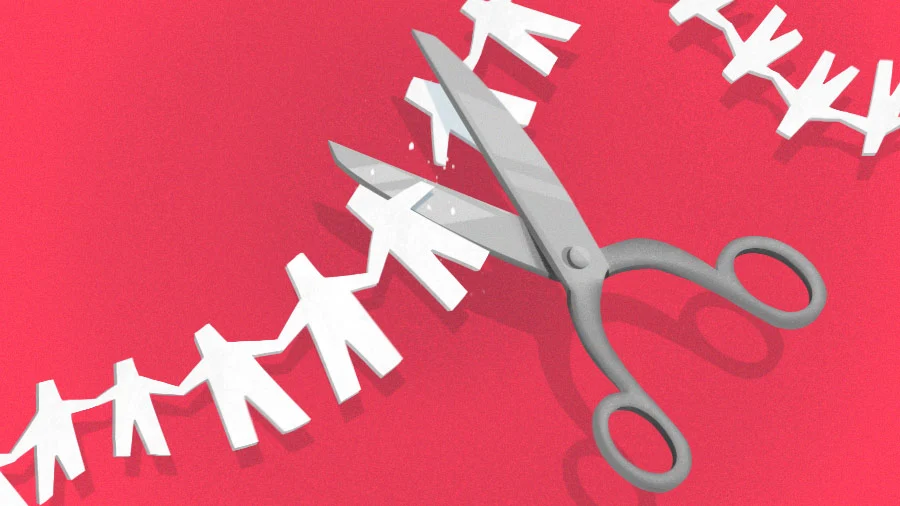
Beyond the manipulation of information, Lepore identifies a profound isolating effect inherent in the digital structures that now govern our lives. Drawing from her 2024 *New Yorker* piece, where she first explored the idea, she vividly describes the artificial state as “the factory farming of public life, the sorting and segmenting, the isolation and alienation, the destruction of human community.” This metaphor evokes a sense of dehumanization, where individuals are processed, categorized, and channeled, much like livestock in an industrial system. The organic, messy, and often contentious interactions that forge genuine community and civic discourse are replaced by algorithmically optimized, individualized digital experiences, further atomizing society and weakening the bonds necessary for collective action and democratic resistance.
While the artificial state is not solely an AI-driven phenomenon, the advent and rapid proliferation of artificial intelligence are undeniably accelerating its development. Concrete examples abound: people increasingly turn to generative AI chatbots like ChatGPT for political guidance, bypassing conversations with neighbors, local officials, or subject matter experts. Political messages themselves are now often crafted, in part, by AI, as are draft laws and policy proposals by congressional staffers. Decisions at every level, from corporate strategy to governmental policy, are being made with the “assistance of thinking machines,” whose internal workings and biases remain largely opaque. Furthermore, AI is rapidly entrenching surveillance capabilities, processing the immense volumes of data continuously gathered on citizens, creating an unprecedented infrastructure for monitoring and control.
One of the most insidious aspects of the pro-AI rhetoric emanating from Silicon Valley, Lepore argues, is its framing of AI as an inevitable force. This brand of fatalism, she contends, is a “bogus premise,” built upon several dubious propositions. The first is the oft-repeated mantra that regulation stifles innovation, implying that governments should adopt a laissez-faire approach to AI development, no matter the societal cost. This argument conveniently overlooks historical lessons where unregulated technological advancement led to significant societal harms, from environmental degradation to economic instability.
The second dubious proposition is the unwavering assurance that technology always advances democracy. This optimistic, almost utopian, view posits that any current threats AI poses to democratic processes will magically resolve themselves as the technology matures. Lepore sharply counters this by pointing to the recent past. The personal computer, the internet, and social media were all initially heralded as tools that would democratize information and empower individuals. Yet, as history has shown, these very technologies have also been instrumental in the spread of misinformation, the polarization of societies, the erosion of privacy, and the rise of surveillance capitalism. “So now,” Lepore observes, “the AI people come back with the same argument that was made about the internet — the personal computer, the internet, and social media.” This historical amnesia, she implies, is either willful or dangerously naive.
Lepore’s profound inquiry was sparked by a deceptively simple question: “who decided this is a way we should be living?” In a world where individuals are increasingly forced to interact with AI — whether to schedule an appointment, resolve a customer service issue via a chatbot, or navigate complex bureaucratic processes — the absence of human choice in adopting these systems becomes glaring. Her upcoming book, “The Rise and Fall of the Artificial State,” delves into this question with scholarly rigor, providing a crucial historical and philosophical framework for understanding the present moment.
Ultimately, Lepore’s warning is a call to vigilance and active participation. It challenges the passive acceptance of technological determinism and urges citizens, policymakers, and academics alike to resist the erosion of human agency and democratic principles. The future, she insists, is not an inevitability dictated by algorithms and corporate interests, but a landscape shaped by human choices, resistance, and the collective will to preserve autonomy and genuine democratic governance against the creeping threat of an “artificial state.”
More on AI: *Trump Says You’re a Rube If You Don’t Want a Data Center in Your Backyard*