Faris Adani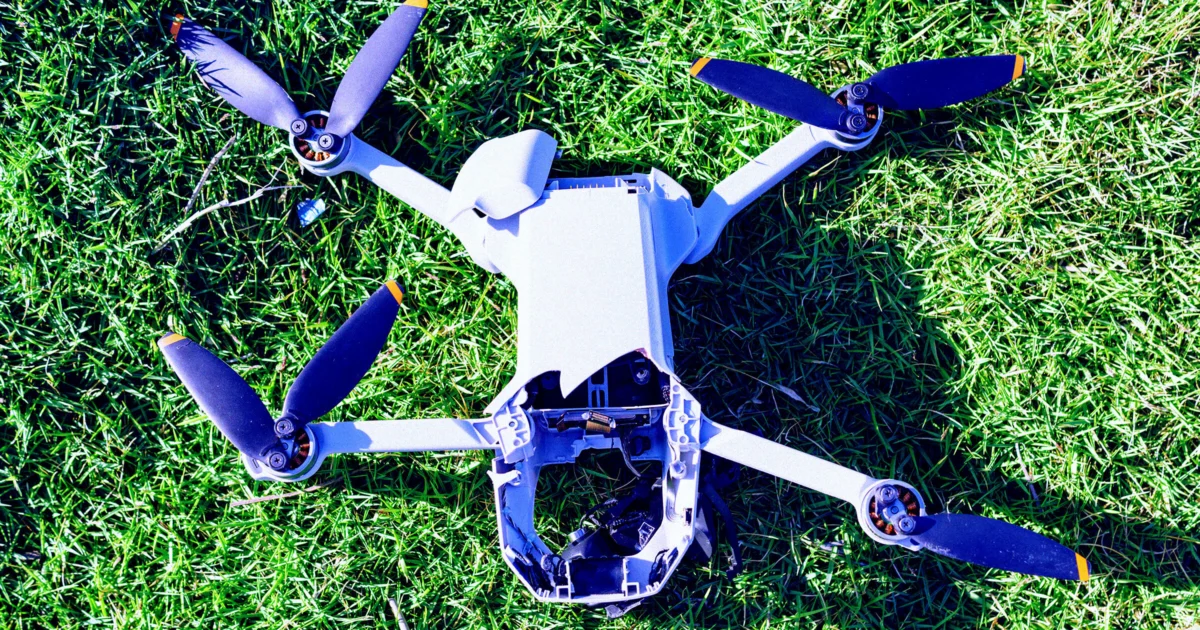
In an era increasingly defined by the pervasive reach of technology and a corresponding rise in public skepticism toward surveillance, even the most altruistic intentions can find themselves caught in the crosshairs of unforeseen backlash. This stark reality recently confronted a group of dedicated volunteers in Las Vegas, who learned a difficult lesson when a high-tech thermal imaging drone, deployed to locate an injured, lost dog, was violently destroyed by a group of unidentified individuals, casting a spotlight on the complex and often fraught relationship between emerging technology, privacy concerns, and vulnerable populations.
The incident unfolded as Paws Patrol LV, a passionate volunteer animal rescue organization, was engaged in a multi-day search for a dog believed to have been hit by a car. The rugged terrain and dense vegetation characteristic of the Las Vegas outskirts presented a formidable challenge, making traditional ground searches with flashlights largely ineffective. To overcome these obstacles and leverage advanced capabilities, the group deployed one of their most valuable rescue assets: a state-of-the-art thermal imaging drone, an investment of approximately $7,000. This specialized equipment is designed to detect heat signatures, allowing rescuers to locate animals even in complete darkness or obscured by dense foliage, significantly improving the chances of a successful rescue in time-sensitive situations.
According to reports from Las Vegas station FOX5 and a detailed account posted by Paws Patrol LV on their Facebook page, the drone’s mission was abruptly cut short. "For the past couple of days, we’ve been searching for a dog we believe was hit by a car," the group wrote, detailing their initial struggles. "We searched on foot, but the vegetation was simply too dense to see through with flashlights. So we launched our thermal drone… one of the most valuable rescue tools we’ve ever owned." The post continued with the shocking revelation: "Less than a minute after it took off, a group of unhoused individuals knocked it out of the sky, smashed it, and threw it into the water." The immediate loss of the drone not only represented a significant financial blow to the non-profit organization but also severely hampered their ongoing search efforts for the vulnerable animal. The volunteers were left not just without their crucial tool, but also baffled by the seemingly senseless act of destruction against a device being used for humanitarian purposes.
The news of the incident quickly spread, eliciting a wave of sympathy and support from the wider community. Demonstrating the powerful impact of collective goodwill, the animal-rescue group was not left without a vital tool for long. In a heartwarming display of generosity, a compassionate business owner from Montana, upon learning of Paws Patrol LV’s plight, stepped forward to donate a brand new thermal imaging drone, ensuring that their critical rescue operations could continue. This swift replacement underscored the value the community places on such efforts, even as the act of vandalism highlighted deeper societal tensions.
While it might be tempting to quickly label the perpetrators as "unwashed Luddites" or individuals devoid of empathy, it is crucial to approach the incident with nuance and acknowledge that the true identity and motivations of the vandal or vandals remain officially unknown. However, if the individuals involved were indeed homeless, as suggested by Paws Patrol LV volunteers, their strong aversion to an unfamiliar drone becomes comprehensible within a broader context of fear, distrust, and past negative experiences with surveillance technology.
For homeless populations, drones have regrettably become symbols of intrusive monitoring and enforcement rather than assistance. Across various parts of the United States, police departments have increasingly utilized surveillance drones, often deploying them in ways that directly impact vulnerable communities. Reports from outlets like KTVZ have documented instances where police in cities like Asheville have employed drones in "crackdowns on homeless-related crimes," frequently leading to the displacement and criminalization of unhoused individuals simply seeking shelter. This use of technology, rather than offering aid, often exacerbates their precarious living situations, forcing them to move from one temporary refuge to another, further eroding their sense of safety and privacy. Beyond official enforcement, there have also been disturbing accounts of private citizens weaponizing drones to harass homeless populations. NBC Boston, for example, reported on a shocking case where a drone was used to "drop dog feces" on people living on the streets of Manchester, a dehumanizing act that vividly illustrates the potential for drones to be used as tools of intimidation and cruelty against those already struggling.
However, the skepticism and outright hostility towards drones are not confined solely to homeless communities. A growing segment of the general population harbors deep-seated concerns about the proliferation of surveillance technology. In various suburban areas, malicious operators have used drones to harass random residents, invading their privacy and creating a pervasive sense of unease. The ethical implications extend to wildlife conservation, where drones have been illicitly used by poachers to scout for game, as reported by The MeatEater, undermining conservation efforts and highlighting the technology’s potential for misuse in environmental contexts. Furthermore, the commercial sector has also seen drones deployed in ways that raise significant privacy alarms. Insurance adjusters are increasingly conducting secretive drone flights over private properties, not always with explicit homeowner consent, to gather visual data. These flights, as documented by CBS News Boston and ABC7 News, are often used to find "excuses to penalize homeowners" for minor issues or even, in extreme cases, to "drop customers altogether," leading to increased premiums or non-renewals based on aerial observations that homeowners may not even be aware of.
The incident in Las Vegas, therefore, transcends a simple act of vandalism; it underscores a larger, more critical point about the increasingly contested nature of our skies. Drone operators, whether benevolent or vindictive, are engaged in a silent battle for control – not just of the physical airspace itself, but over the public perception and acceptance of their technology. On one hand, drones represent incredible potential for good: saving lives in search and rescue, delivering vital supplies, monitoring environmental changes, and assisting in disaster relief. On the other, they embody the fears of ubiquitous surveillance, the erosion of privacy, and the potential for malicious exploitation.
For organizations like Paws Patrol LV, whose mission is unequivocally positive, navigating this complex landscape requires more than just advanced technology. It necessitates a concerted effort to build trust, engage with communities, and transparently communicate their intentions. The public’s understanding of drone technology is often shaped by the most egregious examples of misuse, making it challenging for beneficial applications to gain widespread acceptance without encountering resistance. As drone technology continues its rapid advancement, with innovations like "invisible drones" — as highlighted in a related article from Futurism — pushing the boundaries of what’s possible, the societal conversation around their ethical deployment, regulatory frameworks, and the protection of individual privacy will only intensify. The skies have indeed become a theatre of competing interests and perceptions, demanding a careful balance between technological progress and the fundamental rights and anxieties of the people below.