isnaini azizah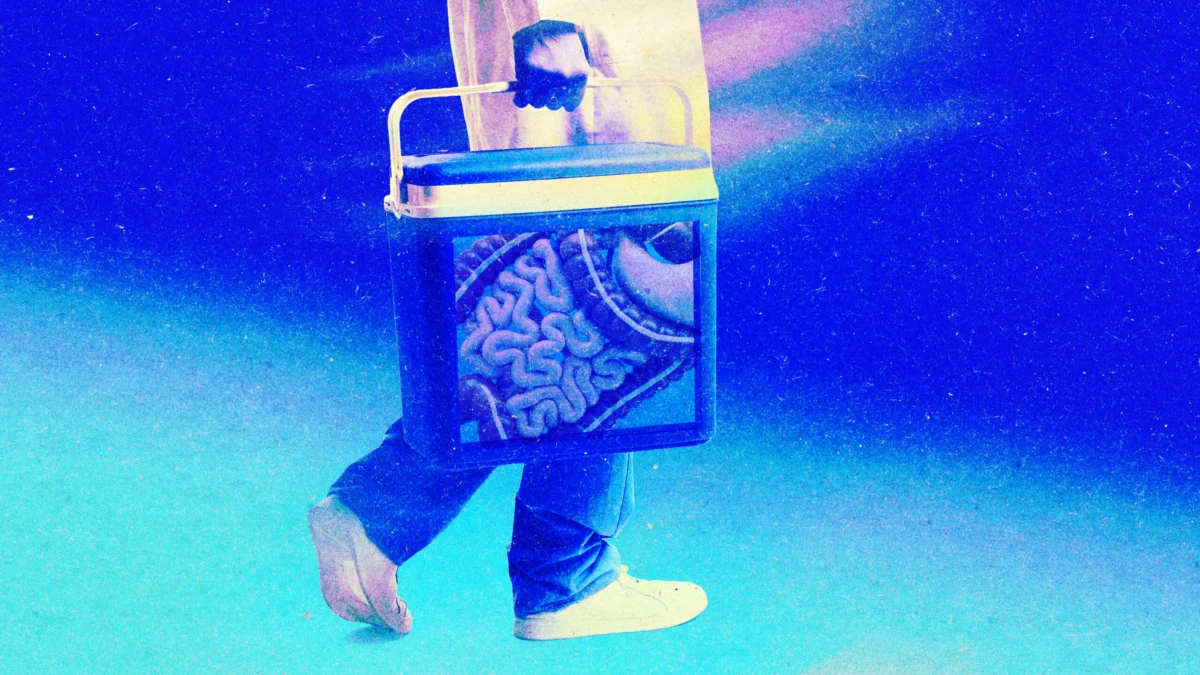
The critical shortage of donor organs presents a formidable challenge in modern medicine, a stark reality amplified by the organ’s ephemeral viability once removed from the human body. Even with meticulous preservation on ice, the precious window of opportunity for transplantation is a mere matter of hours, a ticking clock that often dictates the fate of both donor and recipient. This severe time constraint is a primary bottleneck, significantly limiting the reach and effectiveness of life-saving transplant procedures. Imagine the transformative potential of "organ banks"—vast repositories where human organs could be sustained not for hours, but for days, weeks, months, or even longer. Such a revolutionary capability would fundamentally alter the landscape of organ transplantation. It would grant medical professionals the invaluable time needed to conduct thorough diagnostic tests, meticulously identify the most compatible recipients, and orchestrate the seamless transportation of organs across geographical distances, thereby maximizing the chances of successful integration and minimizing the risk of rejection.
Recent scientific breakthroughs are bringing this ambitious vision closer to reality. In a significant development, a dedicated research team has achieved the remarkable feat of supercooling pig kidneys—animals whose organ anatomy closely mirrors that of humans—preserving them for several days. These supercooled kidneys not only survived the extended storage period at a frigid -4°C (25°F) but were also successfully reimplanted into pigs, demonstrating their continued viability. This achievement represents the latest stride in a field that is currently experiencing an unprecedented surge of innovation and excitement.
The inherent difficulty in freezing organs lies in the destructive nature of ice crystal formation. As ice crystals form within the delicate cellular structures of an organ, they invariably cause irreparable damage, rendering the organ unusable for transplantation. This formidable obstacle, however, has not deterred numerous researchers from relentlessly pursuing various preservation strategies.
One prominent avenue of research is cryopreservation, a process involving rapid, extreme cooling that effectively transforms cells into a vitrified, glass-like state, thereby preventing ice crystal formation. This sophisticated technique has already achieved routine success in preserving gametes and embryos. These biological materials can be cooled to an astonishing -196°C in less than two seconds and remain viable for use even after decades of storage. This success with smaller biological entities fuels optimism for larger, more complex structures like whole organs.
Despite the advancements in cryopreservation for reproductive cells and embryos, the cryopreservation and subsequent thawing of entire human organs for transplantation remains an elusive goal. However, the pursuit of this objective has spurred the storage of numerous human bodies and even brains at ultra-low temperatures. The underlying hope is that future technological advancements might enable their rewarming and eventual reanimation. This speculative frontier of cryonics, the practice of preserving bodies or brains at extremely low temperatures with the hope of future revival, is a testament to humanity’s enduring quest to conquer death and disease.
A compelling illustration of the dedication within the cryonics field comes from the case of Stephen L. Coles, a gerontologist who chose to have his brain cryopreserved. Following his death in 2014, his body was transported to Alcor, a leading cryonics facility in Arizona. A specialized team at Alcor meticulously removed Coles’s head, perfused his brain with cryoprotective chemicals—substances that act as biological antifreeze—extracted the brain from the skull, and cooled it to an extreme -146°C. Years later, Greg Fahy, a renowned cryobiologist and a friend of Coles, examined samples of the preserved brain. He observed that the brain cells, which had contracted during the process, demonstrated a remarkable ability to "bounce back" and regain their form upon rewarming. However, this cellular recovery does not definitively equate to the cells being alive or guarantee the possibility of future brain reanimation. As Matthew Powell Palm, a researcher at Texas A&M University, cautioned at the time, "There are so many ways those neurons could be toast." This statement underscores the profound complexities and challenges inherent in achieving true biological revival.
Matthew Powell Palm himself is at the forefront of alternative organ preservation strategies. It was he, in collaboration with his colleagues, who spearheaded the pioneering work in storing and successfully transplanting supercooled pig kidneys. This groundbreaking study, hailed as "a landmark achievement," demonstrated that these supercooled organs performed significantly better than kidneys preserved using traditional ice-cooling methods. Notably, Powell Palm’s innovative approach did not necessitate the use of cryoprotectants. Concurrently, other research teams are actively exploring novel chemical cocktails designed to facilitate organ storage at even lower temperatures, with the ambitious aim of extending preservation times considerably. These ongoing investigations hold immense promise for revolutionizing organ banking.
Beyond freezing and supercooling, another promising avenue for extending organ viability involves the use of advanced machine perfusion systems. These sophisticated devices continuously perfuse organs with nutrient-rich solutions, effectively mimicking the physiological conditions found within the living body. Machine perfusion technology has gained significant traction over the past decade and is now routinely employed to maintain the viability of livers and kidneys for periods extending up to approximately 24 hours.
Researchers are now diligently adapting these perfusion protocols for an ever-expanding array of organs. This innovative approach has even been successfully applied to eyeballs, a recent triumph that could potentially pave the way for whole-eye transplants. In March, the author visited scientists in Valencia who had developed a specialized perfusion system for uteruses, aptly nicknamed "Mother." This remarkable device was instrumental in keeping a human uterus alive outside the body for an entire day, marking a significant milestone in reproductive medicine and organ preservation.
The field of organ preservation is undeniably in a state of dynamic evolution, characterized by rapid advancements and an infectious sense of optimism. As researchers continue to push the boundaries of what is scientifically possible, the dream of readily available, long-lasting donor organs inches closer to becoming a tangible reality, offering renewed hope for countless individuals awaiting life-saving transplants. Readers are encouraged to stay tuned for further developments and in-depth coverage from MIT Technology Review on this vital and rapidly advancing area of science in the coming weeks.
This article first appeared in The Checkup, MIT Technology Review’s weekly biotech newsletter. To receive it in your inbox every Thursday, and read articles like this first, sign up here.