Imroatul Nasiyah
Researchers from the Center for Computational Quantum Physics (CCQ) at the Simons Foundation’s Flatiron Institute, in collaboration with colleagues from Boston University, have developed a groundbreaking method that extracts unprecedented computational power from conventional hardware. This innovative approach proved so efficient that certain crucial calculations could be performed on a standard personal laptop, challenging the prevailing notion that such intricate quantum dynamics problems necessitate the exclusive use of quantum computers. The implications of this breakthrough are far-reaching, potentially broadening the scope of quantum dynamics problems scientists can investigate and offering a powerful new strategy for tackling optimization challenges where identifying the optimal solution from a vast array of possibilities is paramount. These pivotal findings have been published in the esteemed journal Science.
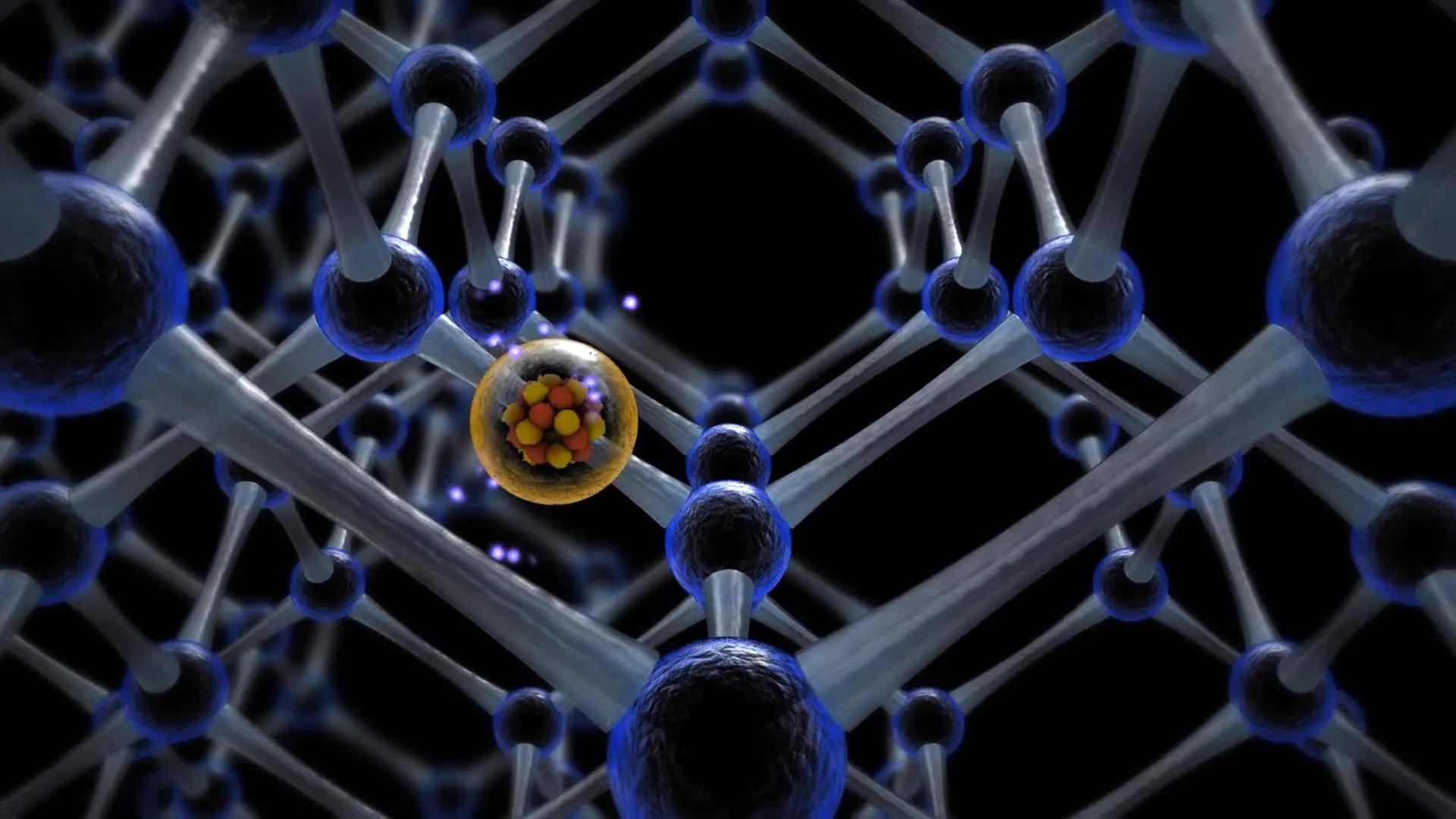
The core of the challenge lay in accurately modeling the behavior of hundreds of interacting ‘qubits.’ Qubits, the fundamental units of quantum information, are the quantum analogues of the bits used in classical computers. While a classical bit can exist in one of two states – either 0 or 1 – a qubit possesses the remarkable ability to exist in a superposition of multiple states simultaneously. This quantum property is the very source of the extraordinary capabilities of quantum systems, but it also renders their behavior exceptionally difficult to replicate on classical computing platforms. The problem at hand involved arranging these interacting qubits in various lattice structures, including square, cubic, and diamond configurations.
This research emerges in the wake of a notable development. In a March 2025 publication, also in Science, another research team reported the successful calculation of the dynamics of a particularly complex qubit system using a quantum computer. This team had asserted that a classical computer would be incapable of matching their achievement. Joseph Tindall, an associate research scientist at the CCQ and the lead author of the new Science paper, expressed a healthy skepticism that often accompanies such bold claims within the quantum computing community. "Whenever we [at the CCQ] see these kinds of claims, we’re always a bit skeptical," Tindall stated, reflecting a common sentiment of questioning and rigorous validation. "Like, ‘Did you try this? Did you try that?’"
For the CCQ researchers, this assertion presented an irresistible opportunity to rigorously test the boundaries of their own computational techniques. Miles Stoudenmire, a co-author on the paper and a research scientist at the CCQ, described the problem as a chance to "take their tools out for a test drive." He elaborated, "We could have picked some more arbitrary target. But it was like ‘Why not pick this one that has a big claim attached to it?’" This strategic choice underscores the team’s confidence in their methodology and their desire to push the envelope of classical computation in the quantum realm.
A significant hurdle in simulating quantum systems is the phenomenon of quantum entanglement. When qubits become entangled, their individual properties become inextricably linked, irrespective of the physical distance separating them. This interconnectedness means that researchers cannot model each entangled qubit in isolation. Instead, highly sophisticated algorithms are required to describe the collective state of the entire system.
"When you have lots of particles that interact by quantum physics, you have this wave function that describes the state of the system," Tindall explained. "It’s this huge object that rapidly gets bigger and bigger the more particles there are." The wave function encapsulates all the necessary information to precisely define the state of a quantum system. However, its size grows exponentially with each additional particle introduced into the system. This exponential growth poses a fundamental challenge: "I just can’t directly store it on my computer," Tindall admitted. The inability to directly store and manipulate these enormous wave functions is a recurring and significant problem in quantum physics research. Nevertheless, performing these calculations is absolutely critical for accurately predicting the behavior of various quantum materials, including crucial ones like superconductors.
The researchers ingeniously overcame this formidable barrier by developing and implementing novel tools based on tensor networks. These are sophisticated mathematical structures designed to compress the information contained within a wave function, making it significantly more manageable for classical computers. Tindall aptly likened this process to creating "a zip file for the wave function where you’ve taken all this information, and you’ve compressed it into this mathematical data structure full of these small tables of numbers that are interconnected to each other."
This remarkable compression technique rendered the simulation feasible on classical computing platforms. Tindall was able to execute many of the initial calculations on his personal laptop, leveraging ITensor, a high-performance tensor network software library that was itself developed at the CCQ. The new simulations also highlight the continuous evolution of ITensor, demonstrating how its developers are adapting tensor techniques to address new and increasingly complex problem types. In this specific instance, the researchers successfully modeled three-dimensional quantum dynamics by employing a 3D tensor network.
"It’s this very powerful compression that can be very effective, but it’s a pretty complex mathematical object," Tindall remarked, emphasizing the intricate nature of these tensor networks. "This really is a bit of a frontier, because working with these objects — especially in three dimensions — is very untrodden. You need sophisticated codes and algorithms to deal with them; it’s a software engineering challenge in itself." This underscores the significant software development effort required to harness the power of these advanced mathematical tools.
Interestingly, many of the simulations did not demand exorbitant computing resources. For the early stages of the calculations, Tindall utilized belief propagation, an algorithm originally developed in the 1980s that has recently been ingeniously adapted for quantum systems. "It’s a little more approximate than some of the other methods, but it’s way cheaper, and we can run it much more directly on lots of harder problems," Stoudenmire noted, pointing to the cost-effectiveness and accessibility of this approach. He contrasted this with "more sophisticated methods in the past of our field" which "wouldn’t be able to even start going for some of these three-dimensional problems, because they’re so big."
Despite the use of relatively modest hardware, the accuracy of the results achieved was state-of-the-art. The simulations produced solutions that not only aligned perfectly with theoretical predictions but also performed exceptionally well on smaller, well-understood problems where the correct answers were already known and verifiable. Most importantly, the results obtained through this classical computational approach were in complete agreement with those previously derived using a quantum computer, a testament to the validity and power of the new methodology. The crucial distinction, of course, is that these groundbreaking calculations did not require access to specialized quantum hardware.
The findings from this research contribute significantly to the ongoing discourse surrounding the boundaries of classical computing and the emergence of "quantum advantage." However, Tindall and Stoudenmire are keen to emphasize that the relationship between classical and quantum computing is not one of simple competition. Instead, they advocate for a symbiotic interplay between the two fields. Classical simulations can serve as invaluable tools for researchers seeking to understand the potential capabilities of quantum computers, while advancements in quantum hardware can, in turn, inspire the development of novel classical algorithms and computational techniques.
"The good side of the classical versus quantum computing debate is that there’s a lot of synergy between the kind of simulations we’re interested in and the codes we write and what can be realized on these quantum computers," Tindall observed. "That can help guide us, and it can also help guide quantum computing researchers, because, obviously, the barrier for entry for us to simulate certain things is a lot easier than for them, because we don’t have to build a quantum computer. I can just write some code and press ‘run’ on my personal computer." This highlights the accessibility and agility of classical simulation methods in exploring complex quantum phenomena.
Looking ahead, the researchers are actively engaged in developing methods that extend beyond systems composed solely of qubits. Their next ambitious goal is to model electrons that possess the ability to move between different sites, a significantly more complex scenario. These types of systems are considerably more challenging to simulate but are also directly relevant to a deeper understanding of real-world quantum materials. "They’re really, quantitatively, a lot harder problems," Stoudenmire acknowledged. "So that’s one of our next big bars that we want to clear." This forward-looking perspective signals the team’s commitment to continuously pushing the boundaries of computational quantum physics.