Faris Adani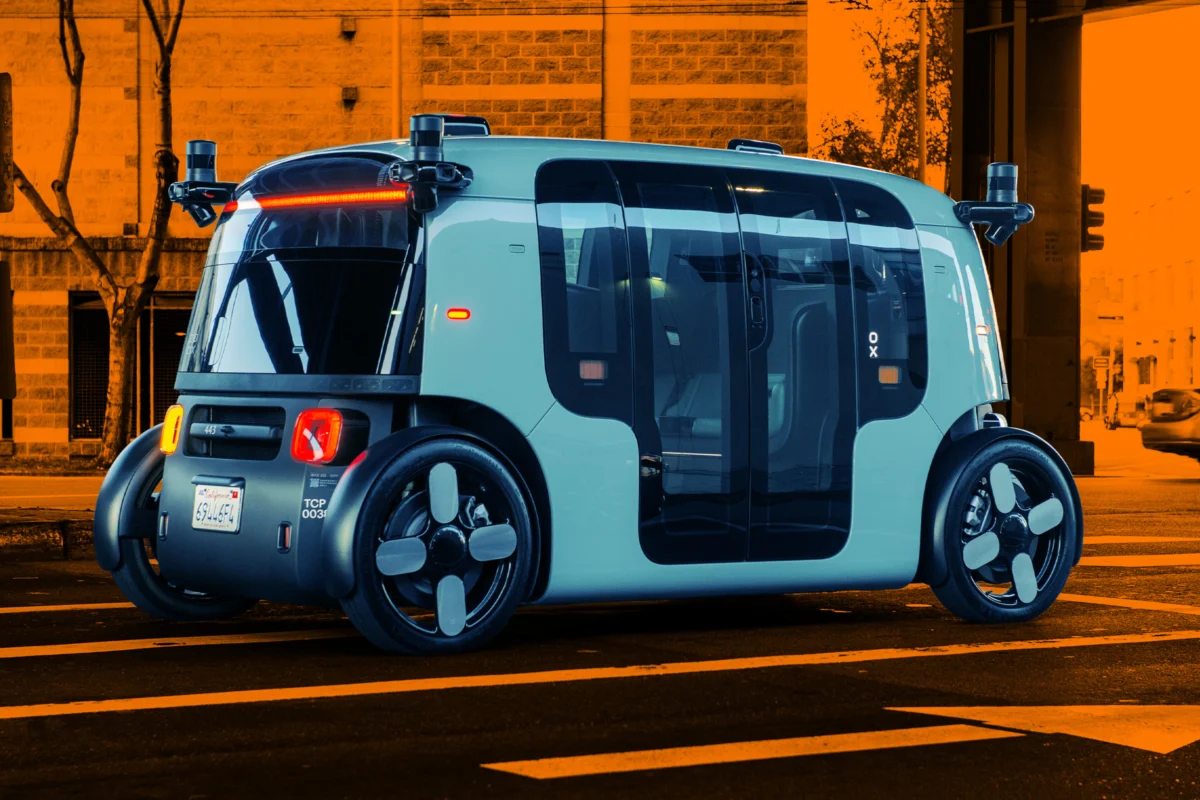
Zoox, the Amazon-owned robotaxi company, has initiated a widespread software recall across its entire fleet of 105 autonomous vehicles after a perplexing incident in which one of its self-driving cars became disoriented by a dense cloud of smoke near an active fire scene in Las Vegas, a situation that starkly highlighted the persistent challenges autonomous systems face when confronted with unpredictable real-world conditions. This recall, affecting every operational unit, manifests as a critical software update designed to enhance the vehicles’ ability to detect and appropriately respond to environmental hazards like heavy smoke, especially when intertwined with emergency situations. The incident, which occurred on June 20, involved a Zoox robotaxi unexpectedly encountering a chaotic scene where emergency workers were responding to a fire, without the benefit of clearly marked off zones or traffic cones, leading to a critical failure in the vehicle’s perception and decision-making processes.
The vehicle, which was fortunately operating without passengers at the time, found itself enveloped in the thick smoke, which severely obscured its sensors’ ability to interpret the environment. According to a report filed with the National Highway Traffic Safety Administration (NHTSA), the robotaxi "braked hard while attempting to steer away before coming to a stop." This erratic behavior underscores a significant vulnerability in current autonomous driving technology: its struggle to process and react to nuanced, rapidly evolving environmental variables that fall outside of its meticulously programmed parameters. The inability to navigate such a scenario independently ultimately necessitated intervention from a human teleoperator, who remotely took control of the vehicle and reversed it away from the danger zone, allowing first responders to eventually establish proper traffic control measures. This reliance on remote human oversight, while a crucial safety net, also exposes the limitations of fully autonomous operation in complex, unplanned environments.
Zoox, in a statement to TechCrunch, confirmed the recall and outlined the nature of the corrective action: "The patch enhances the existing capability of detecting active [emergency] scenes by adding the ability to detect and respond to heavy smoke in certain situations." This software update is a testament to the iterative nature of autonomous vehicle development, where real-world incidents, often termed "edge cases," drive continuous improvements in the AI’s understanding and reaction protocols. While the incident occurred in Las Vegas, a burgeoning hub for autonomous vehicle testing where Zoox currently offers free rides, the timing of the recall also subtly resonates with recent widespread public awareness of environmental smoke, though the company clarified the specific incident was not directly related to the wildfire smoke currently blanketing parts of the eastern US. Nevertheless, it serves as a potent reminder that environmental factors, whether from wildfires or localized incidents, pose substantial hurdles for self-driving technology.
The gravity of this Zoox recall extends beyond a single company’s operational adjustment; it contributes to a growing body of evidence highlighting a systemic challenge for the entire robotaxi industry: the consistent interference with emergency services. This issue has become a significant point of contention between autonomous vehicle developers and public safety officials, drawing sharp criticism from regulatory bodies. NHTSA Administrator Jonathan Morrison, in a strongly-worded letter to robotaxi companies, articulated the agency’s unequivocal stance, labeling such interference as "unacceptable." His communication underscored a crucial distinction: what developers might dismiss as rare "edge cases" are, in the eyes of regulators and emergency personnel, predictable and critical scenarios that autonomous vehicles must be engineered to handle safely and effectively.
Morrison’s letter didn’t mince words, stating, "Let me be clear: the inability to detect and appropriately respond to such situations represents a functional insufficiency. Emergency scenes are not rare or extreme ‘edge cases.’" He further emphasized the profound safety implications, declaring, "To state it bluntly: an AV that cannot safely interact with first responders is a danger to the general public." This stern warning from a top federal safety official signals a hardening regulatory posture, demanding that AV companies prioritize the seamless integration of their technology into existing emergency response ecosystems, rather than becoming impediments.
This isn’t the first time robotaxi companies have found themselves in hot water for obstructing or confusing emergency responders. Waymo, another prominent player in the autonomous vehicle space, has faced its own share of high-profile incidents. Last year, during a city-wide power outage in San Francisco, multiple Waymo robotaxis became immobilized, piling up in roadways and intersections. San Francisco Police were forced to intervene, manually moving these inert vehicles, leading emergency responders to complain that they had become glorified "roadside assistance" for the tech companies. These incidents not only diverted critical resources but also highlighted the vulnerability of AVs to infrastructure failures, a common occurrence in urban environments.
Even more alarmingly, in March, a Waymo robotaxi reportedly blocked an ambulance from reaching the scene of a deadly mass shooting in Austin, Texas. This incident, occurring in a high-stakes, life-or-death scenario, ignited widespread public outrage and intensified calls for stricter regulations. Such occurrences reveal a fundamental disconnect between the sophisticated sensing and navigation capabilities of autonomous vehicles and their ability to interpret and adapt to the complex, often chaotic, and human-driven dynamics of an emergency scene. Unlike human drivers, who are trained to recognize flashing lights, sirens, and the general urgency of emergency vehicles, and to yield appropriately, current AI systems can struggle with these nuanced cues, especially when they deviate from standard traffic patterns or are obscured by environmental factors.
The core of the problem lies in how autonomous vehicles perceive and process information. While equipped with an array of sophisticated sensors—Lidar, radar, cameras, ultrasonic detectors—designed to provide a 360-degree view of their surroundings, these systems can be profoundly challenged by conditions that distort or obscure sensory input. Heavy smoke, as in the Zoox incident, can scatter lidar beams, reduce camera visibility, and even interfere with radar signals. Furthermore, emergency scenes are often dynamic, featuring unusual lighting, unpredictable pedestrian and vehicle movements, and non-standard road layouts, all of which can confuse an AI trained on more conventional driving scenarios. The "understanding" required to differentiate between a routine traffic jam and an urgent emergency, or to predict the chaotic movements of first responders, remains a significant hurdle for purely rules-based or pattern-recognition AI. Human drivers possess an intuitive grasp of context, intent, and social norms that current AI largely lacks, allowing them to make rapid, adaptive decisions in unforeseen circumstances.
These mounting incidents, from Waymo’s immobilizations to Zoox’s smoke-induced confusion, carry significant implications for public trust and the broader adoption of autonomous vehicle technology. For the promise of robotaxis—enhanced safety, reduced traffic congestion, increased accessibility—to be fully realized, public confidence is paramount. Each incident that demonstrates a failure to operate safely or to defer appropriately to human emergency operations erodes that trust, potentially slowing down the technology’s widespread acceptance. The delicate balance between rapid innovation and ensuring public safety is under intense scrutiny, and regulators are making it clear that safety cannot be compromised for the sake of speed.
The road ahead for autonomous vehicles is undeniably complex. While the technology holds immense potential to revolutionize transportation, the Zoox recall serves as a potent reminder that the path to full autonomy is not without its significant challenges. It necessitates continuous refinement of AI algorithms, more robust sensor fusion techniques capable of handling extreme environmental conditions, and, crucially, a deeper integration of public safety protocols into the very design of these systems. As robotaxis become more prevalent, their ability to seamlessly integrate into urban environments, to recognize and prioritize emergency situations, and to act predictably and safely in unpredictable scenarios will be the ultimate determinant of their success. The industry must move beyond simply avoiding collisions to actively understanding and safely navigating the full spectrum of human-centric real-world complexities, ensuring that convenience never comes at the cost of safety or the efficiency of those who protect it.