Faris Adani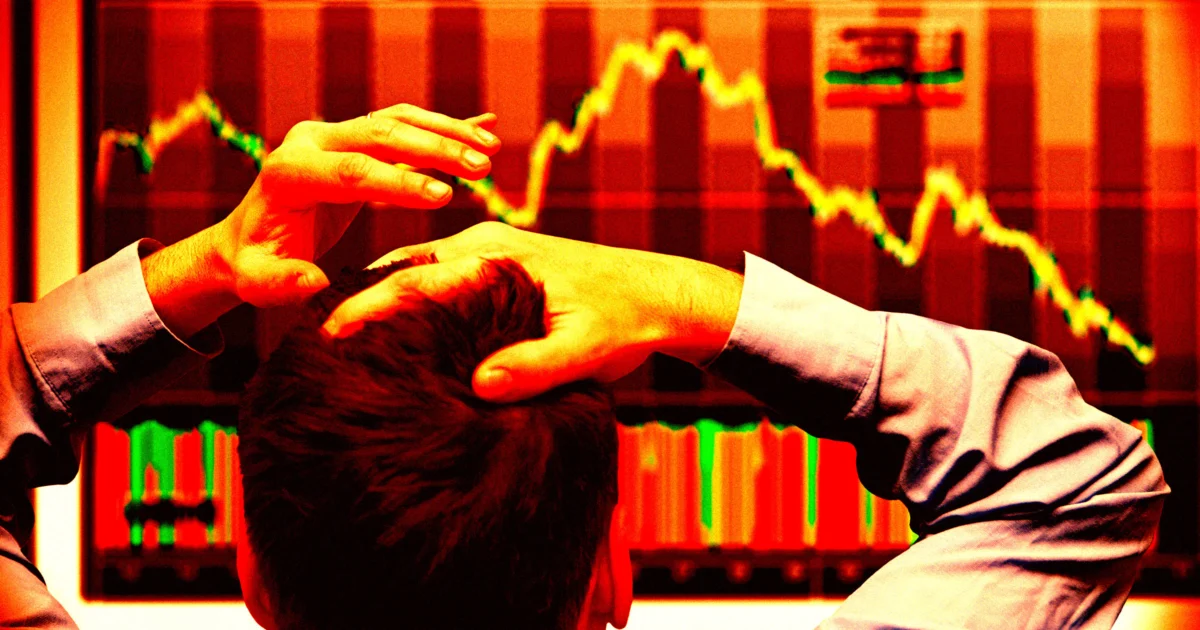
The relentless surge of investment into artificial intelligence, while fueling unprecedented technological advancements, is increasingly shadowed by an ominous prophecy from seasoned financial veterans: the specter of an AI bubble poised to burst. Bill Gurley, a revered venture capitalist and general partner at Benchmark, is among the most vocal, issuing a stark warning that the industry is hurtling towards a "hard reset" – a market correction that could reverberate with devastating force across the global economy. His admonition isn’t merely a cautious note; it’s a stark reminder of historical patterns where speculative fervor outpaces fundamental value, inevitably leading to a painful reckoning.
AI companies today are engaged in an extraordinary spending spree, committing hundreds of billions of dollars to colossal infrastructure projects. These investments are predicated on the fervent belief that demand for their services will skyrocket in the coming years, ultimately justifying these monumental capital expenditures. Yet, the current reality paints a starkly different picture. Revenues, while growing, are still profoundly dwarfed by these astronomical outlays, creating a widening chasm between the tech industry’s soaring promises of an AI-driven utopia and the practical, revenue-generating capabilities of the technology today. This disequilibrium has fueled persistent fears among Silicon Valley investors and analysts alike that an AI bubble, if it were to collapse, could inflict severe damage, potentially even "wrecking the entire US economy."
Gurley’s perspective is rooted in a deep understanding of market cycles and human psychology. "One day we’re going to have an AI reset, because waves create bubbles, because interlopers come in," he told CNBC recently. "When people get rich quick, a whole bunch of people come in and want to get rich too, and that’s why we end up with bubbles." This observation cuts to the heart of speculative markets. The allure of rapid wealth creation draws in a wave of less discerning investors, eager to ride the next big trend without a rigorous evaluation of underlying fundamentals. This influx of capital, often chasing hype rather than sustainable business models, inflates valuations to unsustainable levels, creating a feedback loop of irrational exuberance. Gurley’s chilling conclusion? "One day, I just think we trip and run out of money on those things. I do think that moment stands in front of us."
The current economic landscape for many AI firms is precarious. They are burning through capital at an astonishing rate, pouring resources into advanced research and development, acquiring top talent, and building out massive compute infrastructure, primarily centered around scarce and expensive GPUs. This aggressive spending is essential for staying competitive in a rapidly evolving field, but it also creates immense financial pressure. If the anticipated revenue growth doesn’t materialize swiftly enough, these companies could find themselves saddled with billions in debt and without a clear path to profitability. Gurley likens this to an aircraft struggling to find a runway. "I just think it’s harder to land the plane," he remarked, highlighting the immense challenge of pivoting from a high-burn growth strategy to a financially sustainable model once deeply entrenched in debt.
Gurley’s concerns are far from isolated. A growing chorus of influential figures in finance and technology is echoing similar sentiments. Investors across the board have begun warning of an impending "reckoning," a critical juncture where the truly viable AI enterprises will distinguish themselves from those built on mere speculation. This reckoning is expected to usher in a period of consolidation, where only companies with robust business models, clear value propositions, and a genuine path to profitability will survive and thrive.
Perhaps one of the most potent warnings came from Lloyd Blankfein, the former head of Goldman Sachs, who navigated the bank through the tumultuous waters of the 2008 subprime mortgage crisis. Earlier this month, Blankfein cautioned that it’s time to prepare for a "major jolt to the system," drawing unsettling parallels to the systemic shock that nearly crippled the global financial system fifteen years ago. The comparison to 2008 is particularly chilling, as it evokes memories of a crisis triggered by a complex web of interconnected financial products and widespread speculative lending, where the collapse of one segment had cascading effects across the entire economy. In the AI context, this could manifest through interconnected investments, shared infrastructure dependencies, and the broad market impact of a collapse in a sector that now commands a significant share of economic activity.
Interestingly, not everyone views a potential AI bubble collapse as an unmitigated disaster. A contrarian perspective, articulated by some of the world’s wealthiest business figures, suggests that such a correction might be a necessary "price to pay" in the broader march of technological progress. As The Atlantic recently reported, these billionaires contend that a bubble burst would cleanse the market of speculative froth, eliminate unsustainable ventures, and force innovation to focus on tangible problems and economically viable solutions. This "creative destruction" could, in their view, ultimately lead to a more robust, efficient, and impactful AI industry, allowing genuinely transformative technologies to emerge from the wreckage of failed hype cycles. It would also present opportunities for well-capitalized players to acquire undervalued assets and talent, further consolidating their market position.
Several critical inflection points are looming, poised to test the resilience and true value of the AI sector. Numerous major players, including industry titans like OpenAI and Anthropic, are reportedly eyeing public offerings this year. These Initial Public Offerings (IPOs) will serve as a crucial litmus test, forcing these private companies to submit to the scrutiny of public markets, where valuations will be benchmarked against tangible financial performance and future prospects rather than just investor sentiment.
Perhaps the most astonishing development on the horizon is the anticipated public debut of Elon Musk’s SpaceX, which recently acquired his burgeoning AI startup, xAI. SpaceX is projected to go public at an unprecedented valuation of $1.4 trillion. While SpaceX itself has substantial, albeit capital-intensive, achievements in space exploration and satellite internet, folding xAI into this valuation adds another layer of complexity and potential speculative risk. Such a colossal valuation for a company that includes a relatively nascent AI component underscores the extreme optimism, and perhaps irrational exuberance, currently permeating the market. The success or failure of these high-profile IPOs will undoubtedly send strong signals, potentially acting as the "fuse" that Gurley and others fear.
The stakes could not be higher. Tech companies have collectively committed a staggering $650 billion to AI development and deployment this year alone. This represents not just a significant investment but a rapidly rising share of overall economic activity in the United States. The interconnectedness of AI investments with other sectors of the economy means that any major disruption could have widespread implications. If Gurley’s predicted "reset" were to materialize, its consequences would be bifurcated: a massive boon for the companies and investors who have built their strategies on solid fundamentals and genuine innovation, and a catastrophic disaster for those who have chased fleeting trends and inflated valuations. This high-stakes gamble, driven by the promise of unprecedented technological advancement and immense wealth, has undeniably captivated investors, drawing them into a market where the rewards are potentially astronomical, but the risks are equally profound. The question is not if a market adjustment will occur, but when, and with what intensity, reshaping the future of AI and potentially the global economy itself.