Faris Adani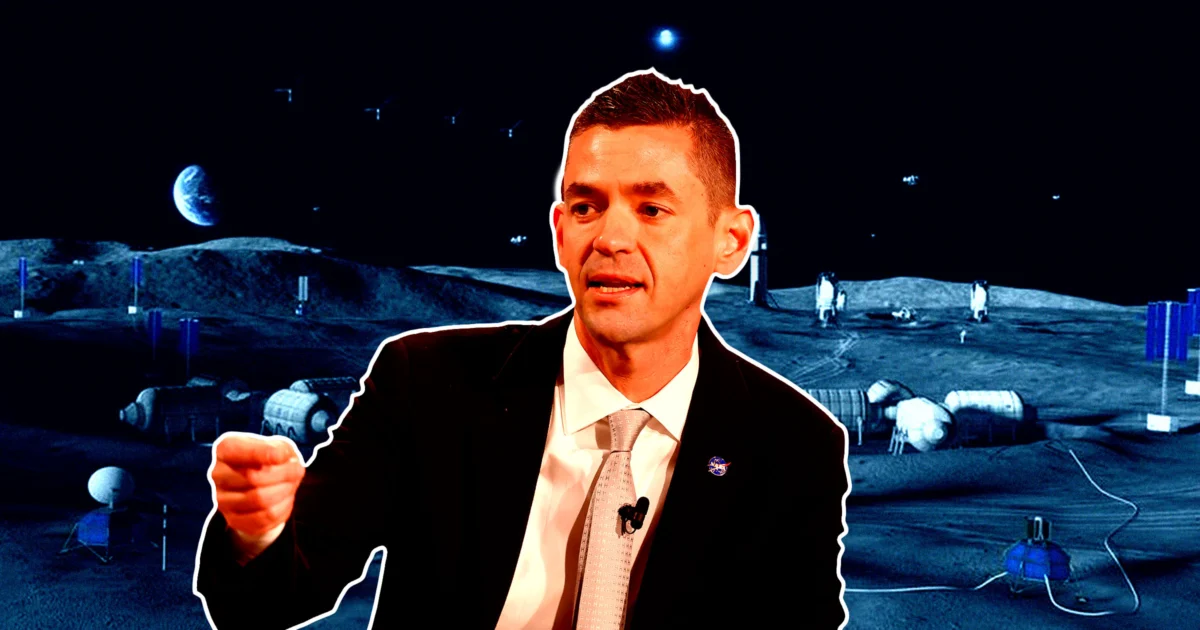
NASA Announces Gigantic Armada of Moon Launches to “Build President Trump’s Moon Base,” Starting Next Year
In a flashy “Ignition” event today, NASA firmly recommitted itself to returning astronauts to the Moon, while extensively fleshing out its ambitious vision for what administrator Jared Isaacman referred to as “president Trump’s Moon base” during an interview with Fox News. The event marked a significant turning point, not just in rhetoric but in the detailed strategic planning presented for lunar exploration and settlement.
“NASA is committed to achieving the near-impossible once again, to return to the Moon before the end of President Trump’s term, build a Moon base, establish an enduring presence, and do the other things needed to ensure American leadership in space,” Isaacman added in an official statement. This declaration underscored a renewed urgency and a politically charged framing of the agency’s long-term lunar objectives, aiming for a swift and decisive re-establishment of American dominance beyond Earth orbit.
This bold announcement comes just under a month after NASA significantly reshuffled the upcoming launches of its Artemis program, a series of missions designed to return humans to the lunar surface. The prior restructuring saw its Artemis 3 mission — originally intended as the first crewed lunar landing since Apollo 17 — transformed into a test of its Human Landing Systems (HLS) spacecraft in low-Earth orbit. Subsequent crewed lunar landing attempts, Artemis 4 and 5, were consequently pushed back to an estimated timeframe of 2028. This earlier recalibration highlighted the immense technical challenges and developmental delays inherent in such complex undertakings, making today’s aggressive new timeline all the more striking.
And that’s just the tip of the iceberg of the agency’s newly-announced plans. As part of today’s comprehensive presentation, Isaacman touted a dramatically increased operational tempo, envisioning “frequent robotic landings” and a “nearly monthly cadence of equipment and rovers with scientific payloads landing on the Moon” starting as soon as next year. This shift emphasizes an unprecedented reliance on automated systems and commercial partners to lay the groundwork for human habitation.
A neatly summarized graphic NASA showed off during its presentation vividly illustrated the vast extent of the agency’s ambitions. Categorized into three distinct phases spanning the next ten years, the plan details an astonishing rate of lunar activity. NASA is planning to send as many as ten spacecraft to the Moon in 2027 alone. In 2028, the agency is looking to launch four landers, three rovers, and four drones, across a total of 12 rocket launches. This level of activity far surpasses anything seen since the Apollo era, reflecting a strategic pivot towards sustained presence rather than episodic visits.
To put those dates into perspective, NASA has only recently started to reach the lunar surface with small commercially-built landers — with varying degrees of success, as evidenced by recent missions like Astrobotic’s Peregrine lander failure or Intuitive Machines’ Odysseus lander tilting upon arrival — decades after the conclusion of its historic Apollo program. Moreover, the agency is still years away from landing humans on the Moon, making the proposed base a monumental leap of faith in technological readiness and logistical prowess.
During a dizzying run-through of the agency’s intricate plans, NASA’s newly-minted Moon Base program executive Carlos Garcia-Galan elaborated on the armada of planned launches and the specific objectives for each phase, painting a picture of methodical, yet incredibly aggressive, expansion.
In the first phase, spread out across 25 rocket launches and over 8,000 pounds of payloads between now and the end of 2028, NASA is hoping to establish “high-rate, reliable surface access” and a “ground truth for Moon Base landing sites.” This foundational phase focuses on reconnaissance, resource assessment, and proving ground technologies. Payloads will likely include surveying instruments, small rovers for terrain analysis, and experimental power systems to evaluate potential sites for future human infrastructure.
The second phase, which spans 2028 to 2032, ramps up significantly, including 27 launches, seven rovers, and over 120,000 pounds of payload. This critical period will see NASA securing sites for its base while working to “establish initial lunar infrastructure,” demonstrate technologies to “enable lunar permanence”— such as in-situ resource utilization (ISRU) for extracting water ice and building materials, advanced power generation, and environmental control systems — alongside two crewed missions per year. These missions will be pivotal for assembly and initial habitation.
Finally, phase three, running from 2033 to 2036, is designed to “enable long-duration and -distance human exploration,” prepare the core site of the base for continuous occupation, and make “routine logistics deliveries from Earth.” Between these years, NASA is looking to launch 29 rockets to the Moon, including four rovers, and over 300,000 pounds of payload. This massive influx of cargo will include full-scale habitats, advanced logistics modules, robust power generators, and extensive scientific equipment to support a fully operational and expanding lunar outpost.
“In total, when you rack and stack the three phases, this is what you end up with,” Garcia-Galan told the crowd, showing off a detailed graphical summary that depicted an exponential increase in lunar presence. “So it’s pretty impressive. Equally challenging.” He underscored the inherent difficulty of the endeavor, acknowledging the scale of the undertaking.
“Remember, trying to achieve the near-impossible here,” he reminded the audience, a sentiment that resonated throughout the presentation and in subsequent discussions.
Onlookers and experts were left stunned after the onslaught of detailed information, grappling with the sheer audacity and complexity of the proposed timeline.
“Trying to follow this is like drinking from a firehose,” tweeted SpacePolicyOnline journalist Marcia Smith, capturing the overwhelming nature of the data. “Not sure what to make of it. ‘Aspirational’?” Her skepticism highlighted the gap between ambitious plans and the historical realities of space program execution.
“Goodness me,” NASASpaceflight’s official X account wrote in its tweet commenting on the full manifest, echoing a widespread sense of awe mixed with incredulity.
Others were left far more impressed, seeing the detailed plan as a long-awaited strategic clarity from the agency.
“I’ve been waiting literally decades for NASA to articulate a plan for a Moon base,” Ars Technica’s Eric Berger, a seasoned space journalist, wrote. “Now Carlos Garcia-Galan is doing a masterful job of precisely this. Dozens of landings. Drones. RTGs. Rovers. Habitats. Excavators. This is incredible stuff.” Berger’s enthusiasm reflected the relief of many who have yearned for concrete, phased plans for lunar settlement, rather than vague aspirations.
But whether we should take NASA at its word, particularly when it comes to its aggressive timelines, remains debatable. Simply sending a crew of astronauts around the Moon and back as part of its Artemis 2 mission, which NASA is still hoping to launch as soon as next week, has been marred by setbacks and delays. These include issues with life support systems, heat shield development, and other critical components, illustrating the profound complexities of human spaceflight, even for circumlunar missions.
In its quest to build out a permanent presence on the Moon, NASA is planning to lean heavily on its private partners, leveraging its Commercial Lunar Payload Services (CLPS) program. CLPS was specifically designed to contract companies to develop robotic lunar landers and rovers, fostering a robust commercial space ecosystem and allowing NASA to procure services rather than develop all hardware in-house. This strategy aims to accelerate development cycles and reduce costs by tapping into private sector innovation and efficiency.
The agency is also looking to shed plenty of weight by abandoning its plans to develop a Lunar Gateway, a small space station in the Moon’s orbit originally intended to be a stepping stone for future space explorers and a hub for deep space missions. The decision to scrap Gateway reflects a strategic re-prioritization, opting for a more direct and sustained focus on surface infrastructure and exploration rather than an orbital waystation that would add complexity and transit time.
Crucially, NASA is also planning to ditch its long-delayed and over-budget Space Launch System (SLS) after Artemis 5, its second landing attempt currently slated for “late 2028.” Instead, it’s looking to “incorporate more commercially procured and reusable hardware to undertake frequent and affordable crewed missions to the lunar surface,” according to the agency’s announcement. This marks a monumental shift, moving away from a government-developed, expendable heavy-lift rocket towards more economical and potentially more frequent launches offered by the burgeoning commercial space industry.
Presumably waiting in the wings and central to this new strategy is the agency’s existing Human Landing Systems partner, SpaceX, whose Starship rocket is being tapped for its attempts to land the first astronauts on the lunar surface in over 50 years. Starship, with its unparalleled payload capacity and theoretical reusability, is critical to the feasibility of transporting the vast amounts of cargo and personnel required for a lunar base.
However, whether Starship will be ready to jump into action, even just for NASA’s low-Earth orbit test as part of its Artemis 3 mission next year, remains uncertain. Starship itself has faced numerous developmental challenges, including engine testing, rapid raptor engine production, heat shield integrity, and the highly complex orbital refueling demonstration critical for lunar missions. Its readiness is arguably the single largest variable in NASA’s ambitious new timeline.
In short, NASA’s plans for its Moon base are wildly ambitious and set the degree of difficulty enormously high. The agency’s announcement presupposes the rapid development and successful deployment of a vast array of technologies — from “MoonFall” drones for aerial reconnaissance and exploration to an enormous pressurized RV for surface mobility and habitat, along with advanced excavators for construction and ISRU, and robust power systems like Radioisotope Thermoelectric Generators (RTGs) — that don’t exist yet in their operational forms and could potentially take significantly longer to realize than the agency may be anticipating.
In other words, while Isaacman suggested his agency was looking to construct “president Trump’s Moon base,” it’s looking exceedingly unlikely that such a base will materialize before the end of Trump’s presidency — or possibly even during the 79-year-old’s lifetime, given the historical pace of such complex endeavors. The political framing provides impetus, but the engineering and scientific realities dictate a far longer horizon.
It’s a possibility NASA is seemingly aware of as its ambitions for the next ten years, which will see it rely heavily on its commercial and international partners, continue to come into focus. The agency is walking a tightrope between political mandates and technological feasibility, striving to maintain momentum while managing expectations.
“The Moon base will not appear overnight,” Isaacman admitted in a publicized note to NASA staffers, a candid acknowledgment of the long road ahead despite the aggressive timeline presented. This statement serves as a crucial caveat, tempering the grand vision with a dose of realism about the monumental undertaking that lies ahead for humanity’s return to and permanent settlement on the Moon.
More on NASA’s announcements: NASA Announces Nuclear Mission to Mars by 2028